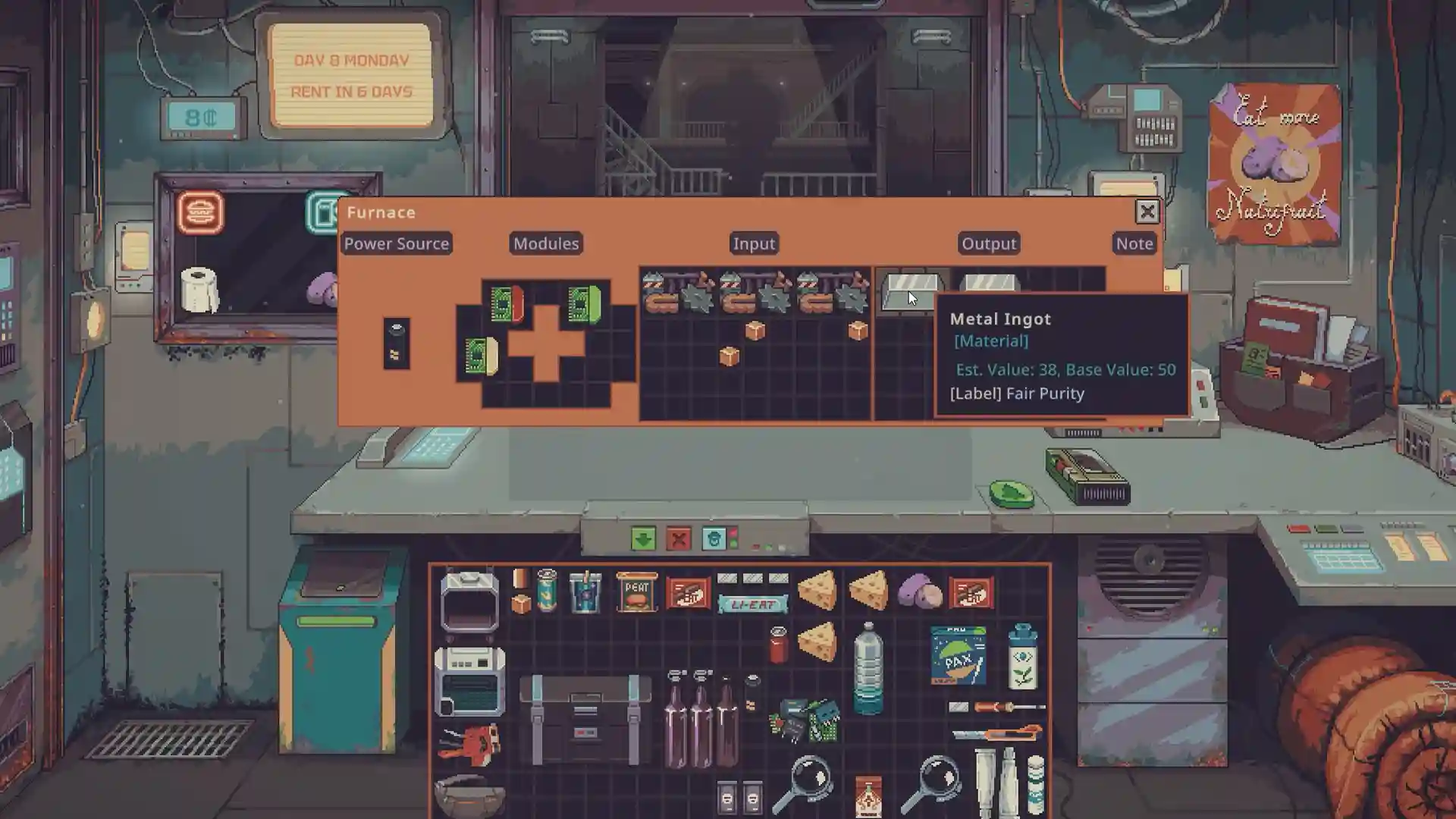


Questing Goose Studio’s Probably Stolen features a set of items called Modules. Building the modules wasn’t the hard part for me; almost all the machines in my shop are customized by modules. Finding the best module for each machine was the hard part. Performance module isn’t always the best choice, for example. You can have a module that speeds up a Cryptographic Desequencer, but is absolutely useless on a Furnace.
Modules come in different shapes and some receive bonuses from their position. Also, damaged or stuck modules can get in the way. Quality, Performance, Refinemnt, and Efficiency are the most useful modules and the main ones you’ll be using on your machines. Let’s see how each one works and where it belongs.
Go to:
Best Modules for Every Machine
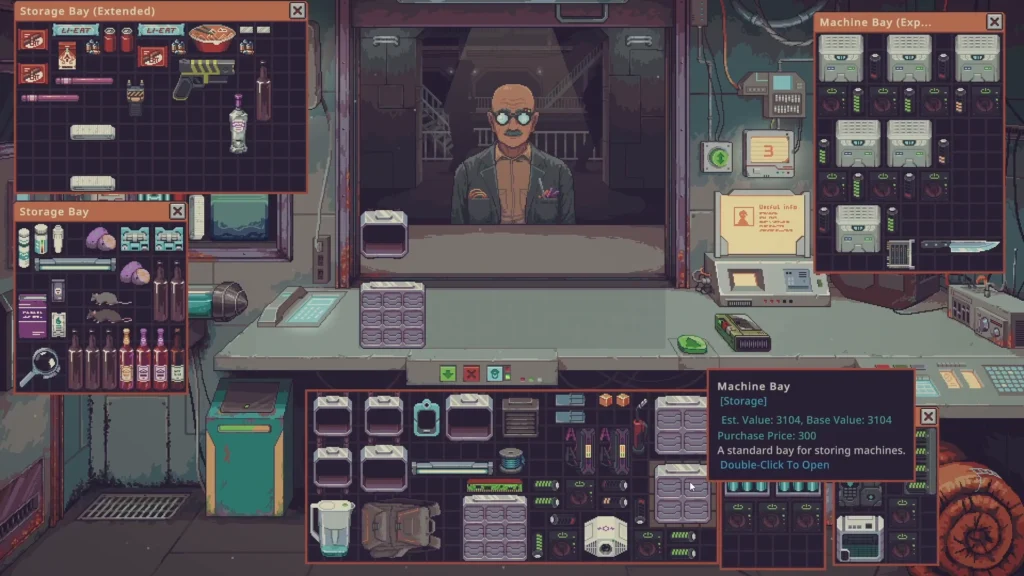
Credits are valuable, so don’t go spending them on modules that won’t work on the machine you want.
| Machine | Best Module | Effect |
|---|---|---|
| Furnace | Quality, Refinement, Efficiency | Higher ingot purity and lower power costs |
| Moisture Farm | Performance, Quality, Refinement | More water or a better water grade |
| Water Purifier | Performance, Quality, Refinement | Higher achievable purity or faster contaminant removal |
| 3D Printer | Performance, Efficiency | Faster printing and cheaper production |
| Hydroponic System | Performance, Quality, Refinement | Faster plant growth and larger harvests |
| Cryptographic Desequencer | Performance, Overclock, Efficiency | Faster keycard encoding |
| Security Alarm System | Performance, Efficiency | Better theft prevention and lower energy use |
| Evaporator | Performance, Quality | Faster evaporation or better vapor recovery |
| AgeWell | Quality, Efficiency | Extra aging progress or reduced power consumption |
| Mirage Projector | Performance, Quality | Higher store attractiveness |
| DNA Manipulator | Performance, Quality, Efficiency | Faster genetic work or improved success chance |
Just remember: these are upgrade priorities, not fixed loadouts. A Refinement Module can help with the Furnace’s Quality stat, but it also lowers Efficiency. That’s why you should set your priorities straight. A module’s penalty may be so severe that you’re struggling to even power the machine. This exact set of circumstances can apply to Overclock Modules too. They can speed up production considerably, but you’ll also need a significant amount of electricity to support them.
All modules share the same three main factors: Performance, Efficiency, and Quality. The bonuses of each factor are added together inside the module bay before the machine calculates its final output.
Performance: Production Speed and Output
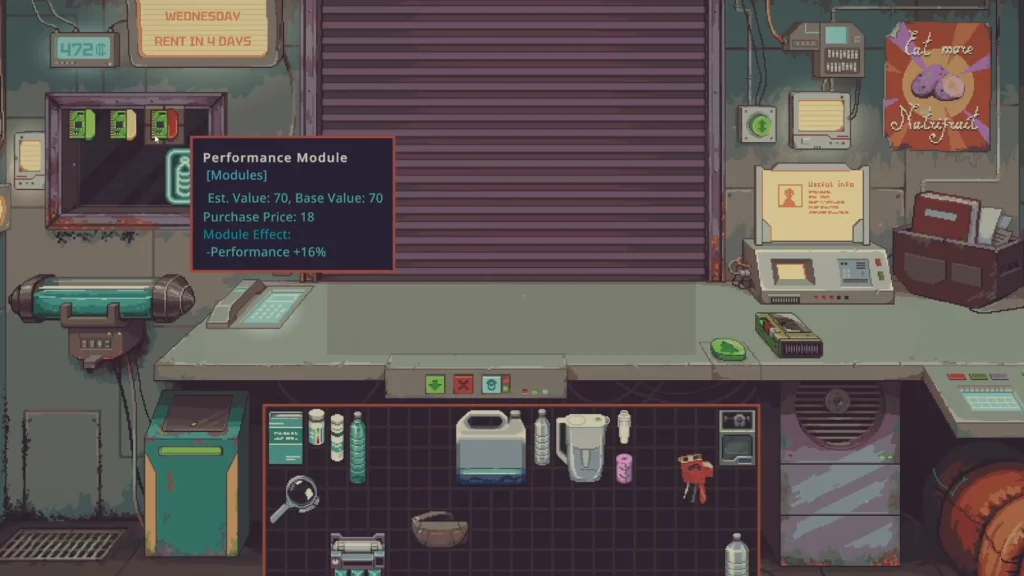
Performance shows how much work a machine can get done every night. For instance, a Moisture Farm produces more water when its Performance increases. The Cryptographic Desequencer encodes keycards faster, while the Hydroponic System grows plants faster. THE PERFORMANCE MODULE HAS NO EFFECT ON THE FURNACE, however.
Efficiency: Lower Electricity Consumption
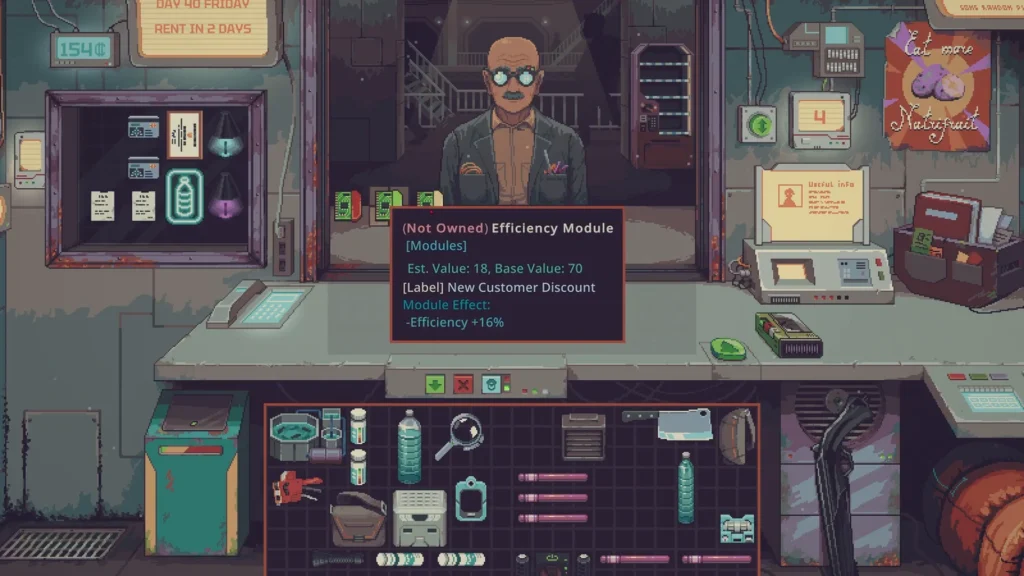
Efficiency lowers power consumption. The Efficiency Module was my favorite because I had a bunch of machine running overnight and I didn’t want to go broke. Efficiency essentially saves you Credits that would’ve gone to waste over maintaining their power supply. The important thing to remember is that power consumption is calculated in whole units, so a slight Efficiency increase won’t change the displayed requirement until it crosses the next threshold.
Let me give you an example: installing one Efficiency Module will leave the machine’s energy cost unchanged, while adding another can finally save a unit of power. On the other side, we can also have negative Efficiency. Overclock, as the name suggests, will increase Performance, but highly decrease Efficiency.
Quality: Better Products and Processing Results
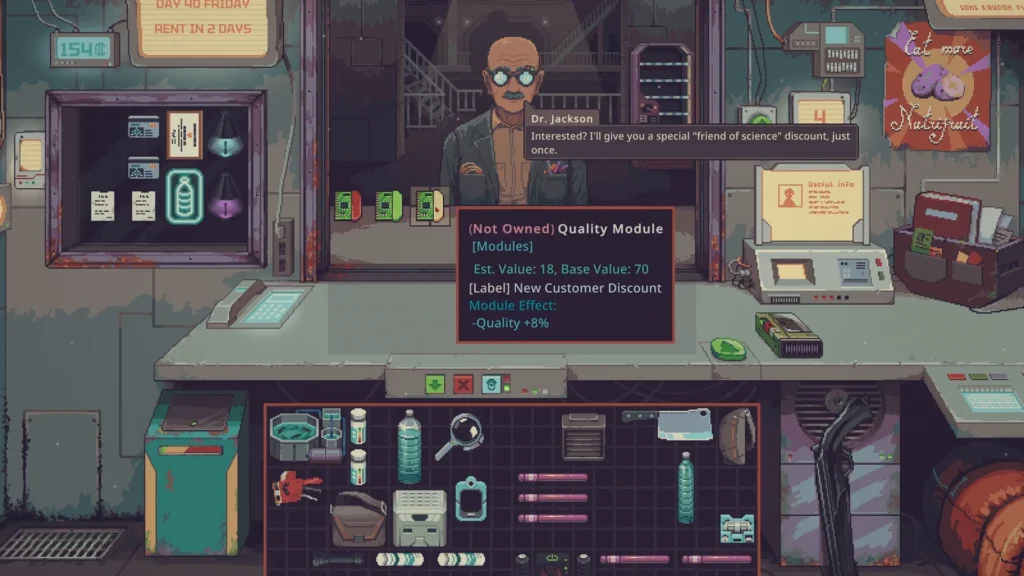
Quality is responsible for the results and outcomes you get out of machines, but it doesn’t work the same way for every one of them. If you put it on your Furnace, it raises the maximum purity of metal ingots. On your Moisture Farm, it improves the grade of water produced. Your Hydroponic System increases maximum harvest yield with an added Quality Module. Though, there are also machines where Quality does absolutely nothing. The Alarm System and Cryptographic Desequencer are among those machines.
How to Install Modules
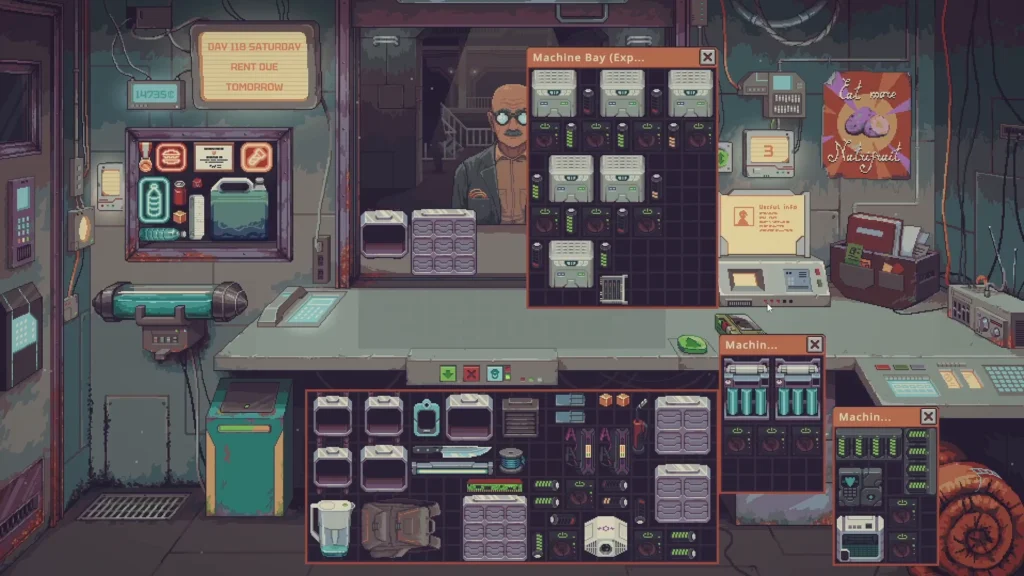
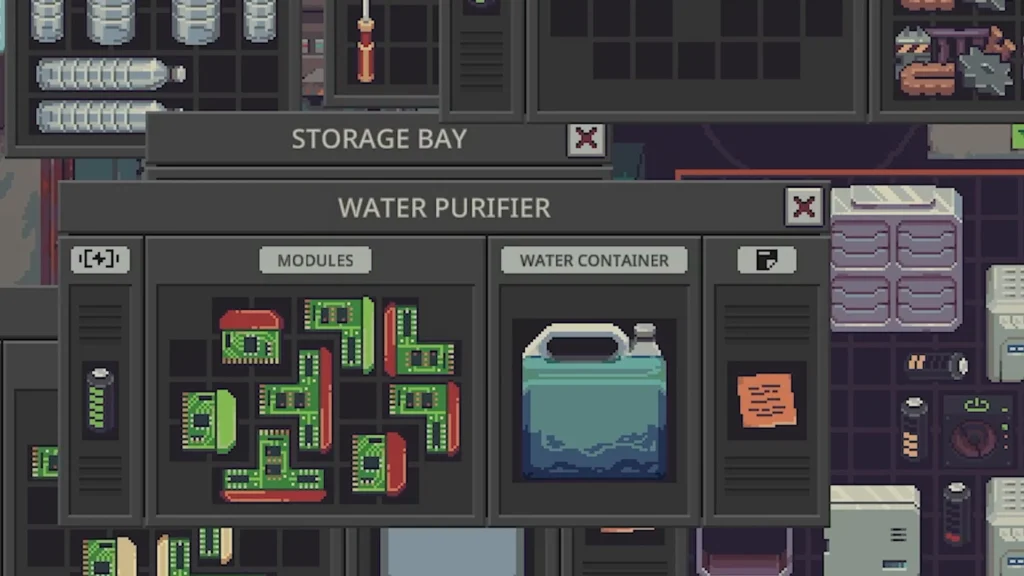
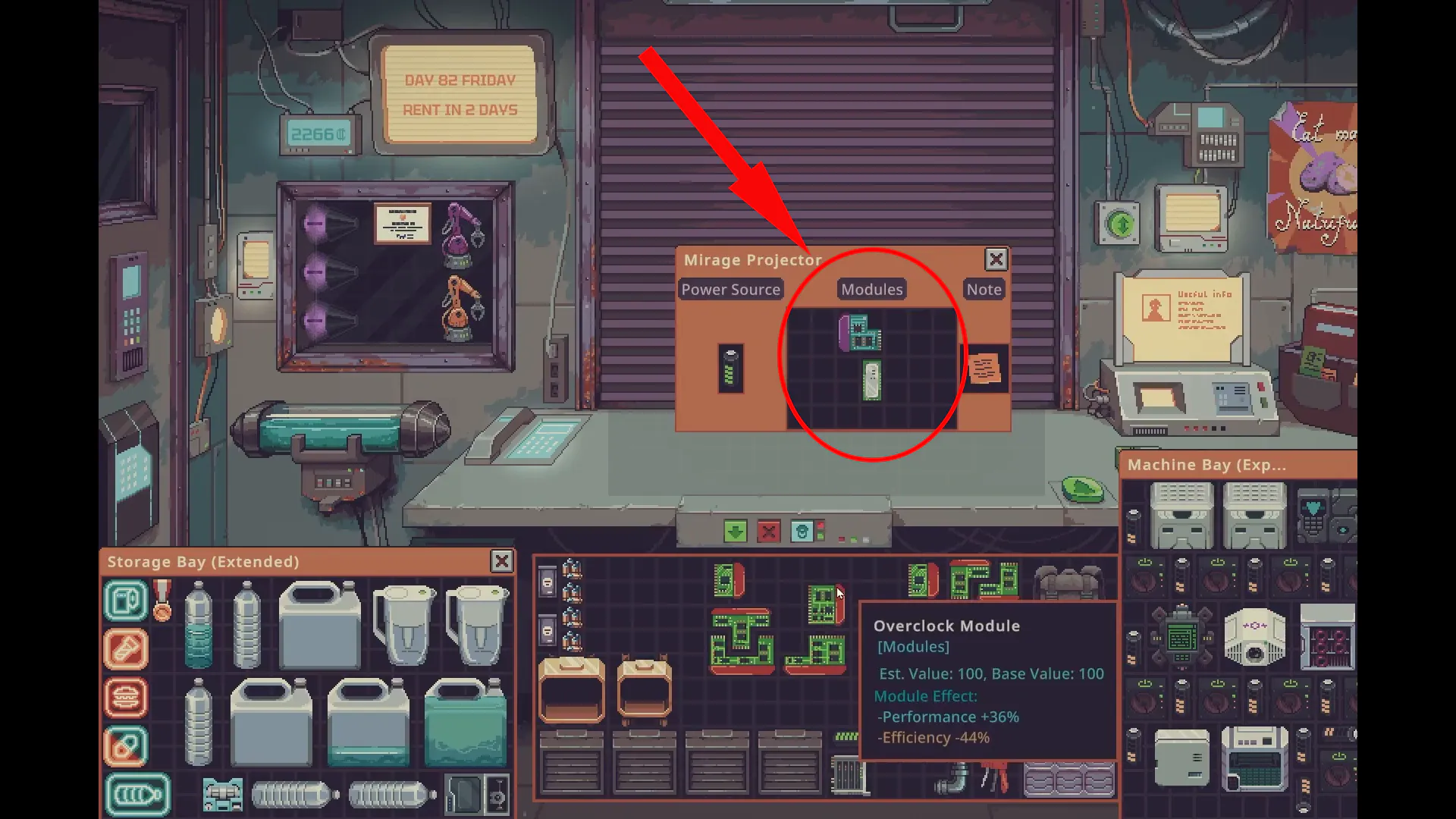
Since modules come in different shapes, you might wanna rotate or flip them to make them fit. Open a compatible machine’s module bay and place your modules in the available grid cells. Almost all machines have a 7 × 5 grid with 26 cells you can use. You can unlock the remaining space with two Module Bay Expansion Kits, increasing capacity to 35 cells at best. Always check the machine’s updated stats after installing a module to make sure you actually did it. All in all, to install a module you should:
- Open a compatible machine and access its module bay.
- Pick up the module you want to install.
- Rotate it with Q or E, or flip it with F if its shape doesn’t fit.
- Place it in the available grid space and inspect the updated machine stats.
- Make sure the machine still has enough power for its next cycle.
Every Module Type and Its Stats
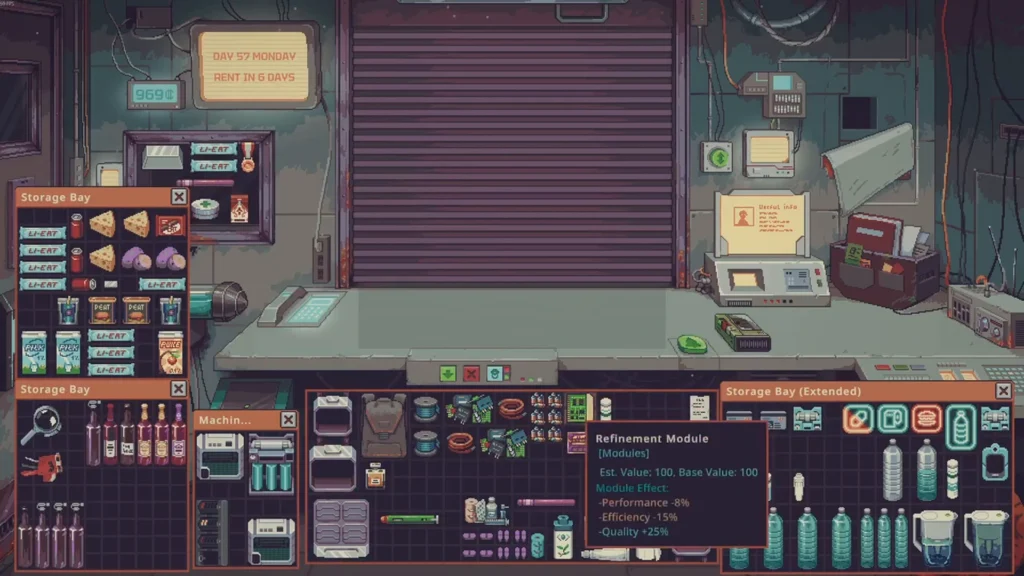
Each module offers different types of bonuses. Here is every major module ( the kind that is not specific to one machine):
| Module | Performance | Efficiency | Quality | Cost |
|---|---|---|---|---|
| Performance Module | +16% | — | — | 70 Credits |
| Efficiency Module | — | +16% | — | 70 Credits |
| Quality Module | — | — | +8% | 70 Credits |
| Overclock Module | +36% | -44% | — | 100 Credits |
| Eco Module | -16% | +32% | — | 100 Credits |
| Refinement Module | -8% | -15% | +25% | 100 Credits |
| Streamlining Module | +8% | +25% | -16% | 125 Credits |
| Neural Core Module (Capped) | +100% | -100% | +50% | 250 Credits |
| Neural Core Module (Uncapped) | +200% | -100% | +100% | 1,500 Credits |
How Module Placement and Bonuses Work
Modules can become stronger depending on where you place them. The most useful bonuses are:
| Place | Bonus |
|---|---|
| Top Mount | +20% to the module’s stats when touching the top edge |
| Side Mount | +20% when touching the left edge |
| Receiver | +10% of its own stats per adjacent Node |
| Support Node | Receives 20% of neighboring modules’ base stats |
| Overcharged | Doubled stats, but a 10% chance of becoming ruined per effective use |
Special Modules and What They Unlock
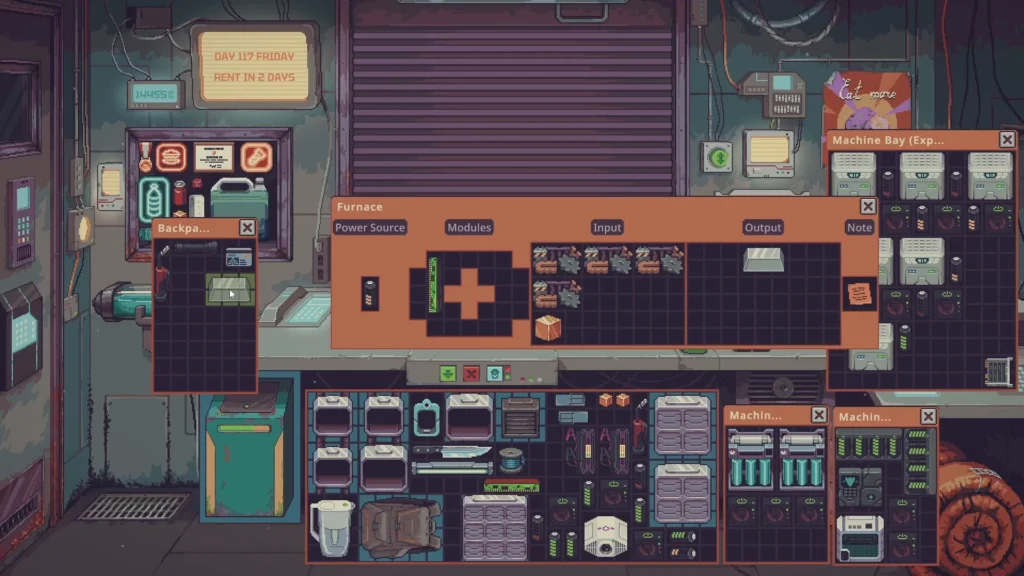
Some modules do more than improve Performance, Quality, or Efficiency. One prime example is the process of refining Junk into Scrap Metals via the Furnace. That, and any additional machine functions are as follows:
| Special Module | What It Does |
|---|---|
| Furnace Blast | Produces 2 ingots from 3 materials |
| Furnace Junk Processing | Converts 6 Junk into 4 Scrap Metal |
| Metal Printer | Enables metal-based printing recipes |
| Computer Numerical Control | Unlocks gun frames and parts when combined with Metal Printer |
| Melee Batch | Adds another melee weapon per compatible print |
| Alarm Transmitter | Generates 1 faction reputation per night |
| Hydroponic Modules | Modify crop production and processing |
Where to Find Modules and Expansion Kits
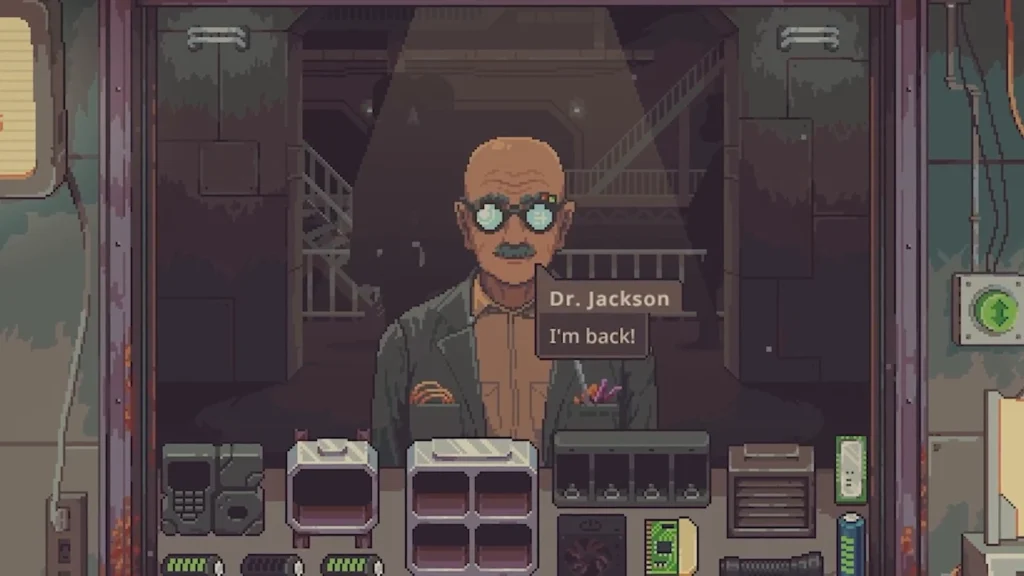
If you want to easily purchase modules and expansion kits, Dr. Jackson is your man. Keep in mind that his stock changes between each visit, so there isn’t a consistent supply of modules available at your whim. There are also modules in the Engineering Foundry Supply Crates that I found. I also got some through trades. Another method is to exchange two unwanted modules for a random replacement at the Underground Exchange.
Kits are both available via Dr. Jackson and some possible trade exchanges. You can also receive four expansion kits as a possible reward during Serpico‘s storyline.
How to Remove Stuck Modules
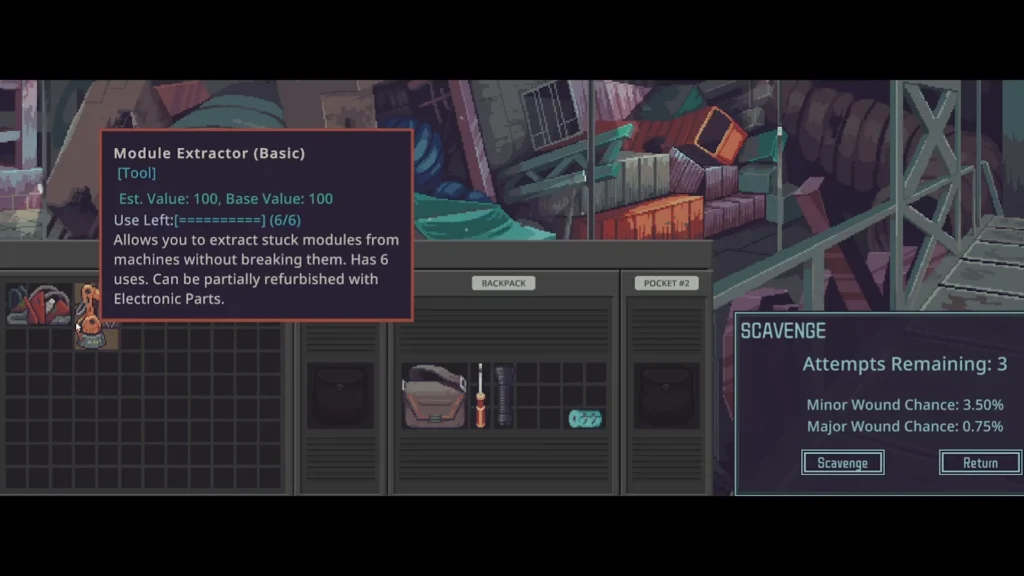
Ah, yes. The annoying stuck modules. Use a Module Extractor to release the stuck modules. There are two version, though: 1. The Basic Module Extractor, which has only 6 uses and 2. The Advanced Module Extractor, which has UNLIMITED uses.
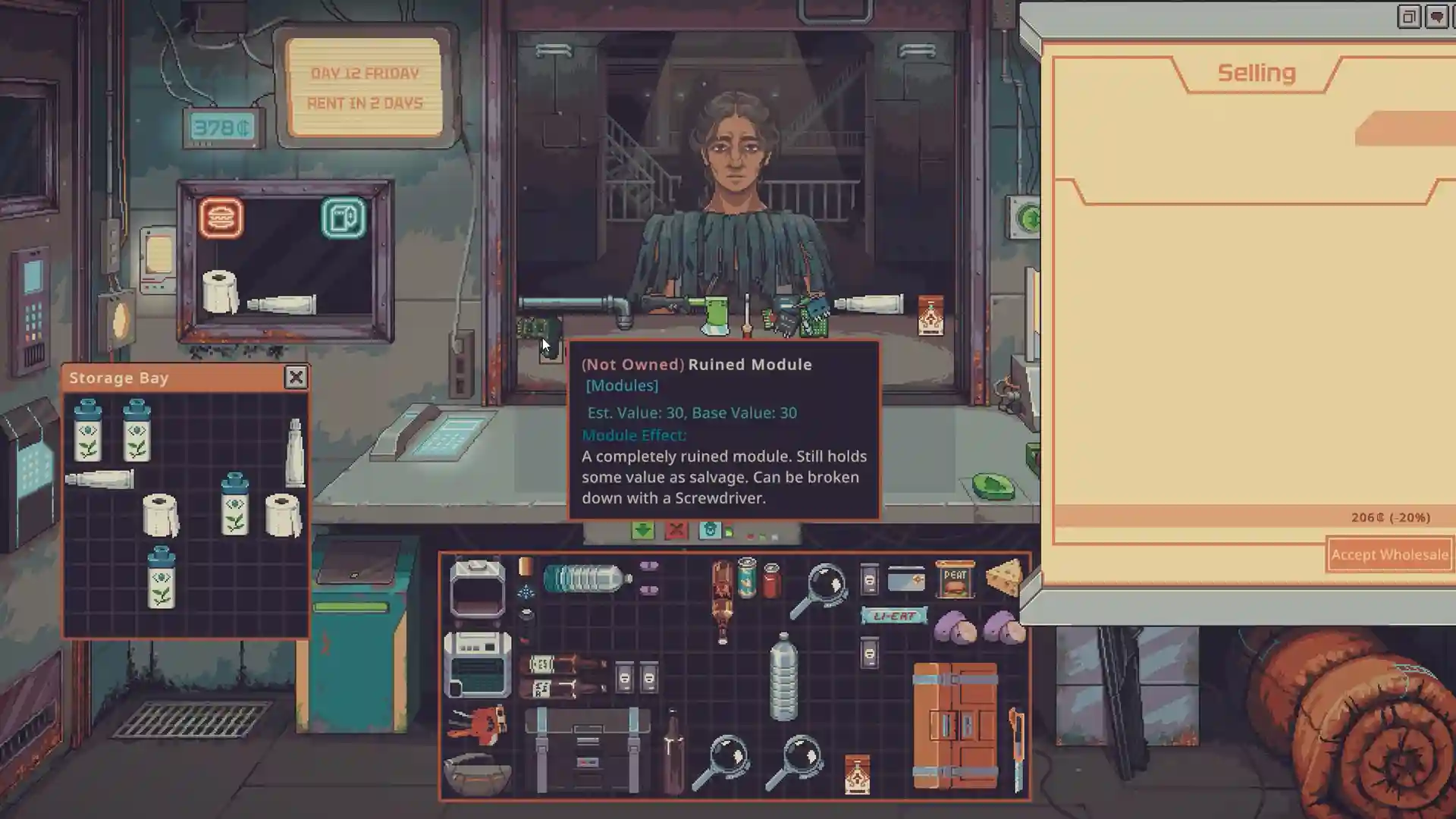
You can refill the basic variant by using an Electric Part on it. Each time you refurbish it, the number of maximum uses is reduced by one. Speaking of Electric Parts, you can use them to turn Corrupted Modules into random standard modules. Ruined Modules can’t be repaired, though. You can dismantle them with a Screwdriver to recover materials.