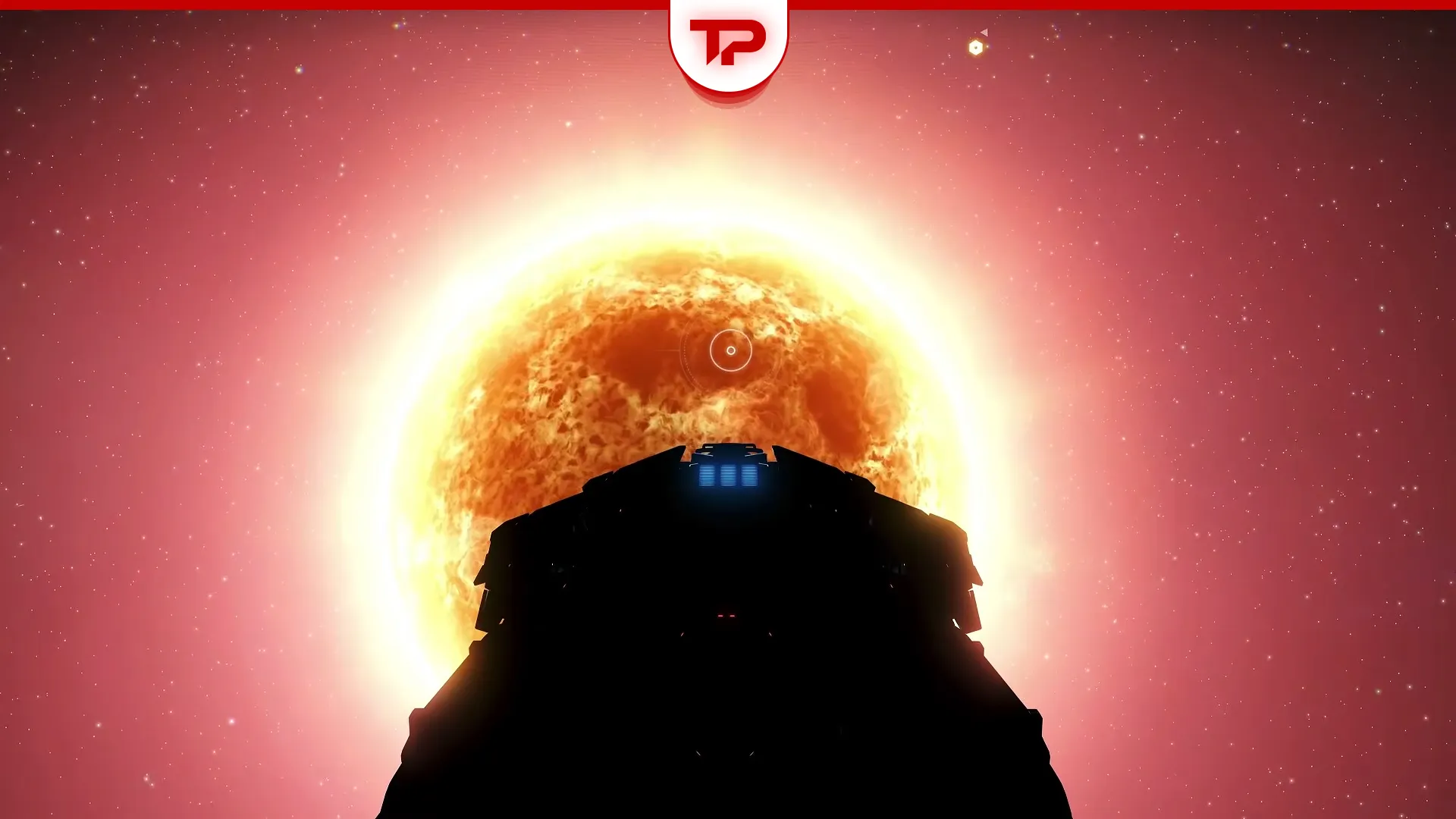


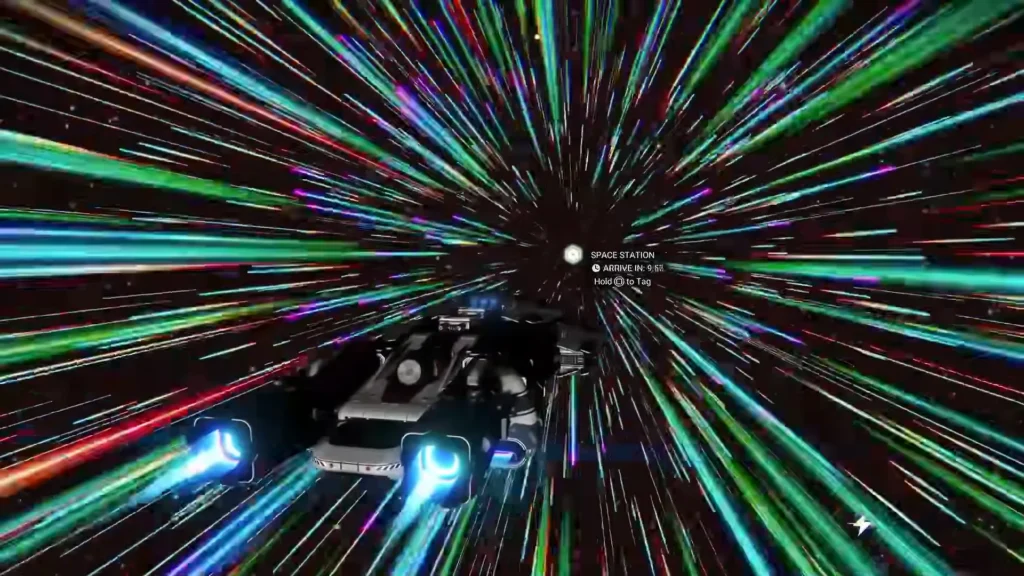
You can fly to the sun now. The NMS Cosmos update turned the star in every system into a real destination, and the only things you need are a Pulse Drive and a serious amount of Tritium. Point the nose at it, hold the pulse, and wait. That wait runs anywhere from three to twenty minutes, and the system you’re in decides which. The game calls it the system star. Everyone else calls it the sun. Same thing, same trip.
At the end you get a discovery popup and one of the best views in the game. That’s it. You can’t land on a star, and if you push past the point where your Pulse Drive cuts out, heat damage will drain your shield and kill you.
What the Article Covers:
Here are some facts you need to know:
| Question | Short answer |
|---|---|
| Can you actually reach it? | Yes, in every system, on any ship |
| What do you need? | Pulse Drive and a full stack of Tritium |
| How long? | Roughly 3–20 minutes, depends on the system |
| Can you land on it? | No |
| Is there a reward? | A discovery, and the Icarus title if you die there |
| Is there anything to do? | Not yet |
What NMS Cosmos changed about stars
For ten years the star was part of the skybox. Players aimed at it, flew for an hour, and it never got any bigger. Ask on any forum before this week and the answer was that stars aren’t real objects in this game.
Hello Games made them real in Update 7.0. The patch notes describe stars as points of interest you can fly to if you feel like it, with a fairly clear warning that they’ll kill you.
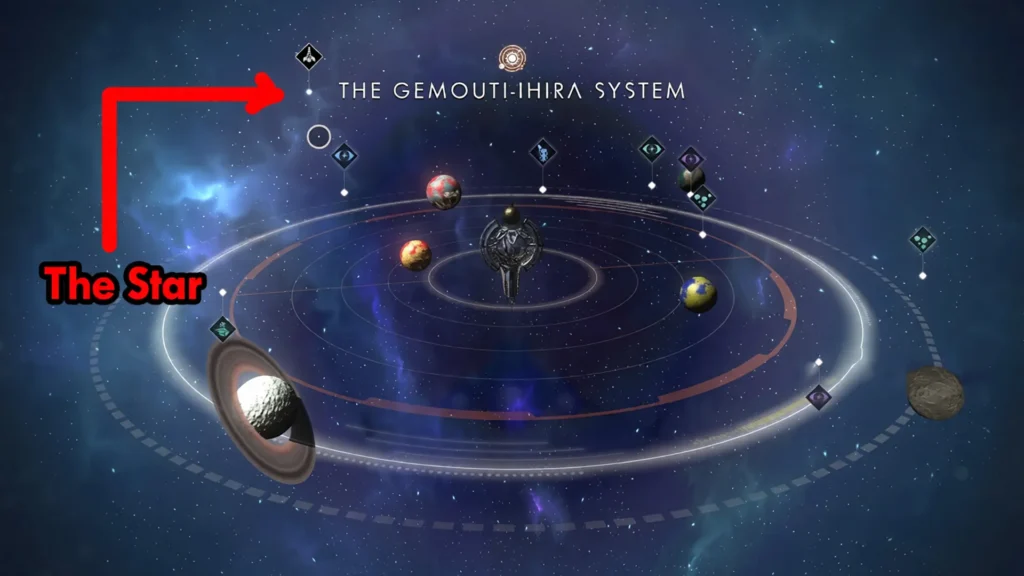
The star isn’t in the middle of the system. The new Star System Map centres on the Space Station, and the star sits far outside the mapped area entirely. When you fly out there, your ship marker crawls along outside the boundary of the map. The distance readout from the Space Station comes back at around 32,000 kilounits, which works out to roughly 32 million units. So the map isn’t lying to you. The star was just never part of that cluster.
What you need before you go
- Tritium, and more than you think. One player made the run carrying close to 2000 and still had to top up.
- A manual save before you leave.
- An empty cargo hold, or at least nothing you’d miss.
- Never attempt this on Permadeath.
If you run dry halfway there, you can summon the Space Anomaly and refuel from it. That trick has saved a few people who left without checking their fuel first.
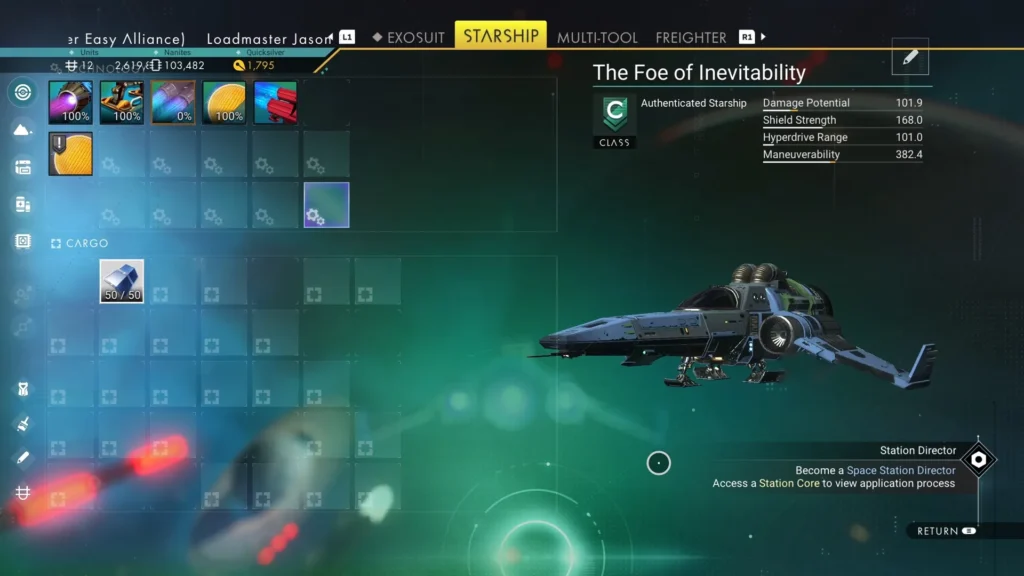
How to get to the star in NMS
- Open the Quick Menu and pull up the Star System Map.
- Find the star. It won’t be inside the cluster with your planets, so look past the edge of the map.
- Mark it, which turns on navigational assistance and lines up your ship for you.
- Hold the Pulse Drive and leave it running.
- Refuel whenever the engine runs low. One report needed six separate recharges on a single trip.
You’ll know you arrived because the game throws a discovery notification at you.
How long the trip takes
A better ship doesn’t get you there faster. A C-class with zero upgrades clocked 18 minutes flat. A fully upgraded S-class Living Ship took about 20. Upgrades change how much fuel you burn, not how fast the pulse moves you.
| Ship | Reported time |
|---|---|
| C-class, no upgrades | 18 minutes |
| S-class Living Ship, fully upgraded | ~20 minutes |
| Corvette | ~10 minutes |
| Assorted player reports | 8, 15, and 15–20 minutes |
| Shortest reported | 3–5 minutes |
The spread is real and it confuses people. The reason is the system, not your build. Some stars sit much further out than others, so one traveller finishes in four minutes and the next is still pulsing twenty minutes later.
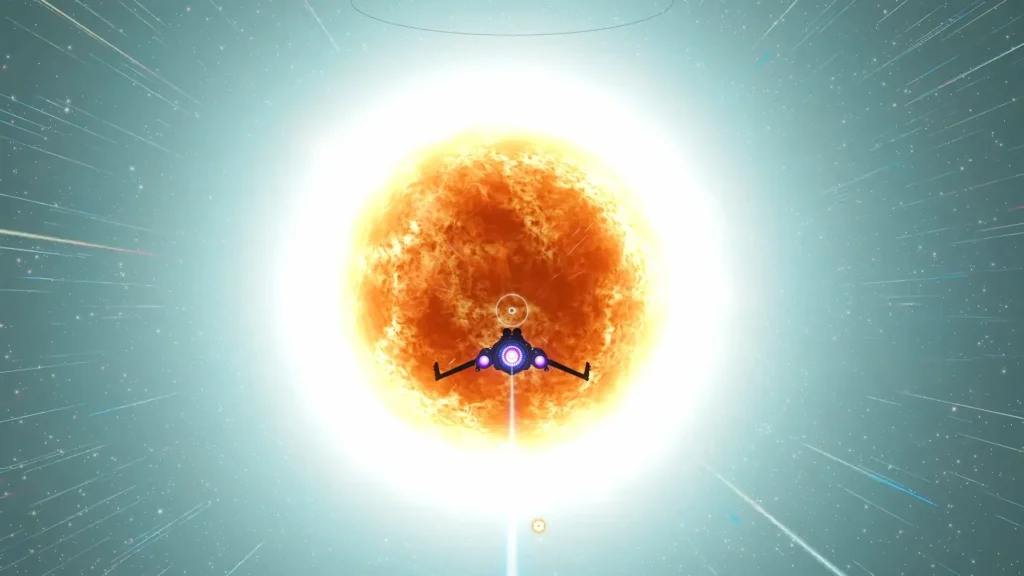
What happens when you get close
Your Pulse Drive stops working first. At a certain range it refuses to engage and you’re left with the regular boost, which moves you at around 3500 units per second. Compared to a pulse, that feels like crawling.
Then the heat starts. The first hits are tiny, barely a scratch on the shield bar, and they read more like a warning than actual damage. Keep going and you get “Extreme heat damage detected” and the shield begins to drop properly. Push further and it empties in a couple of seconds. There’s a point where the drain outruns your recharge rate no matter how many batteries you’re holding, and once you’re there, you’re dead.
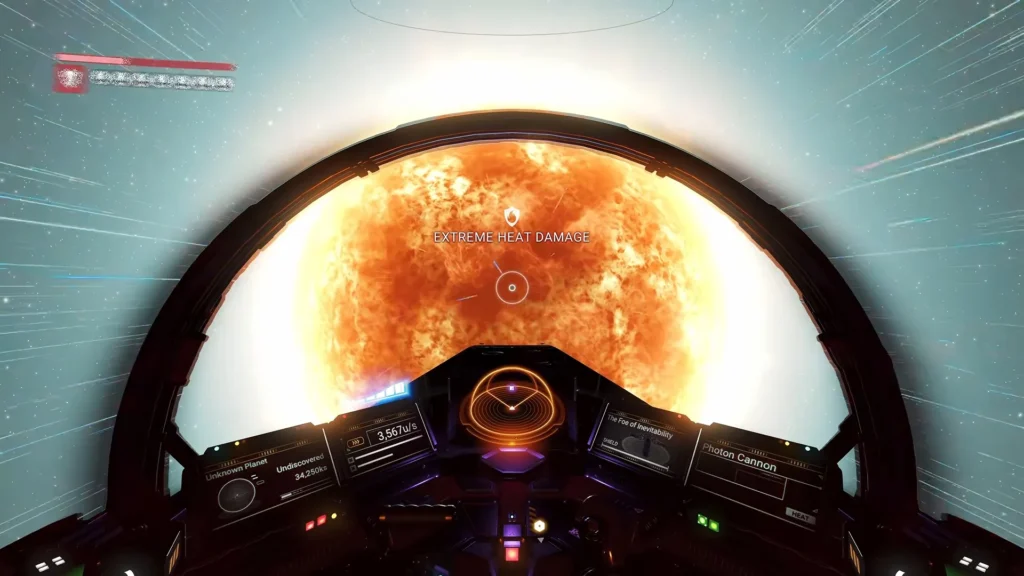
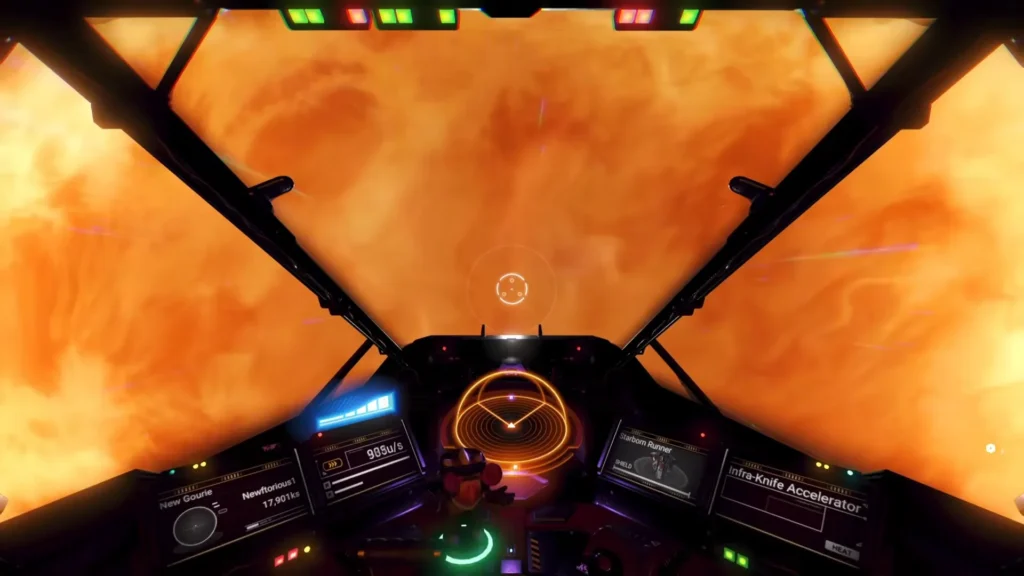
Can you touch it? On Normal, no. You’ll die well before the star fills your screen. In Creative there’s no damage at all, and you pass straight through the model, because there’s no surface under it. A few players claim that if you keep repairing your shield you eventually stop against something solid. Others report an invisible wall. Nobody has pinned this down yet, and I wouldn’t plan a session around finding out.
The colour is a small disappointment. Blue and green stars turn out yellow up close, with only a faint tint of the original colour around them. Most people read it as a bug rather than a design choice, and I hope they’re right.
If you die at the star
| Mode | What happens |
|---|---|
| Creative | No damage at all |
| Normal / Relaxed | You die and leave a grave, your ship survives |
| Survival | Everything in your cargo is destroyed |
| Permadeath | Your save is gone |
The grave is the nasty part. It drops where you died, which means it sits out by the star, roughly the same long flight away. You’d have to redo the entire trip to collect your stuff, and the heat will probably kill you again when you arrive. Write off whatever you were carrying.
A teleport out isn’t a clean escape either. I saw a player jumped through, died anyway, and respawned on a random planet with every module on their ship and Exosuit broken.
The Icarus title
Death by stellar heat unlocks a title called Icarus. You’ll find it under the Appearance Modifier with the rest of your titles and banners.
The hard part is actually finding it. The title list has no search and no sensible order, so you’ll scroll through pages hunting for one word. Titles appear to be account-bound rather than tied to a single save, going by players who have titles on saves that never earned them.
If you’re protective of a no-death save, do the run during the expedition or on a throwaway save instead.
Binary and trinary systems
Multiple stars are handled individually. You fly to each one separately, and one player confirmed reaching two of the three in a trinary system before giving up on the last. Same rules apply to each one, and the heat doesn’t get any kinder because the system happens to have more than one.
Is it worth doing?
Honestly, once. There’s no fuel scooping and no mission attached to the star. You fly for fifteen minutes to look at something and then fly back.
I’d still do it. The star looks incredible up close, and it settles a question players have been asking since 2016. A lot of people came away disappointed that there’s nothing out there to actually do, which is fair, and I suspect Hello Games will hang something on it later.
When it doesn’t seem to be working
The most common complaint right now is “I’ve been flying for fifteen minutes and it’s not getting closer.” It is. The growth is so gradual that it reads as no movement at all for the first several minutes. Hold your line and keep pulsing.
Your ship gets noticeably jittery at extreme distances from the system centre, which is unsettling but harmless. And if you run out of Tritium in open space with no asteroids nearby, you’re stranded until you call the Anomaly.