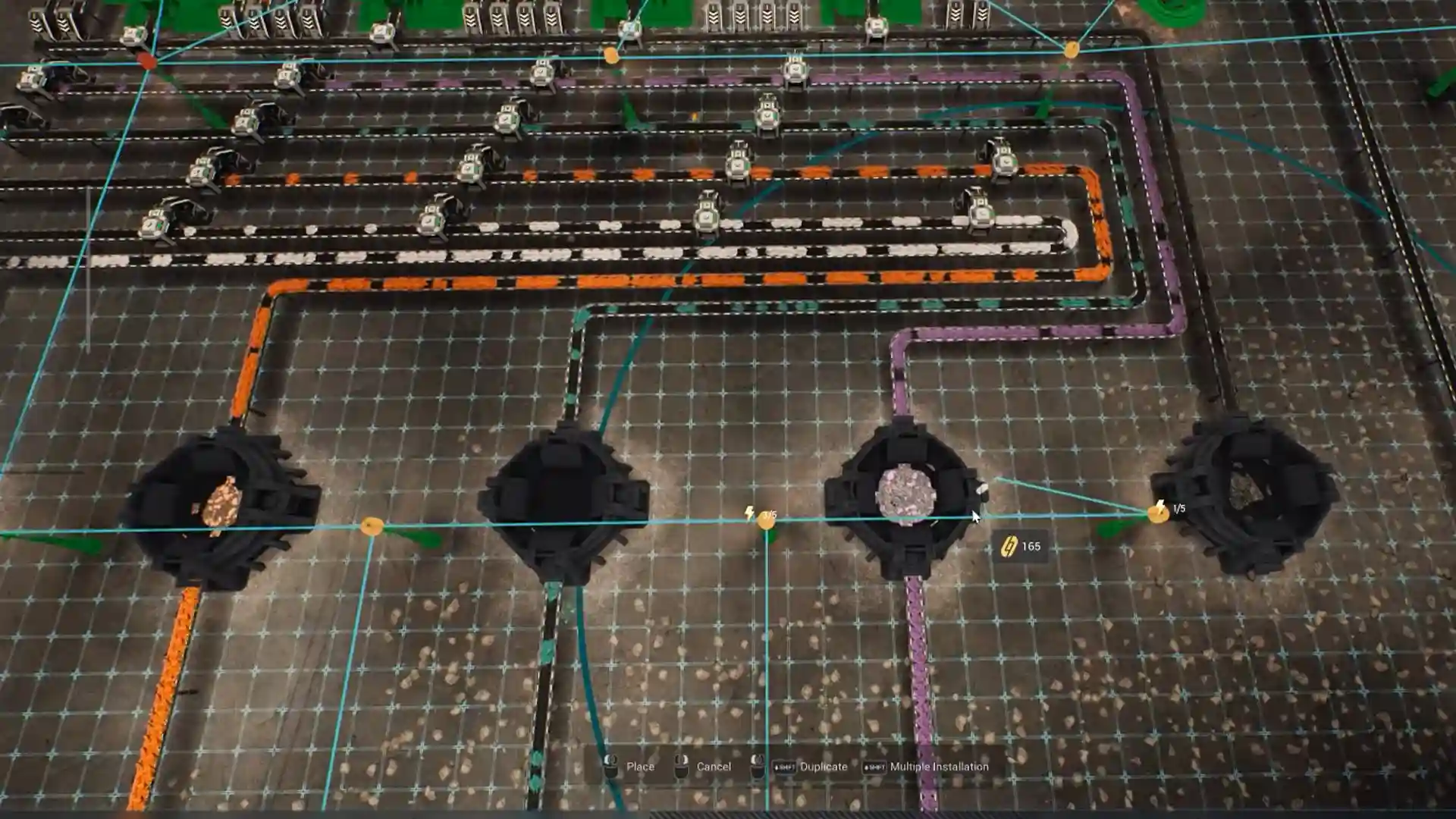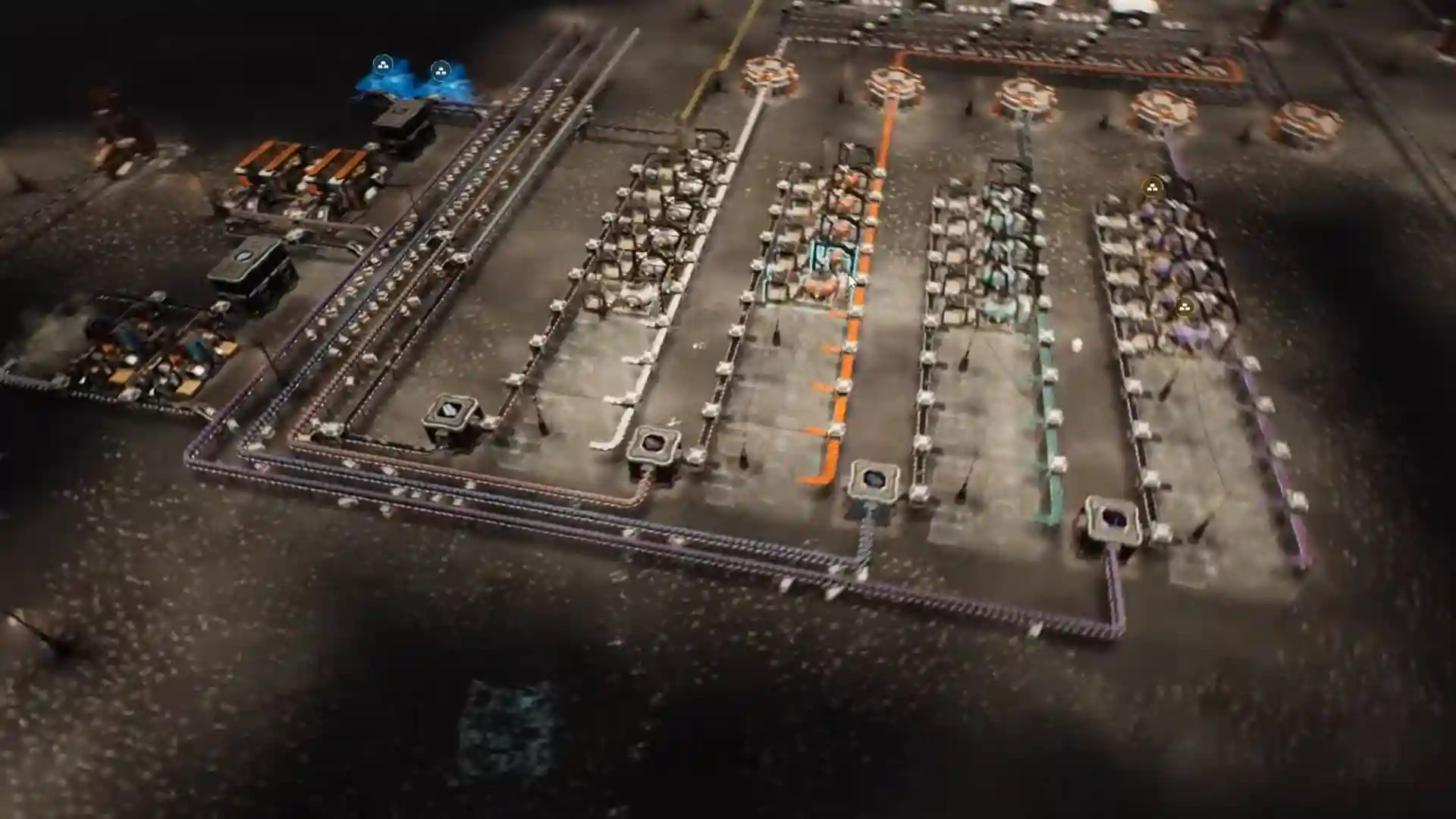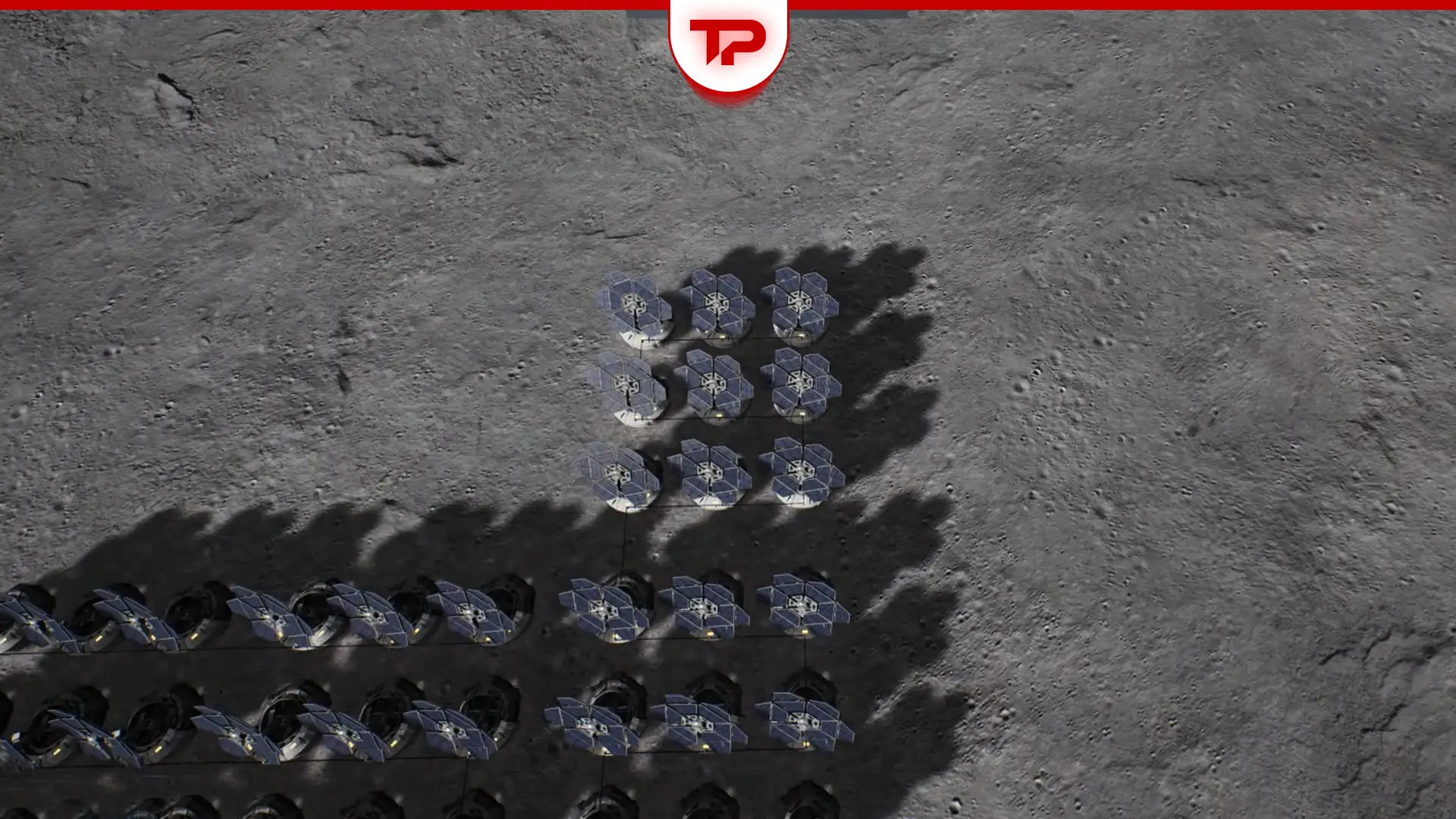


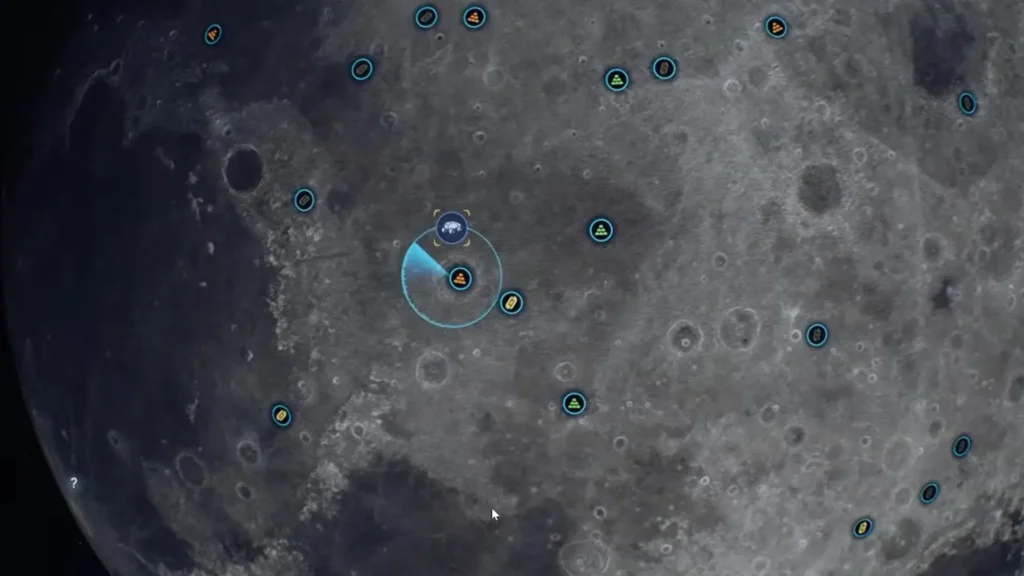
Power is one of the first things that can completely stop your moon base in The Crust. No power means no production, no drones doing their jobs and sometimes even your CPU capacity acting weird.
Once you understand how it works, keeping the lights (and factories) on becomes second nature. Here’s everything about power in the Crust.
What You’ll Read:
Understanding the Day/Night Cycle on the Moon
On the moon, the sun is your main power source. You get roughly two weeks of sunlight followed by roughly two weeks of darkness. During the day your solar panels generate power. During the night they do nothing, so you have to live entirely off whatever you stored in batteries.
That long night is why power management feels so important. Run out halfway through the dark period and almost everything freezes until the sun comes back up.
Getting Started with Power
The moment your first cargo pods land, power should be one of the very first things you set up. Without it, nothing else works properly.
You start with almost nothing, so don’t go crazy building huge solar farms right away. Your early materials (steel, silicon, concrete) are limited until you can produce them yourself. Build just enough to survive the first day and night cycle.
Building Your First Power Setup
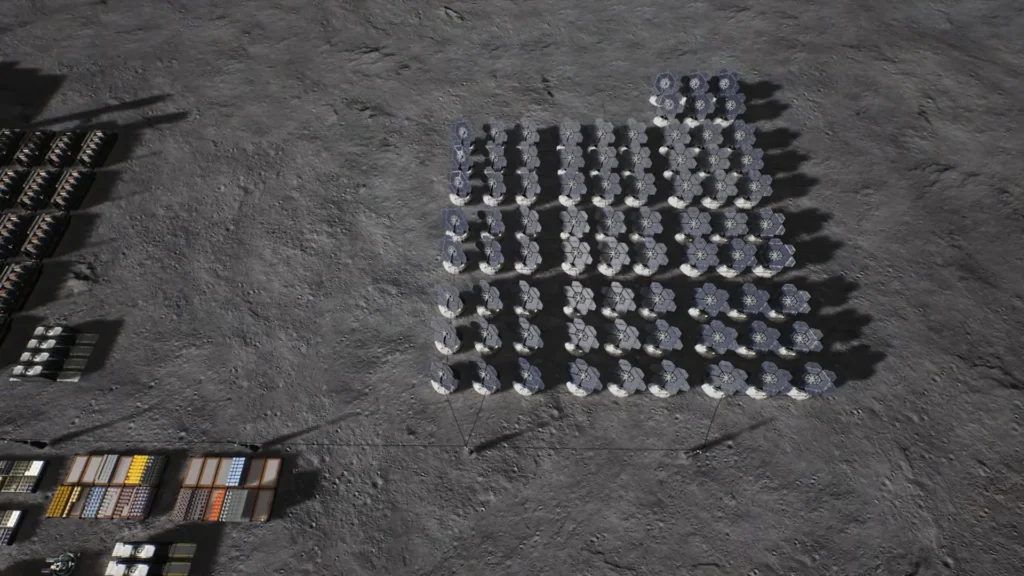
A solid starting setup that shows up across the videos is:
- About six small solar panels
- Four batteries
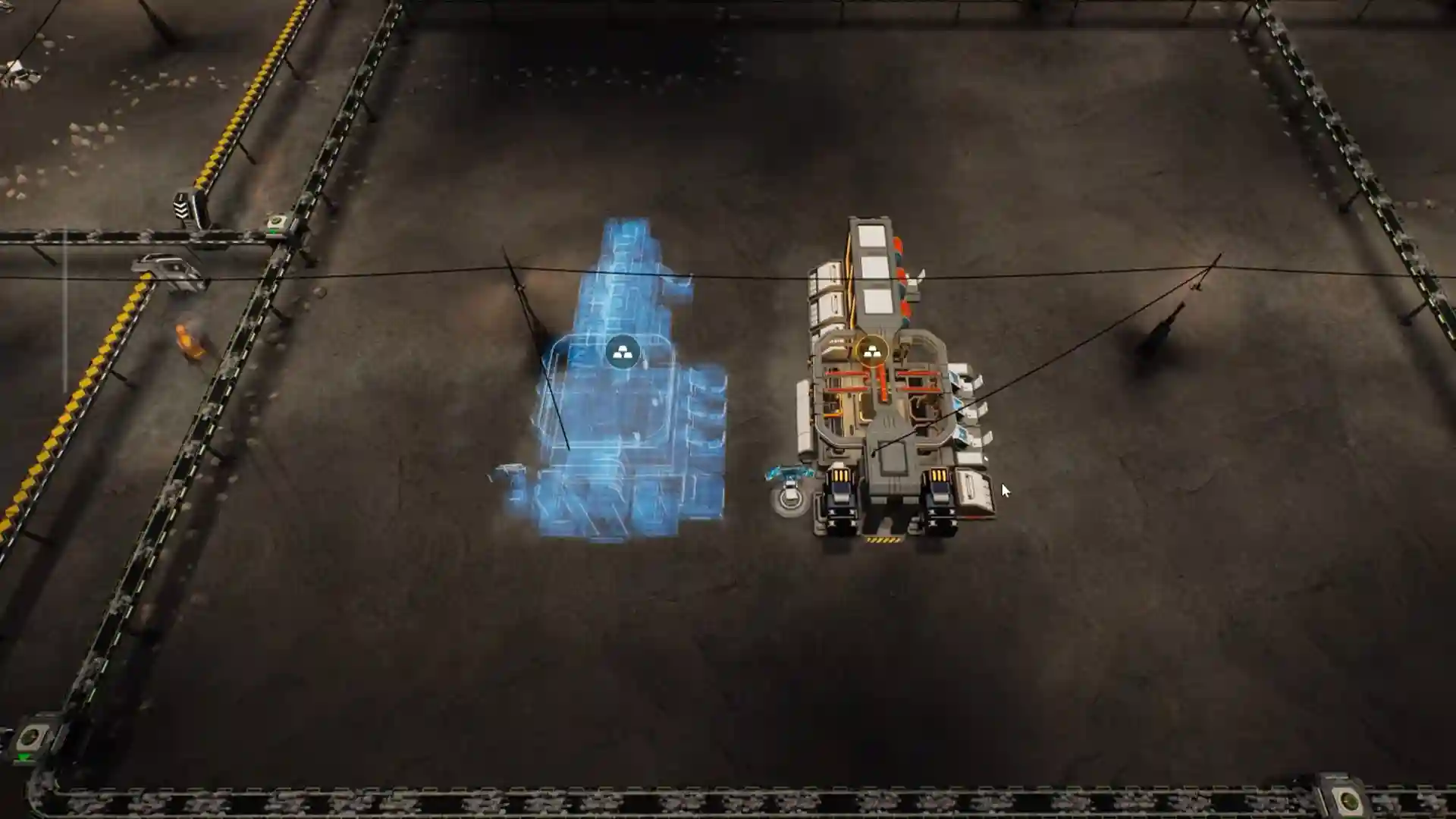
Place them close to the elevator. You need to connect everything to the elevator with wires or electric poles so the power can reach the rest of your base. The elevator is also convenient for repairs.
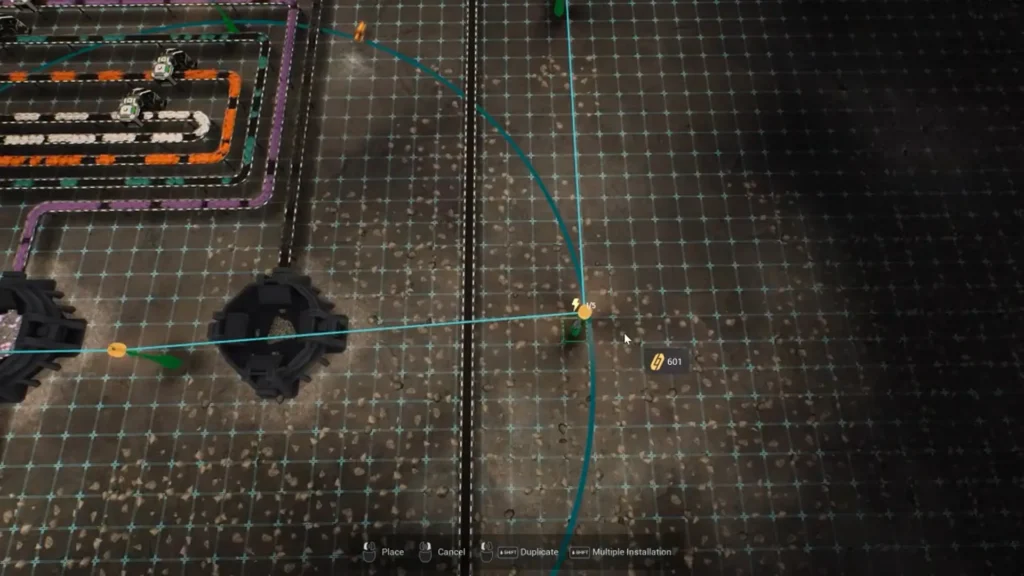
When connecting poles and wires, leave the last connection slot free on each pole. That way you can easily expand the grid later without tearing things apart. The UI can be a bit fiddly sometimes, if the wire won’t snap where you want it, zoom in or change the camera angle.
This modest setup is enough to keep your early machines running through the first night while you start digging and producing basic materials.
Batteries: Your Nighttime Lifeline
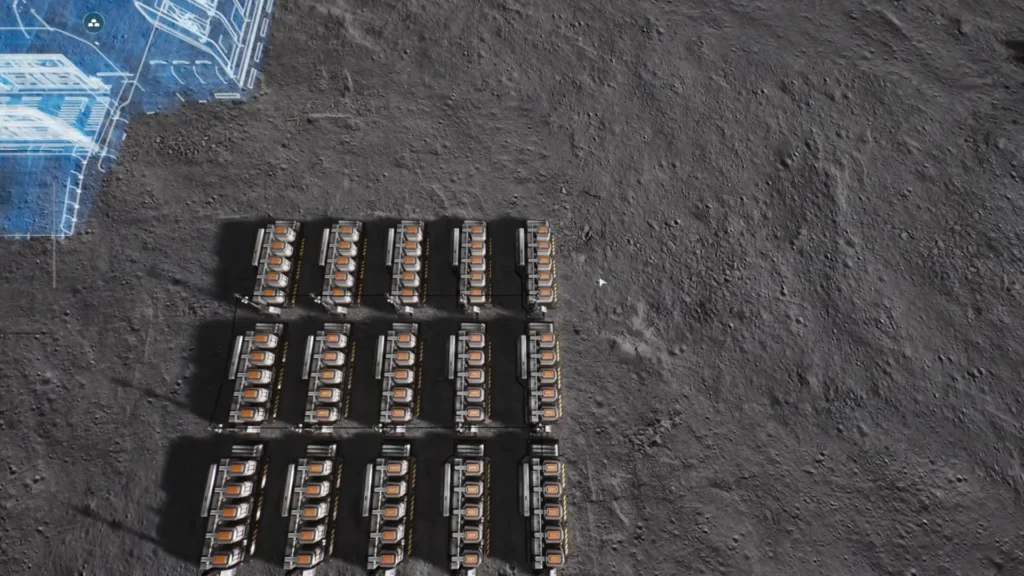
Solar panels only work when the sun is up. Batteries are what keep your base alive in the dark.
Early on you use small batteries. Later you unlock large batteries, which are a big upgrade. One play session notes that large batteries have roughly four times the output and capacity of the small ones while only costing a bit more CPU. Most players eventually deconstruct the small batteries and replace them with large ones once they can afford it.
The golden rule is simple: generate more power during the day than you use, so the batteries fill up completely before night falls. If your batteries are only half full when the sun sets, you’re probably going to have a bad time halfway through the night.
Expanding the Power Grid as Your Base Grows
Power poles and wires form the grid that delivers electricity. If sections aren’t properly connected you can end up with multiple separate power grids. One part of the base has power while another sits in the dark. Always double-check connections when you expand.
A smart habit is to prioritize solar panels and poles in the build queue. Use the radial menu or priority settings so construction drones finish the power infrastructure first. There’s nothing worse than having shiny new factories that can’t run because the poles aren’t finished yet.
Monitoring Power and Avoiding Shortages
The game gives you clear numbers for how much power you have stored and how many days until the next sunrise or sunset. Get in the habit of checking these regularly, especially when you’re about to expand.
Common warning signs players watch for:
- Power lasting fewer days than the remaining night
- Batteries dropping fast after sunset
- Sudden energy shortage messages when new buildings come online
If you’re running low, you have a few options: Build more solar panels (and prioritize them) and add more batteries. You can also temporarily turn off non-essential buildings.
Upgrading Power as You Grow
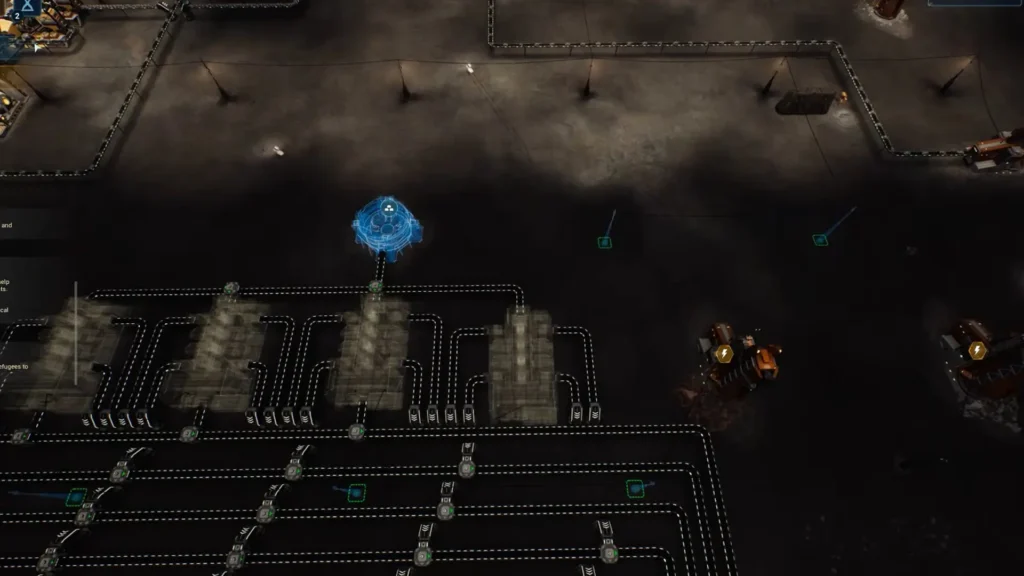
As your base gets bigger, the early small setup won’t cut it. Research unlocks better solar panels and large batteries.
Later in the game you can unlock a fuel factory and fuel generators. These give you an alternative power source that doesn’t rely only on the sun, but they aren’t available at the start and need their own production chain.
When I redesign my entire production layout, I almost always expand power at the same time. More furnaces, more extractors and more storage mean higher power draw, so the solar farm and battery bank have to grow with them.
Common Power Problems and Quick Fixes
Here are the issues that keep showing in every play and the way I deal with them:
- Ran out of power at night: Build more solar panels and large batteries next day. Prioritize them hard.
- CPU not counting properly: Sometimes the game won’t recognize new CPU capacity if the power grid is down. Fix the electricity first.
- Disconnected grid: Trace the wires and poles. A missing connection creates a separate power network.
- Not enough materials for more panels: Complete contracts for credits and research, then use the market if you’re short on critical building materials.
- Expanding too fast: Pause or slow the game, check remaining power days and add capacity before placing a bunch of new buildings.
Advanced Tips from My Playthroughs
Firstly, keep some spare solar-generation and battery capacity so normal expansion doesn’t immediately push you into a shortage.
When you deconstruct old small batteries, do it carefully so you don’t lose stored energy or create grid problems. Surface buildings and underground sections both need power. The elevator is the main bridge between them.
Drones and construction priority matter a lot. If drones are busy hauling regolith instead of building poles, your power expansion stalls.
And finally, cargo docks and improved logistics reduce manual hauling and make later expansion easier.
Power in The Crust is not complicated once you respect the long lunar night. Generate surplus during the day, store it in batteries, keep expanding the grid, and never let your stored power drop below the length of the coming night.