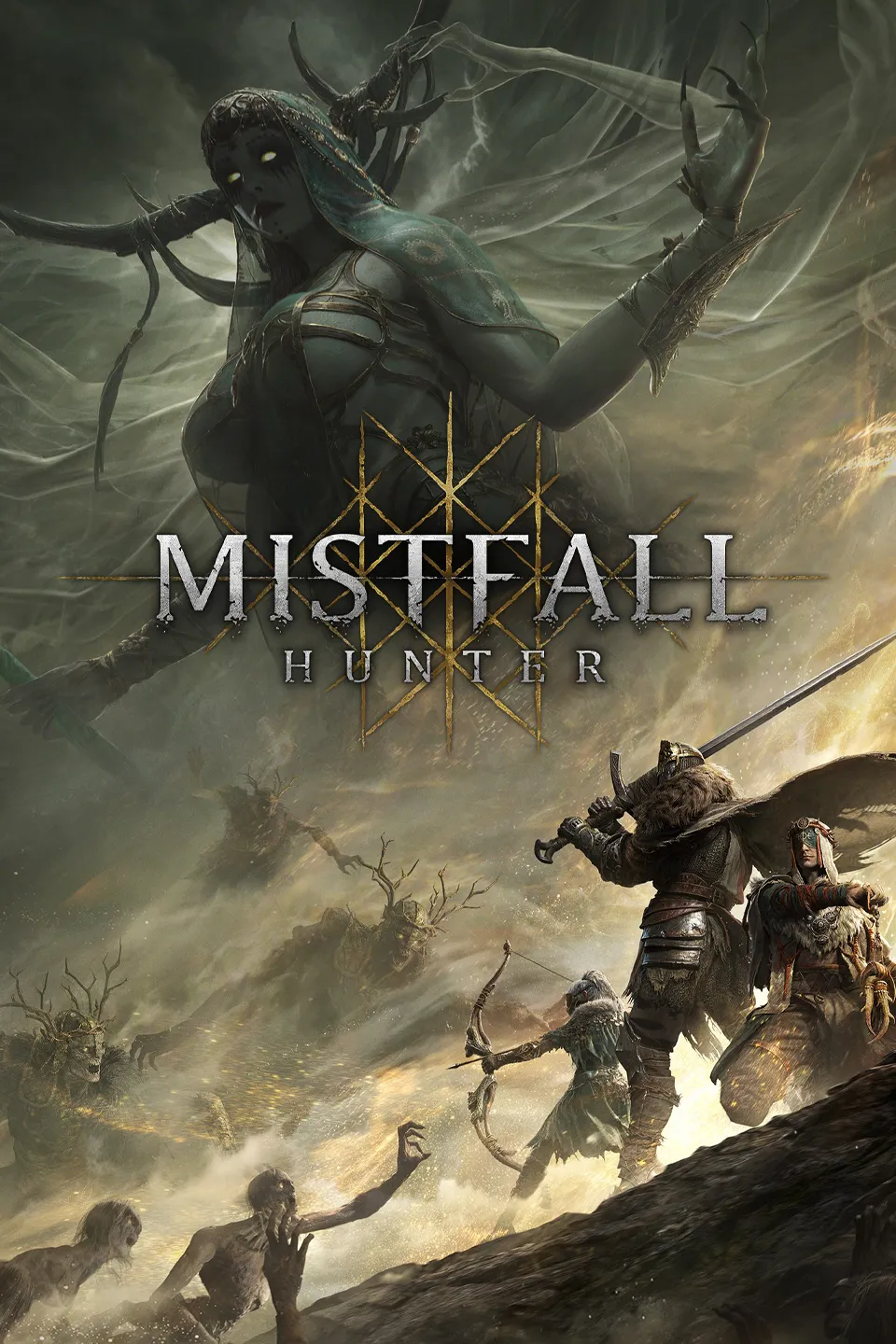


Mistfall Hunter went live on July 30, 2026, and if you have never played an extraction game before, your first hour is going to hurt. You load in, a monster or another player kills you, and everything you were carrying is gone with no explanation. That is normal. I tried to covers how to play Mistfall Hunter from your first login to your first clean extraction, plus the camp habits that stop you falling behind while you sleep.
What You Find in This Guide:
What Mistfall Hunter Actually Is
It is an extraction game with swords and magic instead of guns. You pick one of six classes, equip them with gear, and drop into a map full of monsters, chests, and other players (the game calls all of you Gyldhunters). You grab as much good loot as you can, then you leave.
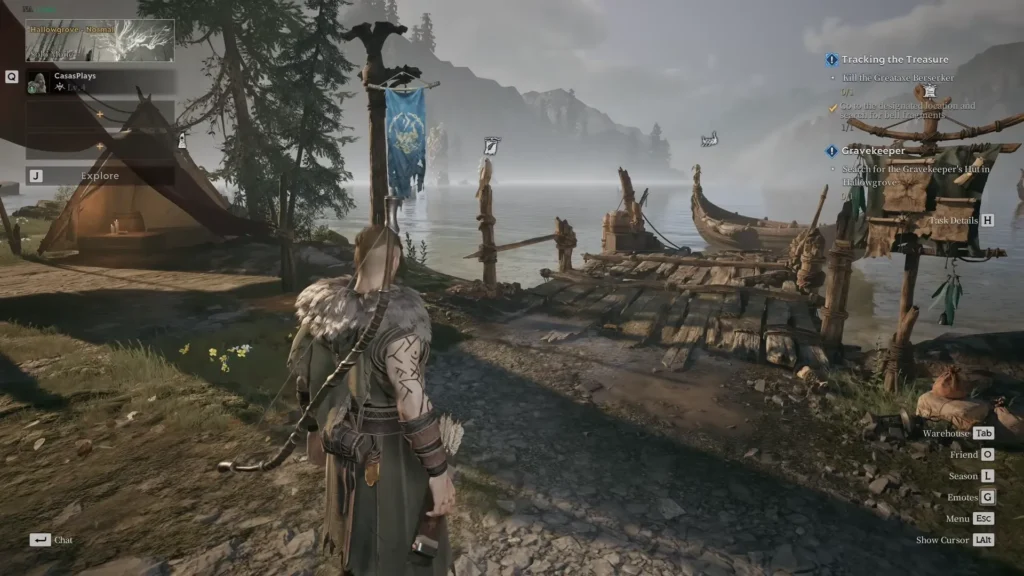
That last part is the whole game. If you die, you lose your bag and the equipment you walked in with. If you extract, everything goes into your warehouse and gets spent on upgrading your camp, which makes your next run easier. Win, and you snowball. Lose, and you start the next run in cheap gear.
If you and one friend want to play together without a stranger, queue trios and turn off fill. You go in a player down, which is a real handicap, but you still get the full three quest reward chests.
The Two Maps and Which One to Start On
There are two maps at launch, Hallowgrove and Brandrgarde, and each has its own difficulty settings (the game calls this Gyldening Intensity). The setting controls what gear you can bring in and how nasty the map is.
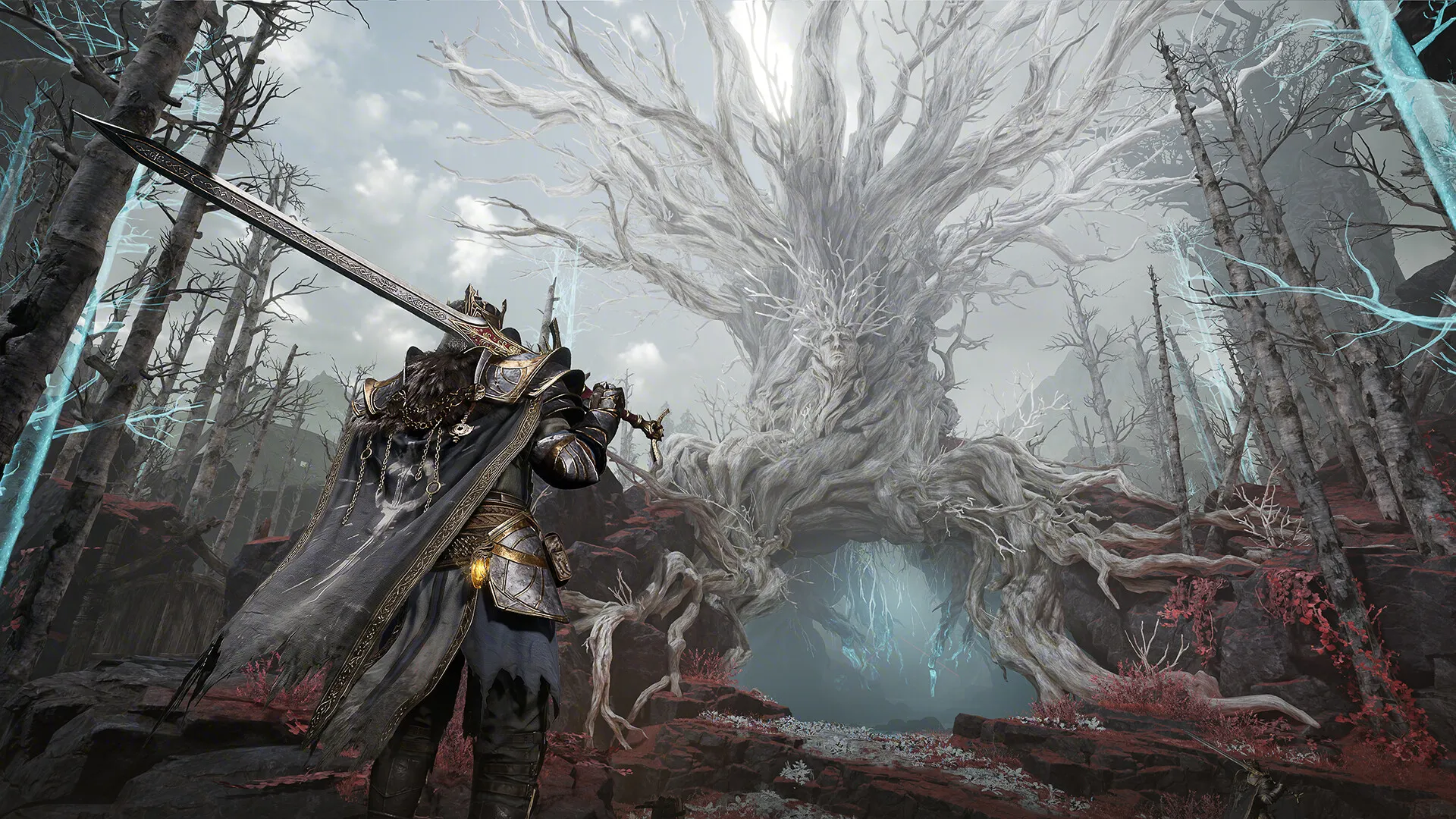
Hallowgrove has a corrupted valley cutting through the middle and Norse ruins scattered around the edges. There is no shrinking circle here. You just have a timer.
Brandrgarde feels like the same world but plays nothing like it. It is built vertically, so you are constantly changing levels, and the spaces are tighter. This map does use a collapsing mist that closes in over several stages, battle royale style.
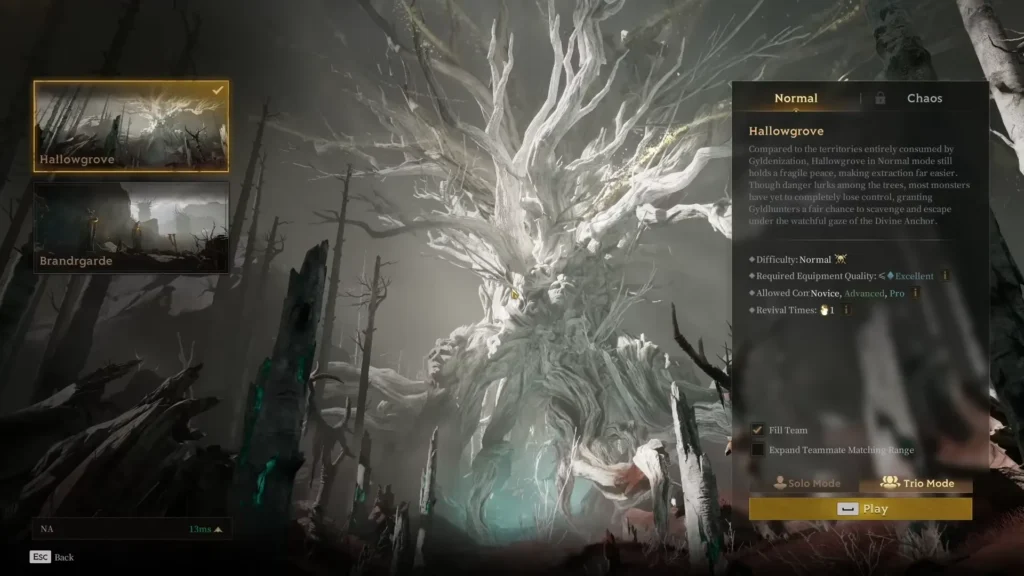
Here is what you need to queue for each one:
| Map and Difficulty | Clearance Requirement (gear value) | Starting Gear Limit | Combat Bags Allowed |
| Hallowgrove Normal | None | Excellent (blue) | Novice, Advanced, Pro |
| Hallowgrove Chaos | 800 Gyldenblod or more | Holy | Advanced, Pro, Elite |
| Brandrgarde Normal | 300 Gyldenblod or more | Epic (purple) | Novice, Advanced, Pro, Elite |
| Brandrgarde Cataclysm | 2,500 Gyldenblod or more | Holy | Elite only |
Combat bags, by the way, are free pre-made sets of gear you get from the scavenger squad and elsewhere. They are how you play without risking anything you care about.
My advice: stay in Hallowgrove until you have finished every quest on it. No circle pressure, easier enemies, simpler extraction. Some quests will try to pull you over to Brandrgarde early. Ignore them for now.
Choosing Your First Class
There are six classes, and you can switch between them cheaply while you are low level, so do not agonize over this.
- Mercenary
- Sorcerer
- Blackarrow
- Shadowstrix
- Seer
- Withered Knight
One thing that confuses new players: your skills are attached to your weapon, not to your class. If you want the full breakdown of what each class gets, we covered every one of them in our Mistfall Hunter skills guide.
Your Camp Checklist Before Every Run
Do these three things every single time you queue. They take about a minute and most new players skip them.
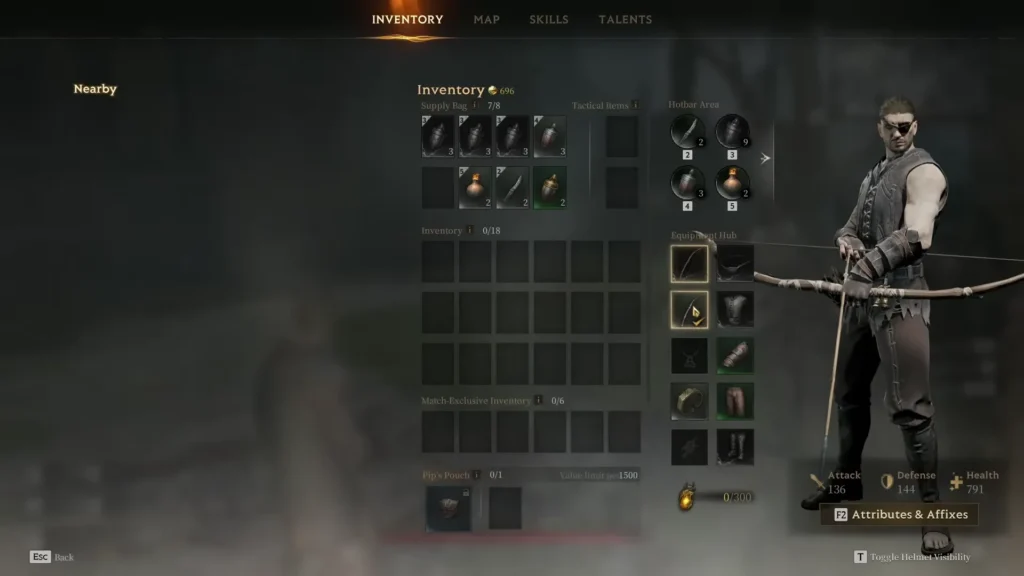
- Drink your Victory Wine. Talk to Sigrid at the tavern. The basic tonic is free and gives you buffs for your next run only. Skipping it means going in weaker for no reason at all. There are four brews. Mortal Tonic is free; Hero’s Ale, Warblood and Gods’ Brew cost materials and unlock as you upgrade the Tavern. Better brew, more buffs, all lasting until the end of your next run.5
- Send out the scavenger squad. They go off for several hours and come back with materials, gear, and combat bags. There is a free expedition, so forgetting to start one before bed means you wake up behind. Treat it as your last task of the night.
- Repair your gear. Equipment has durability and it does degrade. The workshop handles it.
Your First Run, Step by Step
When you load in, the first decision is where to go. Look at your map for blue exclamation points. Those are quests, and they are the best opening move you can make.
Quests are simple: pick one up, travel to the spot, and do the thing. Collect items scattered around an area, kill a set number of enemies, or pay your respects at a vista. Solo runs give one reward chest, trios give three.
Each quest can only be done once per player or party. If you want a fight, go there. If you want to avoid people, go anywhere else.
While you are moving, keep these in mind:
- Fill your Gyldenblod jar. Gyldenblod is the currency you spend on the auction house, repairs, and crafting. It drops from enemies, and a corpse with a glowing goopy blob on it has some. Your jar has a cap set by your Gyldenblod Pool level, and you want it full before you leave.
- Loot zones are circled in gold. Best loot on the map, but also more enemies and more players hunting the same thing.
- Purple-marked enemies unlock chests. If a chest will not open, try it anyway and watch for a purple beam shooting off toward a nearby enemy. Kill that enemy and the chest opens. These are usually worth the detour.
- Use Pip’s Pouch. Whatever you put in this small safe pocket stays with you even if you die without extracting. However there’s a value cap and you cannot put very valuable items in there. (Also worth knowing that whatever is on your Keychain also survives death)
- Favorite the materials you need. Back at camp you can flag specific materials, which puts a little marker on their icon when you find them mid-run. Very useful when you are farming for one particular upgrade.
Combat Basics You Actually Need
There is no mana. Energy is what your skills and actions spend, and running dry leaves you Exhausted for a moment. Stamina is separate and powers guarding. Dodging spends its own Dodge Energy, which is why dodge still works when Stamina is low. Escape Energy is the one nobody tells you about: you spend it to break out of stuns instead of sitting through them. Bank some. Getting chain-stunned on an empty bar is how new players die to other Gyldhunters.
Breakaway is your panic button. After you take two hits of impact damage close together, a gold icon flashes on screen. Dodge at that moment and you break out of the stagger. It costs no Energy, and dealing or taking damage brings it back faster. Enemies have the same icon, so you can check theirs before committing.
Springhorn and elixirs are not the same thing. You get a fixed number of Springhorn charges per run and they cannot be refilled mid-match, but they heal instantly and reset when you queue again.
Listen for footsteps. Player audio is deliberately boosted, so other Gyldhunters sound much louder and clearer than monsters. If something upstairs sounds like a neighbor stomping around, that is a person. Quieter clanking is just a monster.
How to Extract in Mistfall Hunter
This is where Mistfall Hunter does something genuinely different, and it works differently on each map.
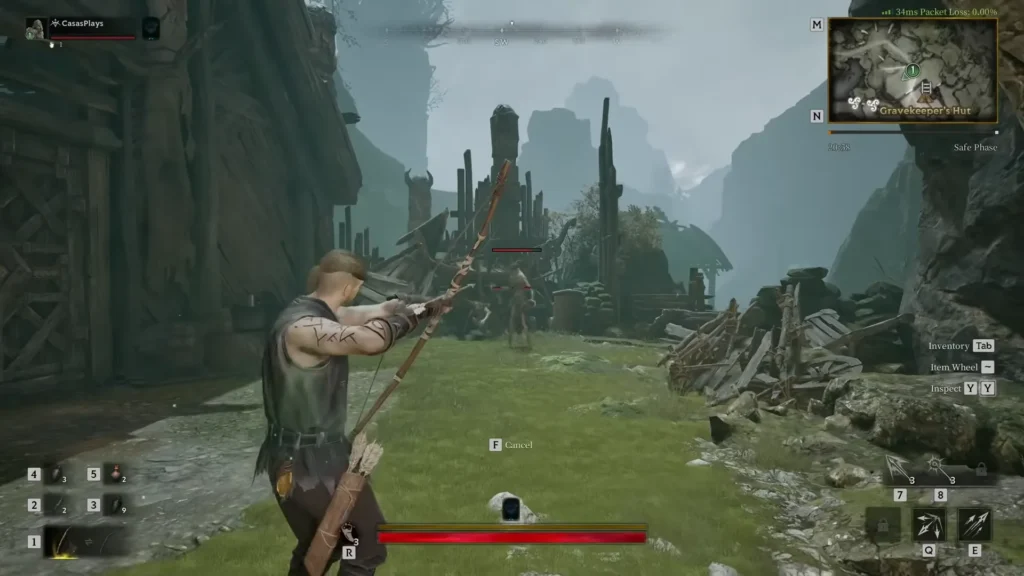
On Hallowgrove, On Hallowgrove, watch the timer in the top right. Until it fills, you are free to explore. When it runs out, the mist collapses all at once instead of creeping in. To get out, find a returning chime, which sprouts up in a few spots after a short while. Interact with it and a woodling spawns at a marked spot nearby. Kill it and it turns into a Soul Tree. Stand near the tree, summon your extraction point, then interact with it to leave. The tree withers after a while, so do not dawdle, and the chime goes on cooldown once used.
On Brandrgarde, On Brandrgarde, there are no chimes. Returner woodlings just spawn randomly around the map. Look for a pulsing blue aura you can briefly see through walls, and listen for the bell sound. Kill one and loot it for a Soul of Return, then summon an extraction point and interact with it. Every party member needs their own, and you can drop yours for teammates. This turns extraction into a real team problem, because the moment you have one you can walk out and leave everyone else behind. In trios, the final circle spawns a woodling carrying three of them, so a bad last fight is not automatically the end.
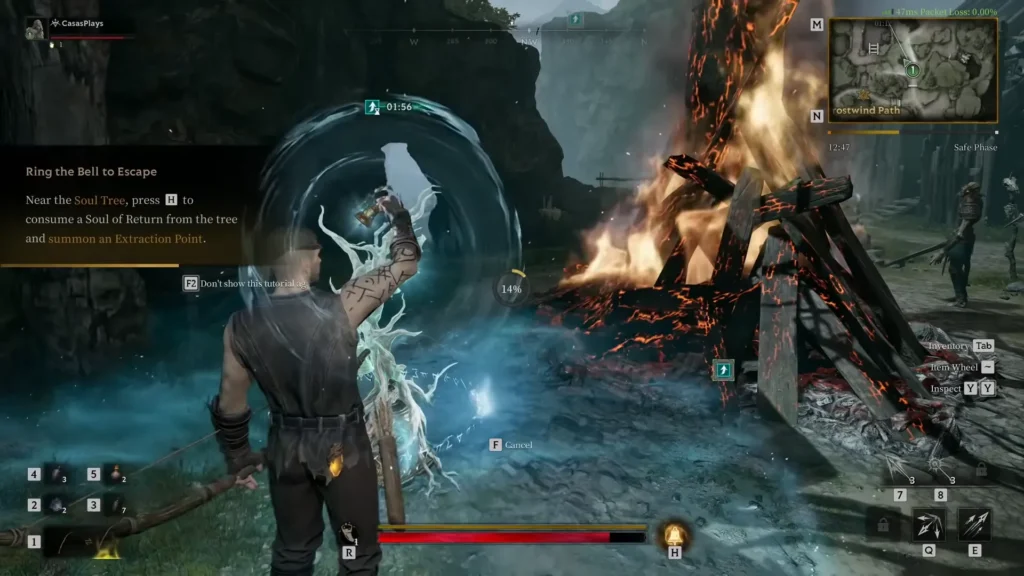
Both maps have a smuggler extract. You pick a couple of items to keep, walk out with your equipment, and lose everything else. Ugly, but it beats losing the lot. There are also Soul Ferries, which take Soul Threads looted off rival Gyldhunters. If you have been winning fights, that is often your fastest way out.
One more rule worth knowing: how you die decides whether the run is over. If a monster or the mist kills you, you drop into soul form and respawn nearby. Walk back to your body, interact with it, and you are alive again. If another player kills you, that is it, no recovery. So do not quit out the second a monster kills you.
That is about reviving yourself. In a trio your teammates can still pick you up, though you only get one revival per run.
What to Upgrade First at Camp
Wind Rest Camp is where everything between runs happens. There is a lot here, so here is the order that matters.
Gyldenblod Pool first. From level three, each upgrade also unlocks a character slot, so you need level seven for one of every class. At level four with a maxed character you can pay Gyldenblod at Dew to level your other characters quickly, which saves a lot of grinding.
Goddess Statue second. Each upgrade increases your Springhorn healing, 10% a level up to level six, then 5% for the last two. The early levels are far better value than the late ones.
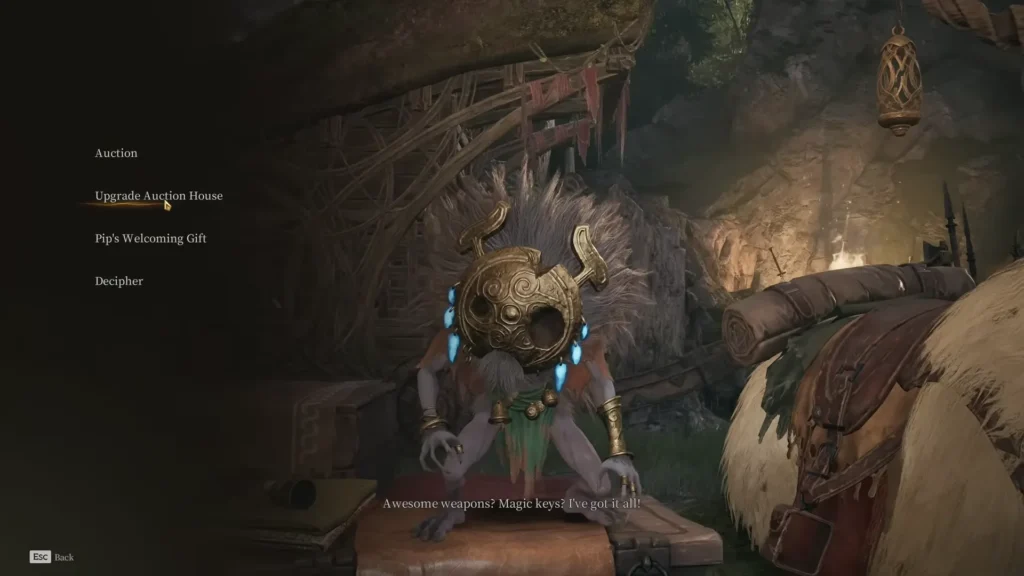
Dew, your fire keeper, sits in front of the pool. This is where you switch class, and where you decipher the ciphers you pick up from events and drops. Which NPC you hand a cipher to changes what you get, so it is worth reading our Ashen Cipher guide before you spend the free one sitting in your mail.
Two smaller things: the collection pedestal is pure showing off, letting you display rare materials on your profile. The soul catch tree generates income while you are offline, and you can improve it with soul catch items.
Path of Glory: The Ranked Mode
Yes, there is ranked. It unlocks at character level six and it is called Path of Glory.
The smart part is that every player switches it on or off independently, and it does not change matchmaking. So you can queue ranked while your friend does not, and you still play together.
You earn points during a match for killing other Gyldhunters, killing monsters, completing tasks, picking up valuable assets, and extracting. How much each action is worth scales with your current tier. Points are only taken away if you fail to extract, and there is a cap on how much you can earn in one match, so there is no reason to keep pushing once you hit it.
Worth knowing if you stay on Hallowgrove: past a certain score you stop earning points on Hallowgrove Normal entirely. That is the game telling you to move up.
Important Note: A shoutout to Casas Plays for making such a comprehensive walkthroughs. I took all the photos from his videos because he set the settings on a higher quality.
That should be enough to get your first few extractions done without throwing your gear away. Which class did you start with, and has anyone actually managed a clean Brandrgarde run yet? Let me know in the comments.
Can I play Mistfall Hunter with just one friend?
Not officially. Queue trios with fill turned off and you will go in as a pair, but you are giving up a teammate. The reward chests stay at three.
Which class is best for beginners?
In my opinion Mercenary. Super armor means your attacks do not get interrupted constantly, which makes the learning curve much gentler. Shadowstrix is the one I would avoid starting on.
Do I need to play ranked?
No. Path of Glory is a toggle and the gameplay is identical either way, so you may as well leave it on for the extra rewards.