

The secret to the Horsey Game best horse isn’t found in a shop or a lucky spawn. It’s built in the CRISPR Lab. If you want a champion that actually wins races instead of just looking “goofy,” you have to dive into the 20 double-stranded helices that make up its genome.
The complete guide to engineering a world-class racer is here, read it carefully, you Rider!
Want to dominate the racetrack in Horsey Game? The secret to the best horse isn’t just breeding, it’s mastering the CRISPR Lab to engineer a perfect genome. In this text, we’ll show you exactly which DNA edits create the fastest, most stable racer by optimizing leg strength, gait efficiency, speed factors, and stability.
Whether you’re a beginner overwhelmed by the 20-helix genome or an experienced player, my suggesting edits will transform your chaotic default horses into consistent winners. Let’s dive in.
The Text:
The CRISPR Mechanics
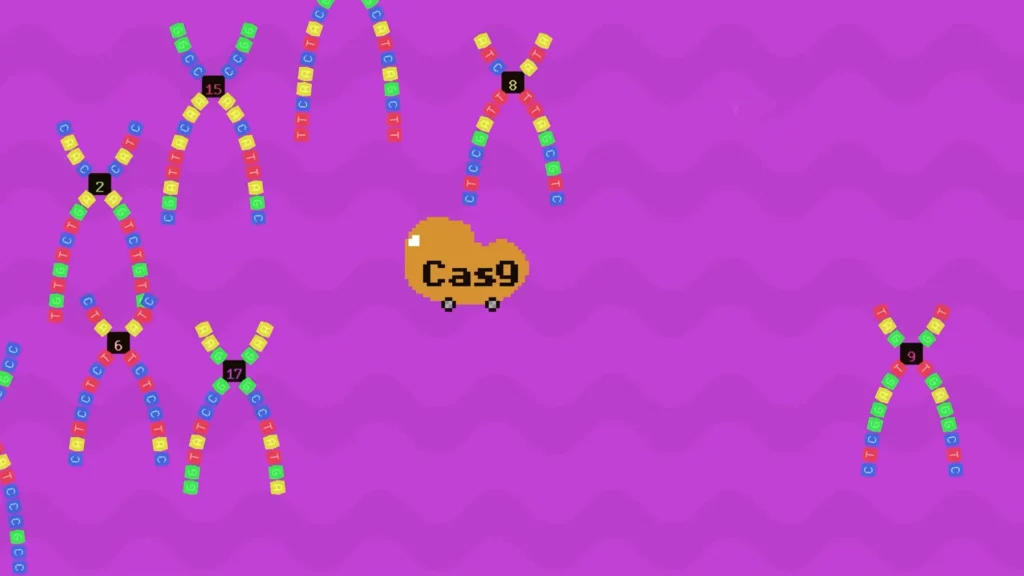
Every horse is defined by a genome of 20 helices (numbered 0–19). In the CRISPR Lab, you can “zip” and “unzip” these to swap individual bases: A (Yellow), T (Red), C (Blue), and G (Green).

- The Golden Rule: Both strands are read independently. For the maximum stat boost, you must edit both strands to the same base.
- Direction Matters: Helices are read from top to bottom. Position 0 is the very first pair at the top.
How to Access the CRISPR Lab:
Power it up by buying a used car and dropping it into the giant hamster wheel at the Power Plant. Place 1–6 horses in the containment chambers. Extract DNA into a flask (single horse for exact copy, or blend multiple for randomized mixes). Insert the flask into the computer terminal to enter the microscopic double-helix view.
In my text Horsey Game guide, I’ve written more about this CRISPR thing. Read it if you need.
The Best Horse Data
To build a winner, you need to focus on Helix 8 and Helix 4. These control the physical power and efficiency of the horse’s gait.
| Stat | Helix | Position | Best Base | Effect |
| Leg Strength | H8 | P4 | C (Blue) | Maximizes value at 120 (pure power). |
| Leg Length | H8 | P1 | T (Red) | Max length of 120 (longer strides). |
| Brake Force | H4 | P9 | T or G | Sets value to 0 (prevents speed loss). |
| Stability | H0 | P0 | A or C | Forces “Quadruped” tag so it stays upright. |
I want to talk about Helix 18 out of the table because it is the most important gene for a speedy horse, Combining Helix 18 speed edits with the Helix 8 leg optimizations often produces the fastest consistent racers:
- SPEED FACTOR (H18, P1) → T (Red) for the highest value.
- NARCOLEPSY (H18, P0) → A, T, or C (value 0) to prevent random sleeping mid in the race.
- SPINAL LOCO (H18, P4) → A (Yellow) for maximum locomotion value.
- LOCO SYNC (H18, P10) → T (Red) to improve gait synchronization and reduce energy loss.
How to Create Your Horsey Game Best Horse
This may seem a bit complicated but it is not that hard actually, I’ll provide an obvious and step-by-step guide for that:
Step 1, The Extraction: Bring your horse to the CRISPR Lab. Place it inside the chamber and use the terminal to extract its DNA. This will generate the visual interface showing all 20 helices.
Step 2, Edit the Speed Genes: Navigate to Helix 8. Count down to Position 4 (remember: start at 0). Swap both bases to C. This ensures your horse has the leg strength to actually move its weight. Next, go to Position 1 and swap to T for maximum reach.
Step 3, Remove the Brakes: One of the biggest hurdles for new players is the “Brake Force.” By default, horses lose momentum during their animation cycle. Go to Helix 4, Position 9 and change the bases to T or G. This effectively “deletes” the friction, allowing for a much smoother, faster gallop.
Step 4, Ensure Horse Status: If you mess with Helix 0, your horse might accidentally become a biped or even lose its legs entirely. Ensure H0 P0 is set to A or C to keep it as a Quadruped.
Warning: Be careful with Helix 0, Position 7. If you have a white horse and set this to G (Green), the White is Lethal gene activates, and your horse will immediately die upon exiting the chamber.
Advanced Optimization: The Meta Traits
If you have the basics down, now it’s time to go for real Horsey Game best horses. For that, the below tips are necessary:
- Tail Size (H19, P2): Set to T for a size of 140. While mostly aesthetic, a larger tail can sometimes help with balance in high-speed turns.
- Arm Strength (H11, P7): Set to T for 120. Even though they are “horses,” the game treats the front legs as “arms” in certain physics calculations.
- Brain Spasticity (H11, P12): Set to T (0). A high value here makes the horse move erratically, which is terrible for racing.
Once your edits are complete, save the sequence and reinject it. You now have a genetically perfected racer that defies the natural evolution of the game.
The Finish Line
At the end of the day, the best horse in Horsey Game isn’t a gift from the RNG gods, it’s a product of your own scientific meddling.
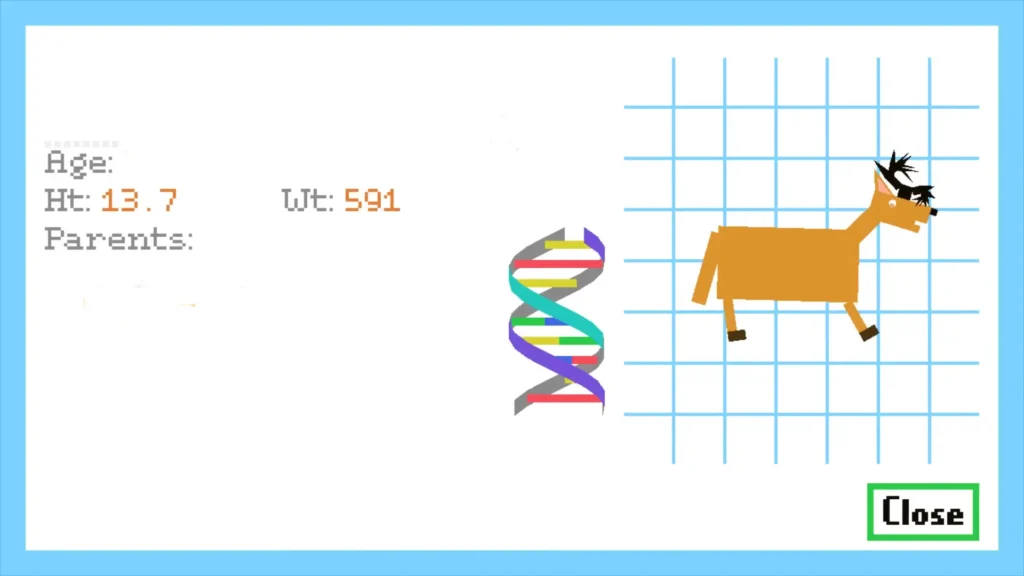
While the game presents itself as a chaotic, physics nightmare, the CRISPR Lab gives you the keys to the kingdom. By mastering the 20 helices and stripping away the Brake Force that plagues standard spawns, you transform a goofy creature into a high performance racing machine.
Just remember that great genetic power comes with great responsibility. One wrong swap in Helix 0, and you might find yourself riding a bipedal nightmare instead of a champion.
FAQs
How do I know if my edits actually worked?
The most immediate way to tell is the visual change in the Lab. If you’ve correctly edited Helix 8 for Leg Length, your horse’s legs will visibly extend or thicken before you even exit the chamber. For performance stats like “Brake Force,” you’ll notice the horse maintains momentum much better during the “swing” phase of its gallop.
Can I break my horse permanently?
Technically, yes. If you trigger a lethal gene (like the H0 P7 “White is Lethal” base) or accidentally delete the tags that define it as a “Quadruped,” your horse may become unusable or die. Always keep a backup horse or take a screenshot of your original DNA sequence before you start swapping bases.
Is there a limit to how many times I can edit one horse?
No. You can take the same horse back into the CRISPR chamber as many times as you have the patience for. This is actually what I recommend.
Why is my horse still slow even with max Leg Strength?
Check your Brake Force (H4 P9). You can have all the power in the world, but if your horse is programmed to “brake” at the end of every leg extension, that energy is wasted. Ensure your Brake Force is set to 0 by using T or G bases.
Can I share my Best Horse DNA with other players?
Since the game stores these values as strings of bases (A, T, C, G), you can manually copy your helix “recipe” and share it here in the comments. Other players just need to enter the CRISPR Lab and manually input your sequence to replicate your results.