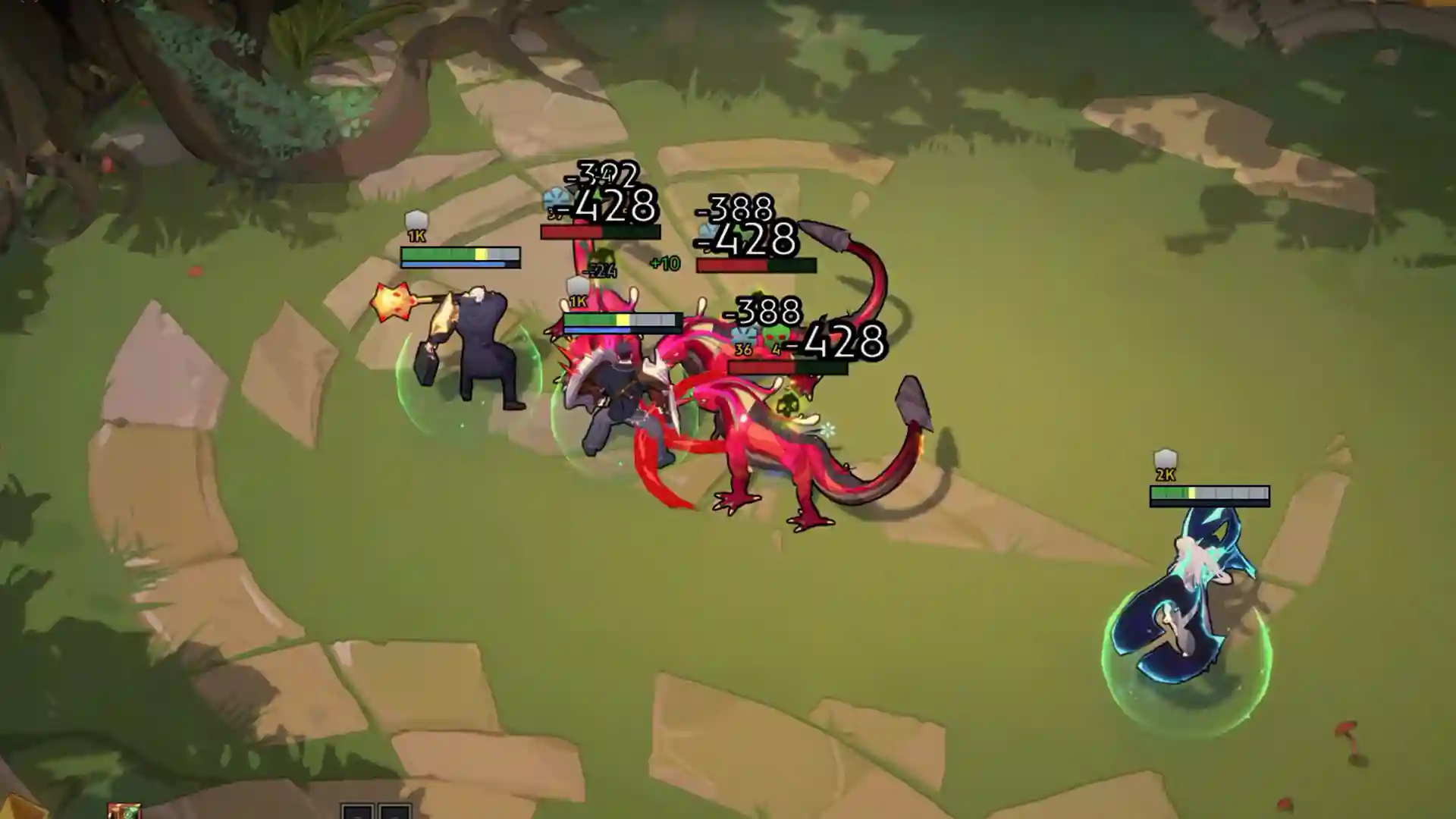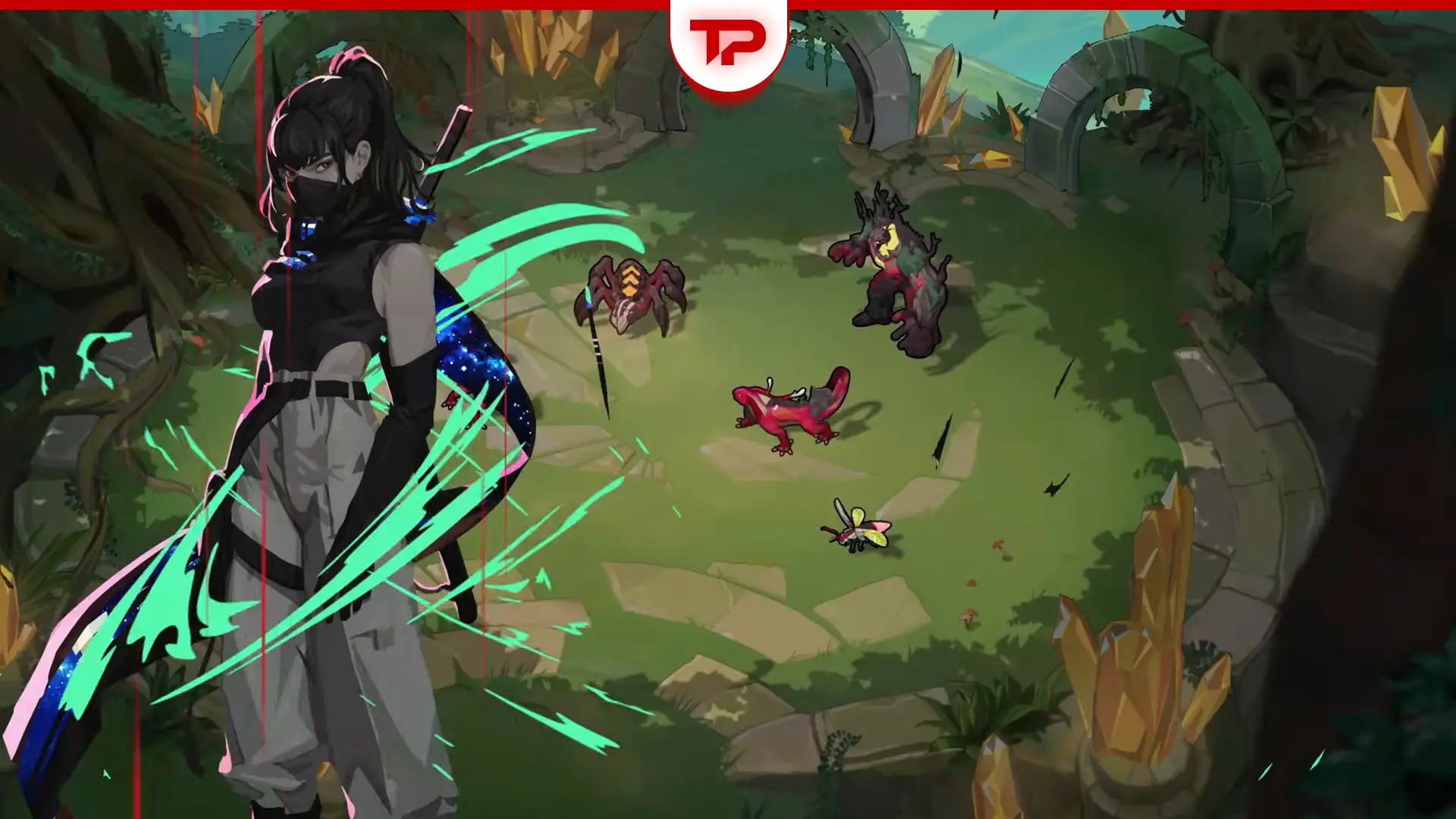


This Guildrun guide pulls together the core systems plus builds that have actually worked for me and other players. It’s mostly for beginners who want to know what the core game mechanics are, but in some sections, I’ll go a little deeper so the details might be useful even for an experienced player.
Read till the end, if you learn even one tip here, I’ll be satisfied.
Note: This guide is based on the demo version. Some aspects of the game may change during updates or after the final release. I’ll update the text whenever needed.
My Guildrun Guide:
What Is Guildrun
You build a team of heroes, shop between fights for items and relics and fight through Acts (Act 1, then a tougher Act 2) full of scaling combats. Beat the final boss and you roll straight into Endless mode.
Difficulty is chosen before each run, on an eight-rung ladder: Base → C → B → A → S → SS → SSS → the Red Rift. Each rung stacks the modifiers from every rung below it. So picking SSS means you’re also carrying C’s combat-start HP loss, A’s reduced Shard income, and S’s one-item-per-rank cap, all at once.
Team basics you’ll want up front
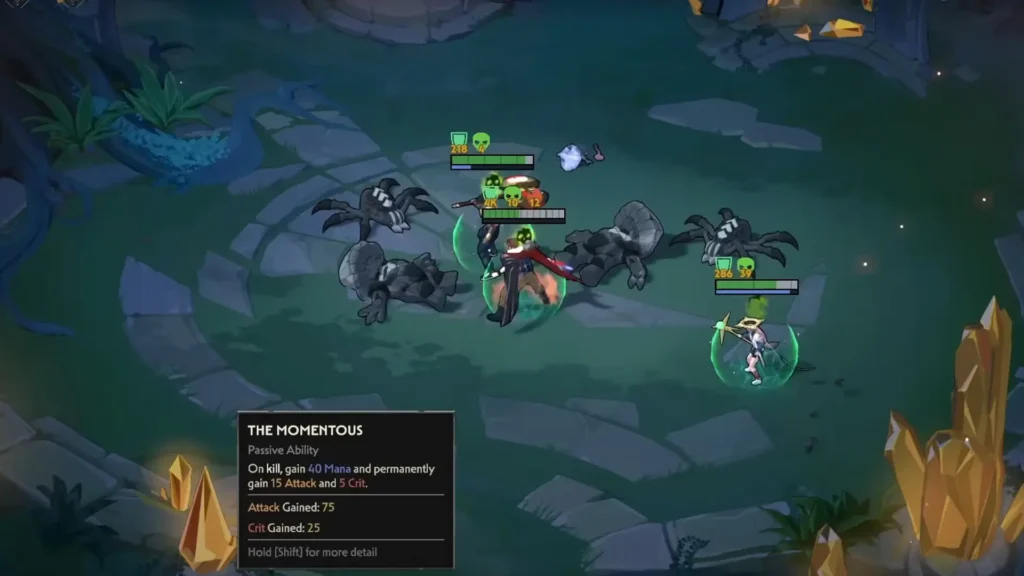
You start with 3 heroes and can field up to 5. Your total roster caps at 6, so at least one hero always sits in reserve (where “Backup” effects still work). Each hero can hold up to 6 item slots, though most start with far fewer than that.
Core Stats Explained
In games like this, understanding stats helps you learn everything faster. So I’ll explain each one in the simplest way.
Guildrun HP
It shows base survivability. Tanks and Vanguards run the highest pools. Recover it via Omnivamp or flat HP-per-second effects.
Mana & Mana Regen
Only heroes with an active ability use mana, and the pool size varies by hero. Dragomir’s Devour, for instance, casts once he’s stacked up enough mana, then resets to zero.
You fill mana three ways: flat mana from certain items, passive Mana Regen (mystic-focused gear leans into this, and only Mystics gain bonus mana regen on rank-up), and auto-attacking. Actually, every hit adds mana to the pool, so stacking Attack Speed is a legitimate way to charge spells faster.
Attack & Attack Speed
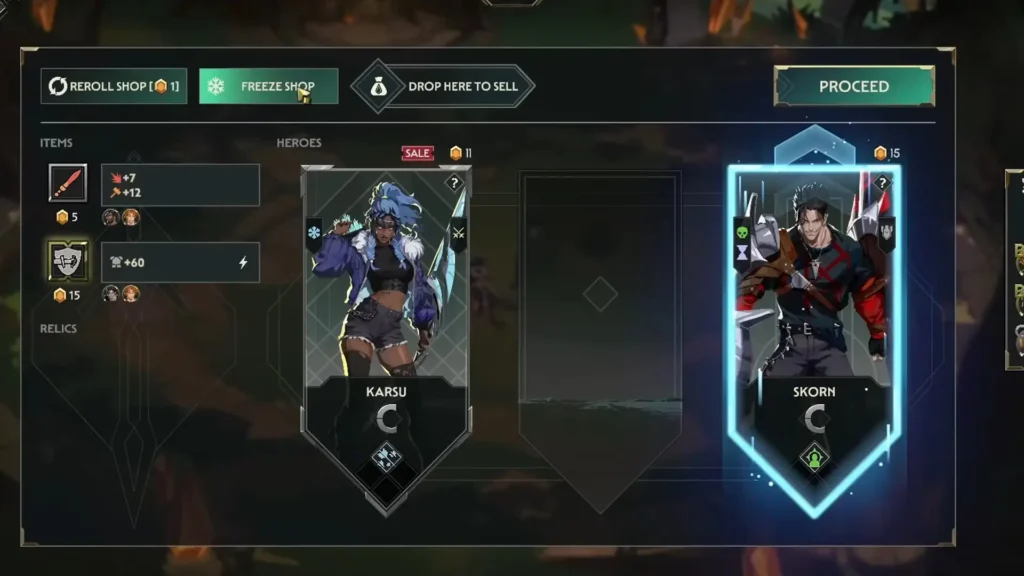
Your hit damage scales off the Attack stat and scaling differs by hero.
Attack Speed is a straight multiplier on your base attack rate; every 100 points roughly doubles how often you swing, capped at 5 attacks per second for most heroes.
Crit
At 100% Crit chance, your crits (attacks and spells alike) deal double damage. Push past 100 and every extra point adds to the damage multiplier instead of being wasted. Crit is the other strong path for an auto-attack carry.
Magic
Magic actually powers spells and magic-scaling effects. Hold Shift on an ability to see its exact scaling.
Defense
Defense mitigates incoming damage on a straight linear curve. There’s no soft cap or diminishing-returns breakpoint, so every point you add is worth the same as the last one.
The real reason to eventually pivot away from pure Defense isn’t inefficiency, it’s coverage: Defense does nothing against True Damage (a damage type that ignores it entirely) or damage-over-time effects like Poison and Burn. If you’re facing either, HP or shields are what actually keeps you alive, not more Defense.
Guildrun Rank-Ups: Your Power Spikes
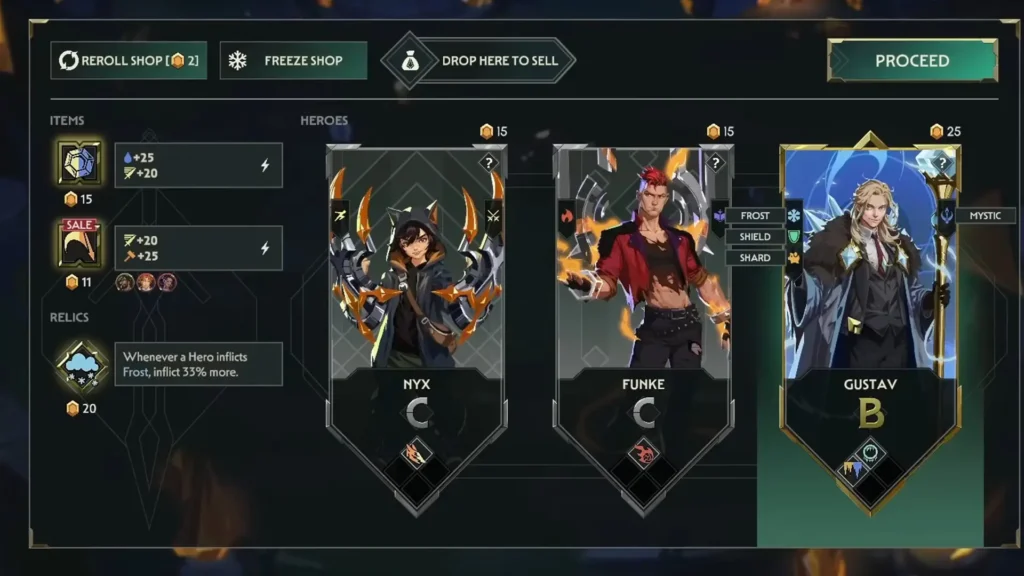
Every hero starts at Rank C with a basic ability. Upper ranks are:
- Rank B: You pick one of three unique specializations, always the same three for a given hero. Some grant a second class and its associated stats, but taking a second class typically (not always) slightly dilutes the stat gain from your main class on future rank-ups.
- Rank A / S: Each subsequent rank-up gives you your class’s stat growth plus one randomly offered upgrade drawn from your class’s pool. If you’ve picked up a second class, upgrades are drawn from both pools combined. This provides more options, but more dilution if you’re hunting one specific upgrade.
Beginner priority: get at least one hero to B-rank and geared before the Act 1 challenge fight — this is consistently the point where undergeared beginner runs fall apart.
Rush vs. Stall
Rush Activates from the very start of combat, for a limited window. Ming’s “Enlightened” upgrade extends every Rush ability’s duration by a second per hero rank, so by S-rank his Rush effects run several seconds longer. This is genuinely strong on heroes like Rip who lean on repeated Rush triggers.
Stall is Inactive until a set number of seconds into the fight, then stays on for the rest of the combat, firing once.
One Thing to Plan Around Either Way
every fight has a hidden clock called The Storm. At 50 seconds in, it starts dealing escalating damage to every unit on the field (yours and the enemy’s alike).
By roughly 65–75 seconds, most fights are unwinnable regardless of what you’re running. This doesn’t kill Stall as a strategy, but it does mean “stall forever” isn’t real. You’re racing to close out the fight before The Storm does it for you, badly.
Which one I choose? Both are viable win conditions, and plenty of strong builds mix them. Rush for a fast-opening burst, Stall for a payoff once the fight drags on.
Beginner-Friendly Heroes
The list I provided below isn’t a theory crafted one you may find in other shallow guides. They’re pulled from builds that have actually closed out runs. I myself prefer Rowan and Ming, anyway your suitable hero can be other ones, it mostly depends on your play style.
Ratna
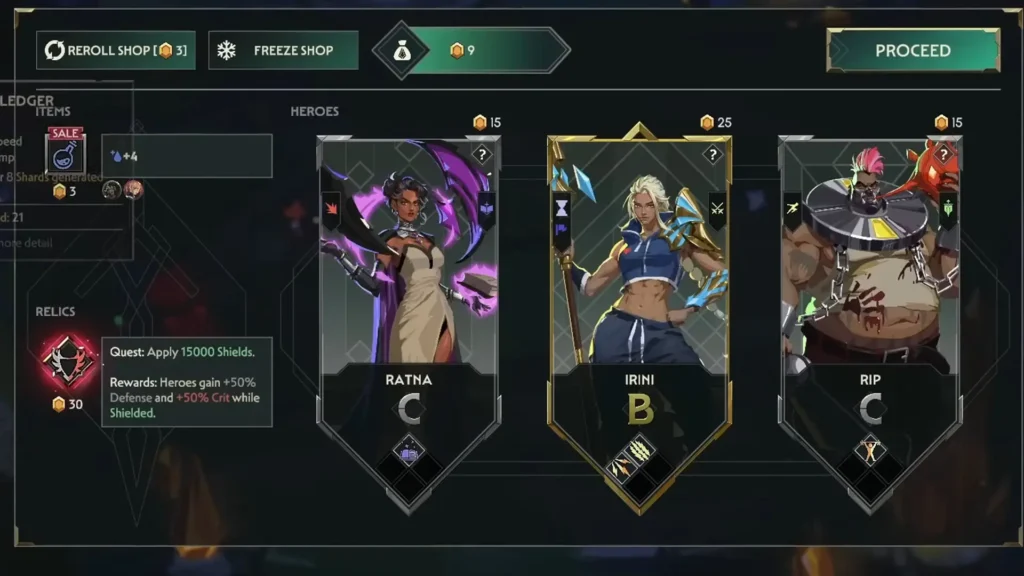
Ratna’s Fashionable spec grants an extra item slot and, at start of combat, roughly 45 Magic per rarity level of each equipped item.
If you want her leaning harder into late game, her Assassin upgrade path stacks Crit alongside spell damage instead. Her “Mage Armor” upgrade (100% of Magic converted to Defense) can also make her one of the tankiest heroes on your board once her Magic is high enough.
Ming
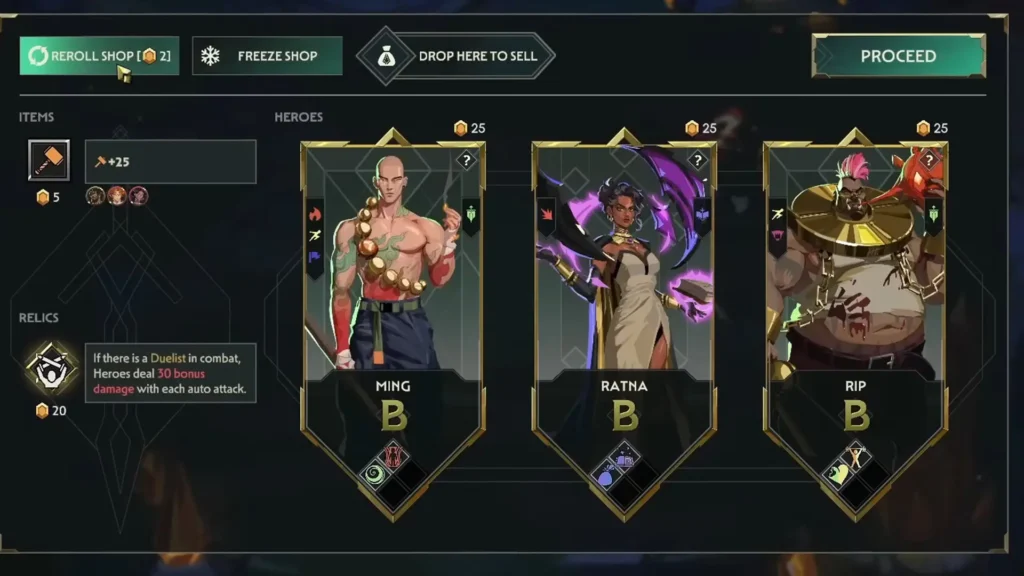
Ming is the Burn king. His kit stacks Burn on adjacent enemies every second, doubling under Rush. I recommend you pair him with HP stacking (his damage scales off his own Max HP) and Rush-extending upgrades.
Kai
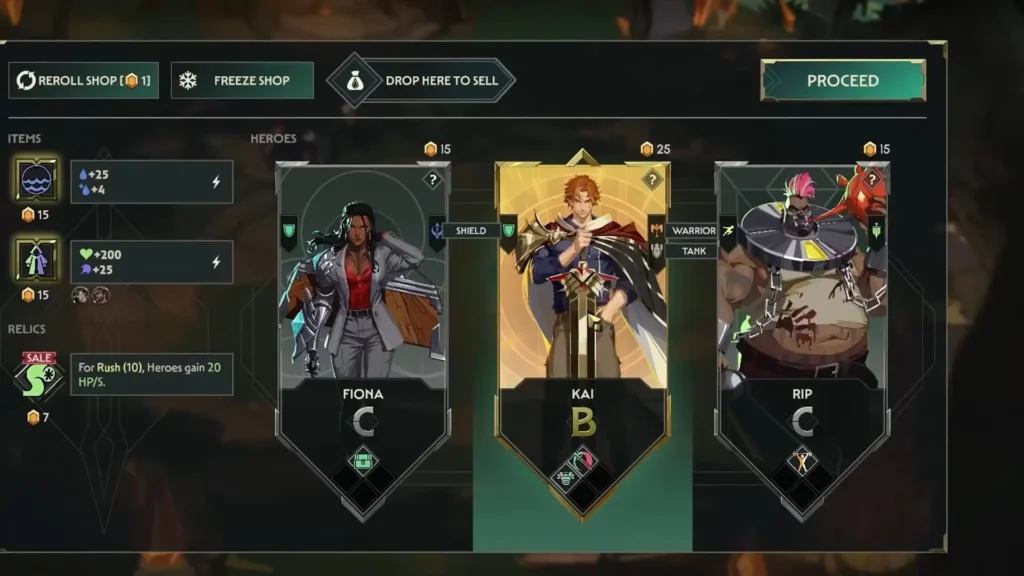
the shield-nuke Warrior is Kai. His active builds a shield, waits, then deals AoE damage plus bonus damage equal to his remaining shields.
Taking his Unstoppable spec (bonus shields, and Attack gain every time he’s shielded) lets shield-generation support stack his damage fast. Pair him with Gustav and Grace’s Radiant upgrade for the best results.
Grace
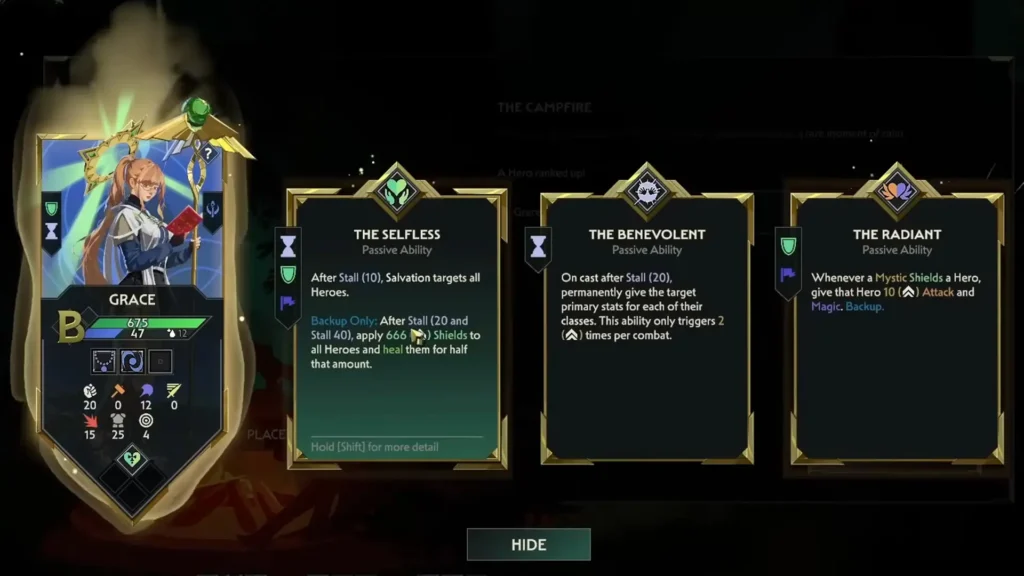
She is a support MVP. Her Salvation heal scales off Magic and, after a Stall trigger, can target and resurrect fallen heroes. Her Selfless spec extends Salvation to hit the whole team after an early Stall.
Logan
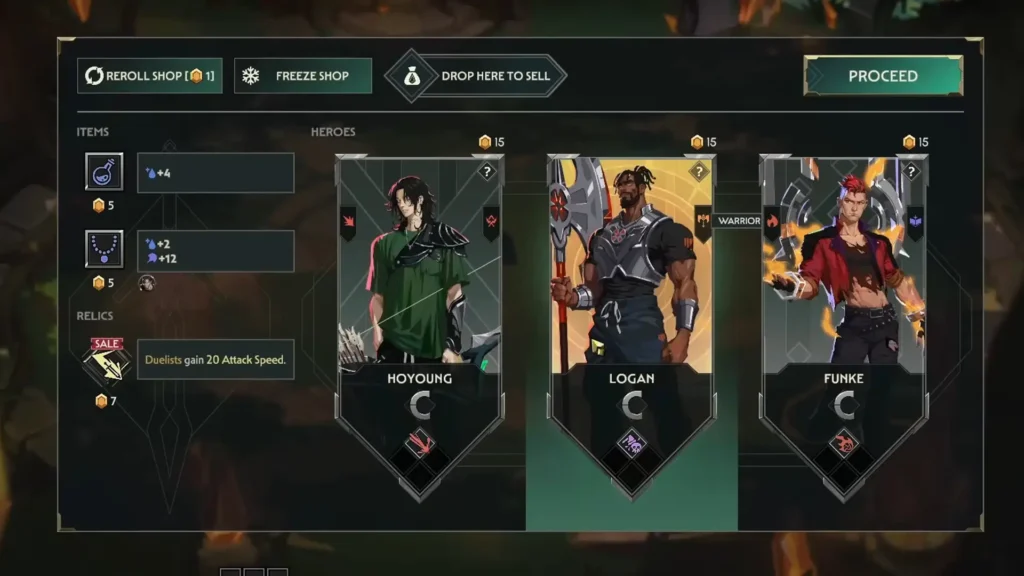
Logan’s Execution ability scales with Attack and Magic. His Juggernaut spec converts damage dealt into a lasting personal shield. He is capable of soloing single-target fights once he’s stacked a few rank-ups. Tilly is a common pairing here for the extra Shard generation.
Rowan
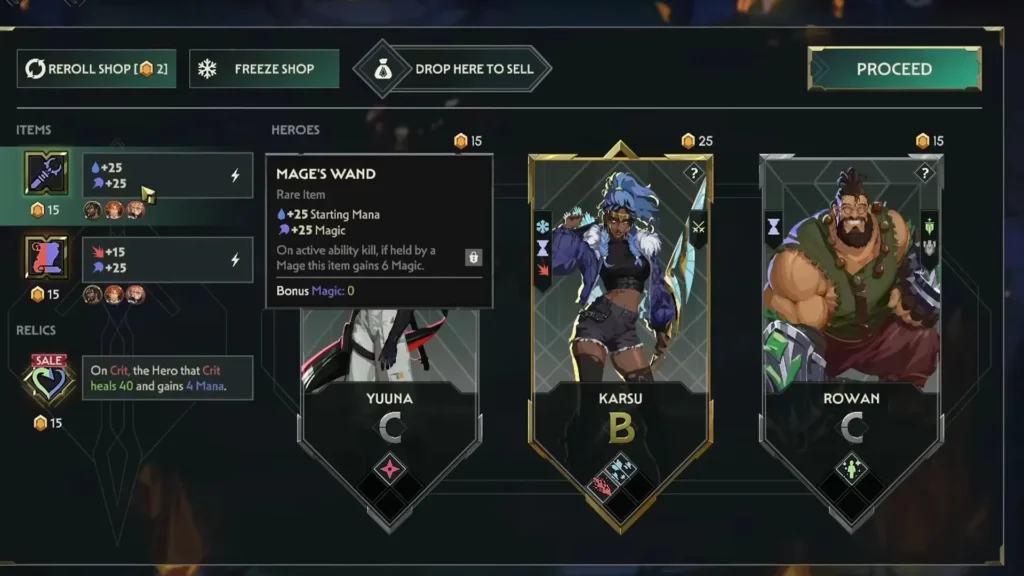
His Bold shield-scaling upgrades (attack scales off current shields and every hit generates more shields) turn him into a frontline that gets stronger the longer a fight runs. I like this. He is strong alongside Ming for a Vanguard-heavy comp.
Common Beginner Pitfalls
I thought about all the mistakes and pitfalls I had when it was my early days. I feel a Guildrun guide won’t be completed without covering these mistakes. The list below is based on everything I could remember:
- Skipping early rank-ups or B-ranks make the Act 1 fight much more challenging.
- Chasing raw Attack instead of Attack Speed;
- Neglecting mana generation or Attack Speed on spell casters, so their kit never actually fires;
- Bad positioning. Undefended backline heroes die before they contribute;
- Grabbing every tempting relic instead of skipping risky ones early, when your team can’t yet absorb a bad pick;
- Diluting your rank-up upgrade pool with a second class when you’re hunting one specific upgrade. Going dual-class doubles your options but also your randomness.