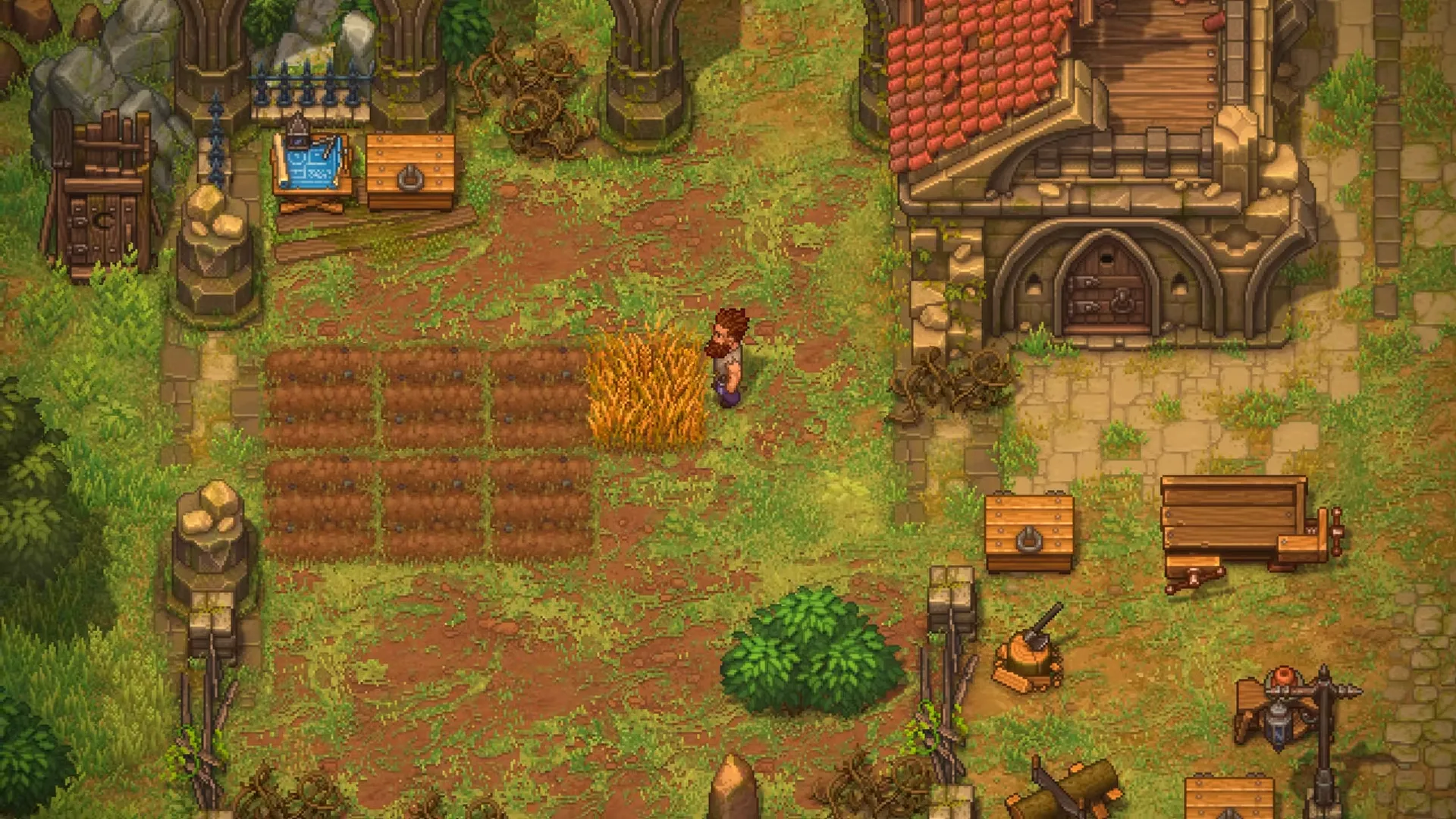


Graveyard Keeper 2 is finally here, and I’ve spent enough time in this trending game’s demo and doing my homework to put together the guide I wish existed on day one. This Graveyard Keeper 2 guide walks you through the opening hours, the new stats you’ll need to manage, and the systems GK1 never had: red and white skulls, zombie automation, and Town battles. Everything below is what you need to know.
Disclaimer: This guide is written based on my experience with the game’s demo. Slight changes are possible with the full release. Check this guide again for updates.
What You’ll Read:
Graveyard Keeper 2 Story
Here’s what happens in the first hour of the game. You can skip this if you want. (Spoiler alert, obviously!)
Breaking Out of Dungeon With Larry
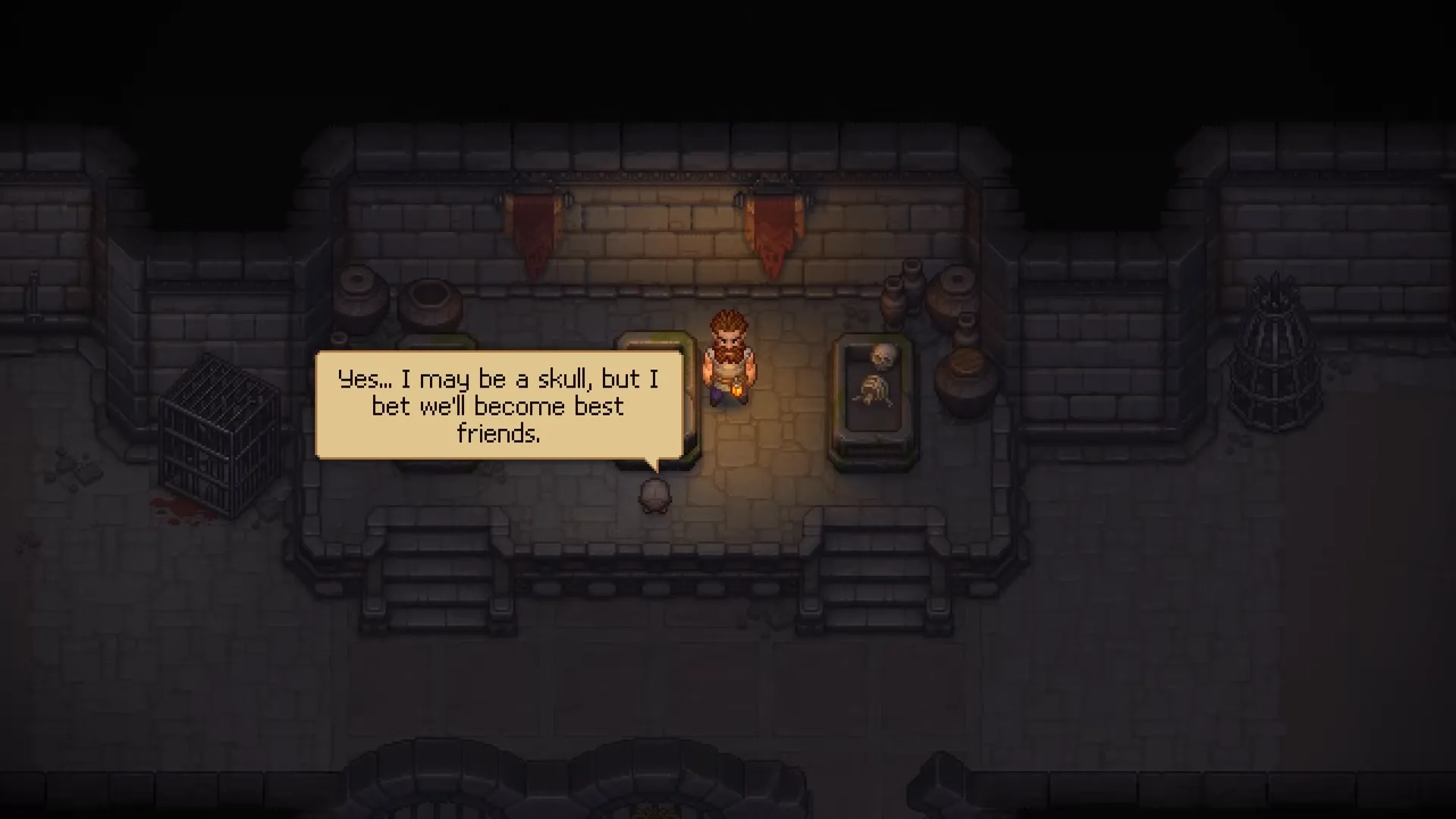
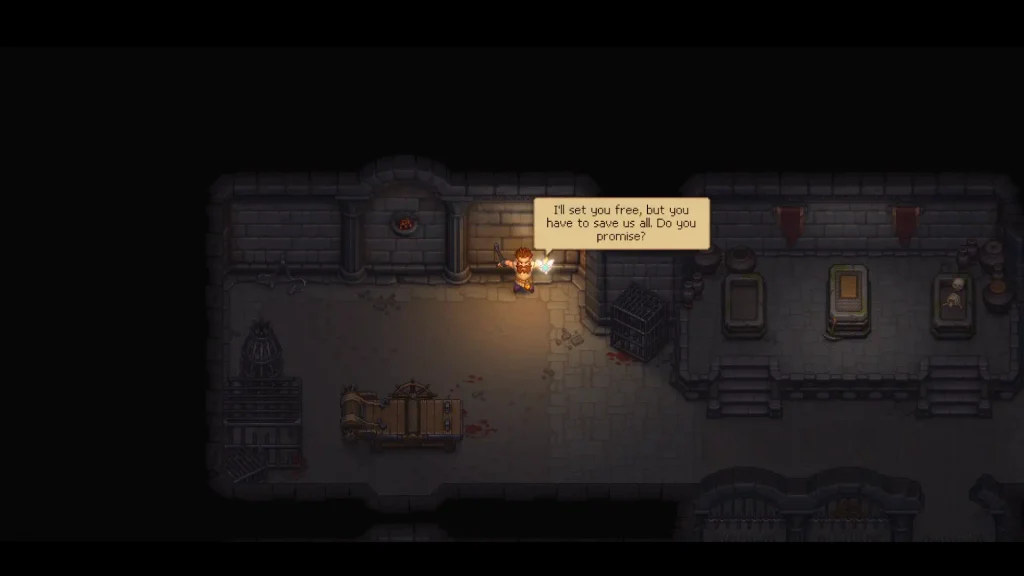
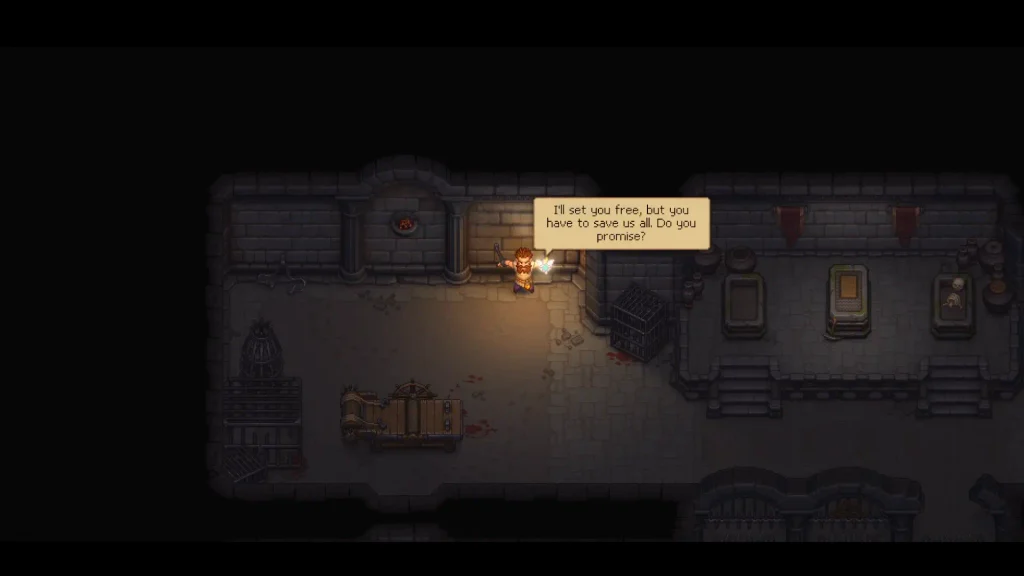
You wake up chained in a dungeon. A fairy appears (who calls herself “Soul”) and tells you eight years have passed since you wrecked the world, and now you’re the one who has to fix it. She snaps one of your chains but doesn’t have the strength for the second. Larry, a sarcastic talking skull who claims he was your cellmate for nearly a decade, motivates you to break the second one.
Grab your first pickaxe to free him from his sarcophagus, and gather mushrooms and berries on your way out. Look for a note pointing to a hidden stash holding a royal signet, an Inquisitor’s medallion, and a rusty key. The key opens your cell door.
Surviving the First Fight With the Inquisitor Gear
Sneak through the deserted town, avoiding the palace guards and wandering zombies, until you find shelter for the night. Sleeping restores your energy. Guards spot your signet and medallion and mistake you for a real Inquisitor, sending you to the workshop for gear!
This is where you first see conveyor belts and a semi-automatic workbench. Craft iron armor, take a sword, then get handed a banner and told to lead soldiers to the right flank. On PC, spacebar attacks. The fight buys just enough time to run for the town gates, but the villagers won’t open them until you show the medallion.
Your First Burial
A talking donkey delivers your first corpse, ringing a bell to let you know it’s arrived. Take it to the morgue’s autopsy table and extract its organs, which affects overall body quality. Some organs need a higher autopsy skill to remove safely, or you’ll trigger a “surgeon’s error.”
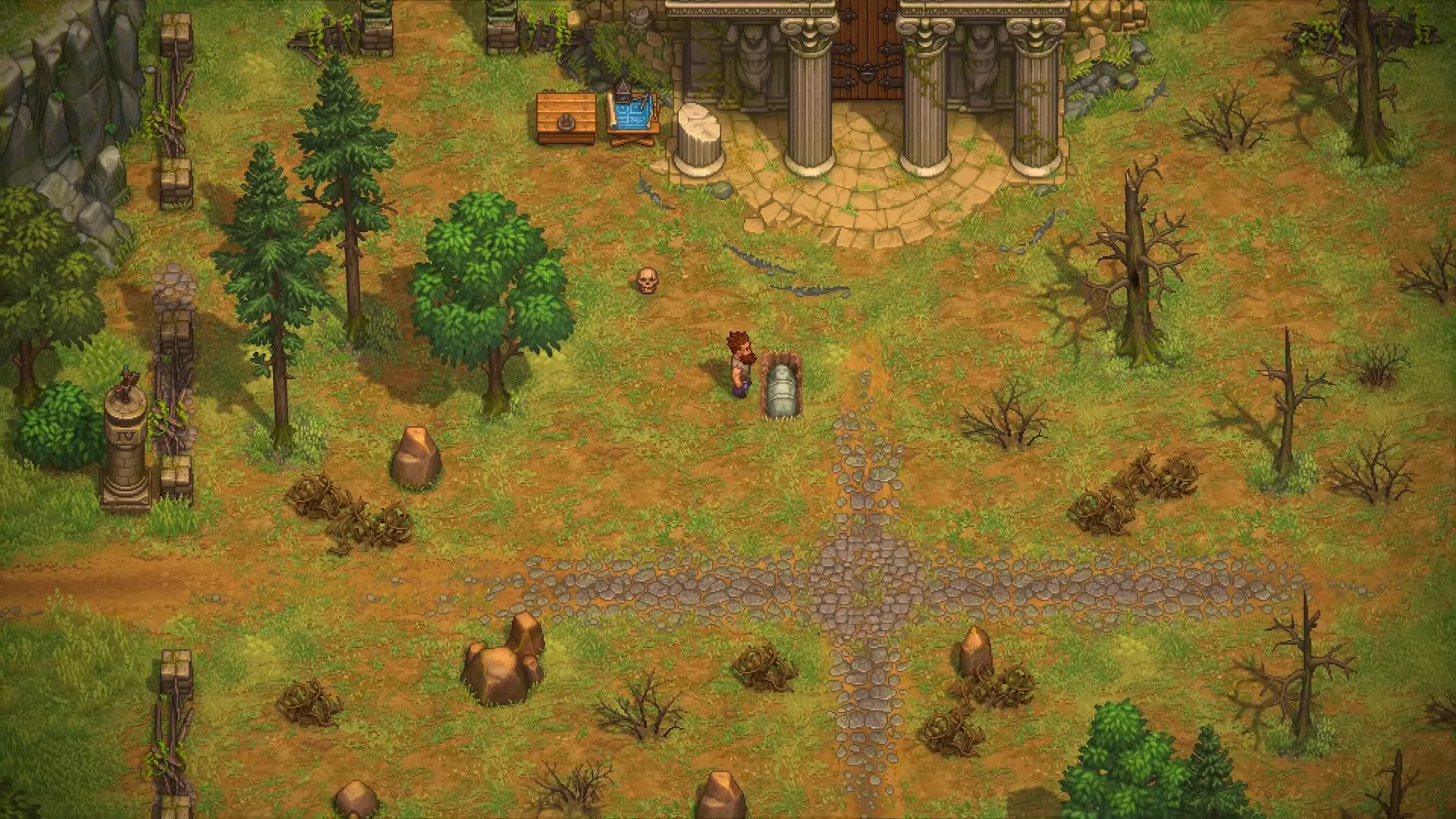
Build a grave from the blueprint, dig it with your shovel, place the corpse, and add a sign. This first grave won’t give much prestige; better headstones and fences unlock later, but it completes the quest. Hand the burial certificate to the head guard, and the map unlocks, showing your base, the morgue, and the town square.
Energy and Insanity Explained
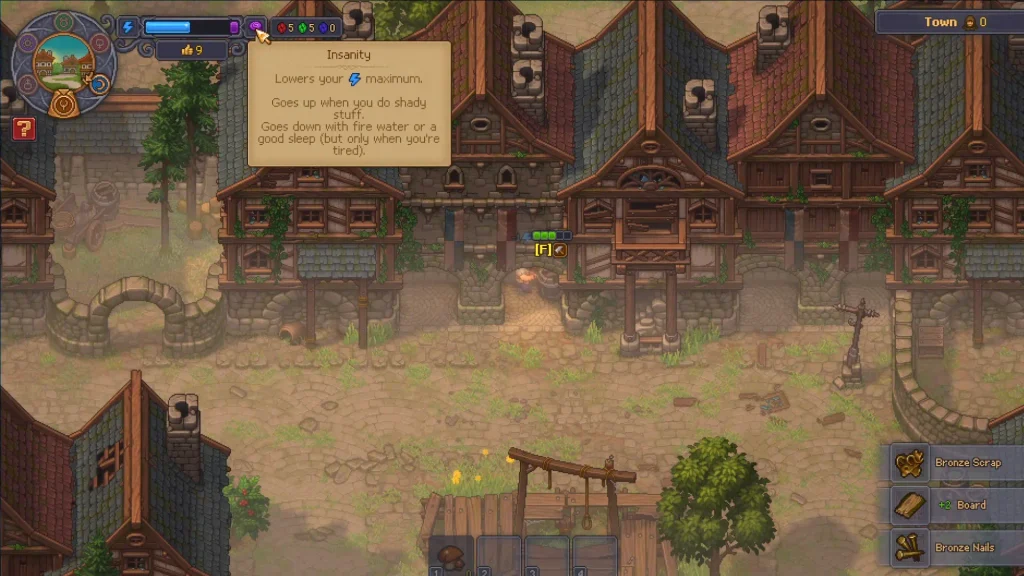
Two stats sit in the top-left of your HUD: energy and insanity. Energy drains with every task such as gathering, chopping, mining, crafting, and you refill it with food or by sleeping. Mushrooms are the easiest early food, but they barely dent your energy bar, so don’t rely on them alone.
Insanity lowers your maximum energy. It climbs while you handle bodies and builds up during regular labor too, even something like making boards. Beer brings it back down. Sleep also lowers insanity, but only when you are tired.
The safest habit is eating before you feel it coming on, since letting insanity build unchecked makes everything harder to manage.
How Tech Tree and Inspiration Work
You earn tech points from almost every action and spend them across a tech tree that covers woodworking, farming, building, and working with bodies. Points come in different colors, each tied to different branches. Some blueprints are also locked behind specific quests, not just point totals, so grinding points alone won’t unlock everything.
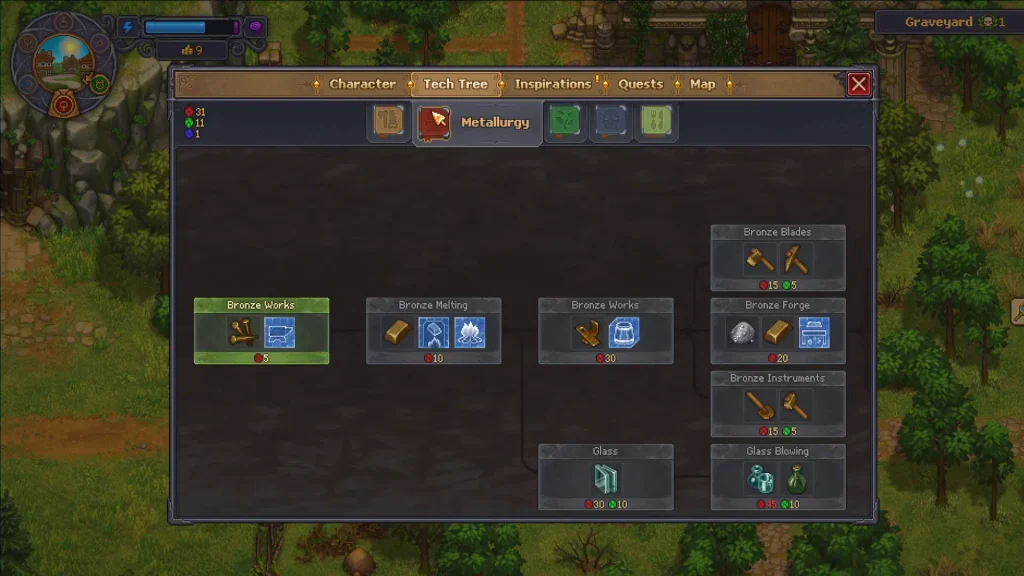
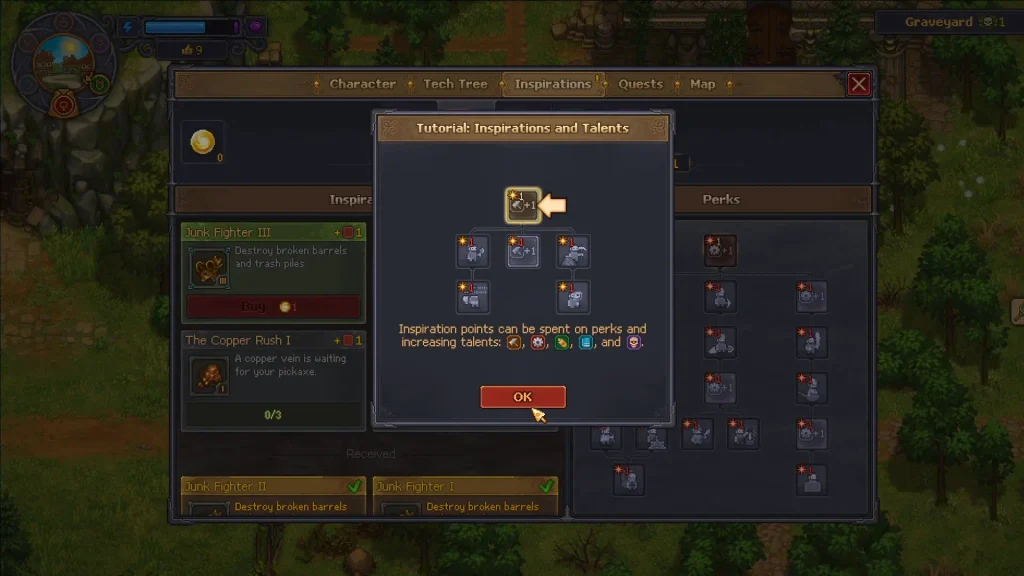
Inspiration works differently. Cutting trees, collecting berries and mushrooms, and crafting all fill an Inspiration bar. Once it’s full, it converts into a star-shaped point you spend on perks or talent upgrades. Your first few Inspirations come free, but later ones cost Faith, which you won’t have access to for a while.
Early on, prioritize tree-cutting and wood-processing unlocks first. Wood feeds almost every early recipe, and running short slows down everything else.
What Are Skulls
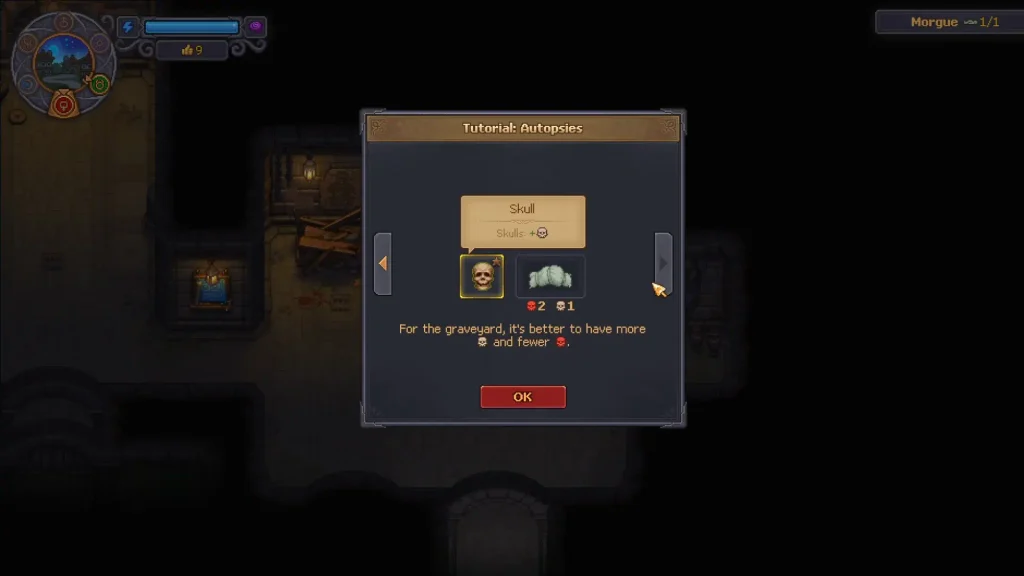
Every corpse carries both white and red skull levels, and they cancel each other out into a single net score. Three white skulls plus two red leaves you with a net of one white, for example. You can strip body parts during autopsy to push that number either direction, and later unlocks let you add things back to adjust it further.
For burial, you want the white number as high as possible. Red skulls have a separate job entirely: they feed your zombie army, so don’t waste a heavily corrupted corpse on a grave when you could be raising a stronger zombie instead.
How to Grow Your Graveyard Rating
Your graveyard sits outside the town walls, near your base, not inside the town itself. Each white-skull burial paired with a wreath or marker adds a level to your graveyard’s overall rating. Leftover trees, rocks, and empty holes without a buried corpse subtract from it, so clear your plots before you start burying.
Early on, aim for a graveyard rating of 10 white skulls to clear your first burial goal. Individual plots display a skull-quality number; I’ve seen values from +6 down to -3, though the full formula behind that number isn’t confirmed. The tech tree eventually unlocks graveyard modules that add space for tombs, benches, columbaria, and monuments, plus new grave designs for customization.
How to Win Town Battles
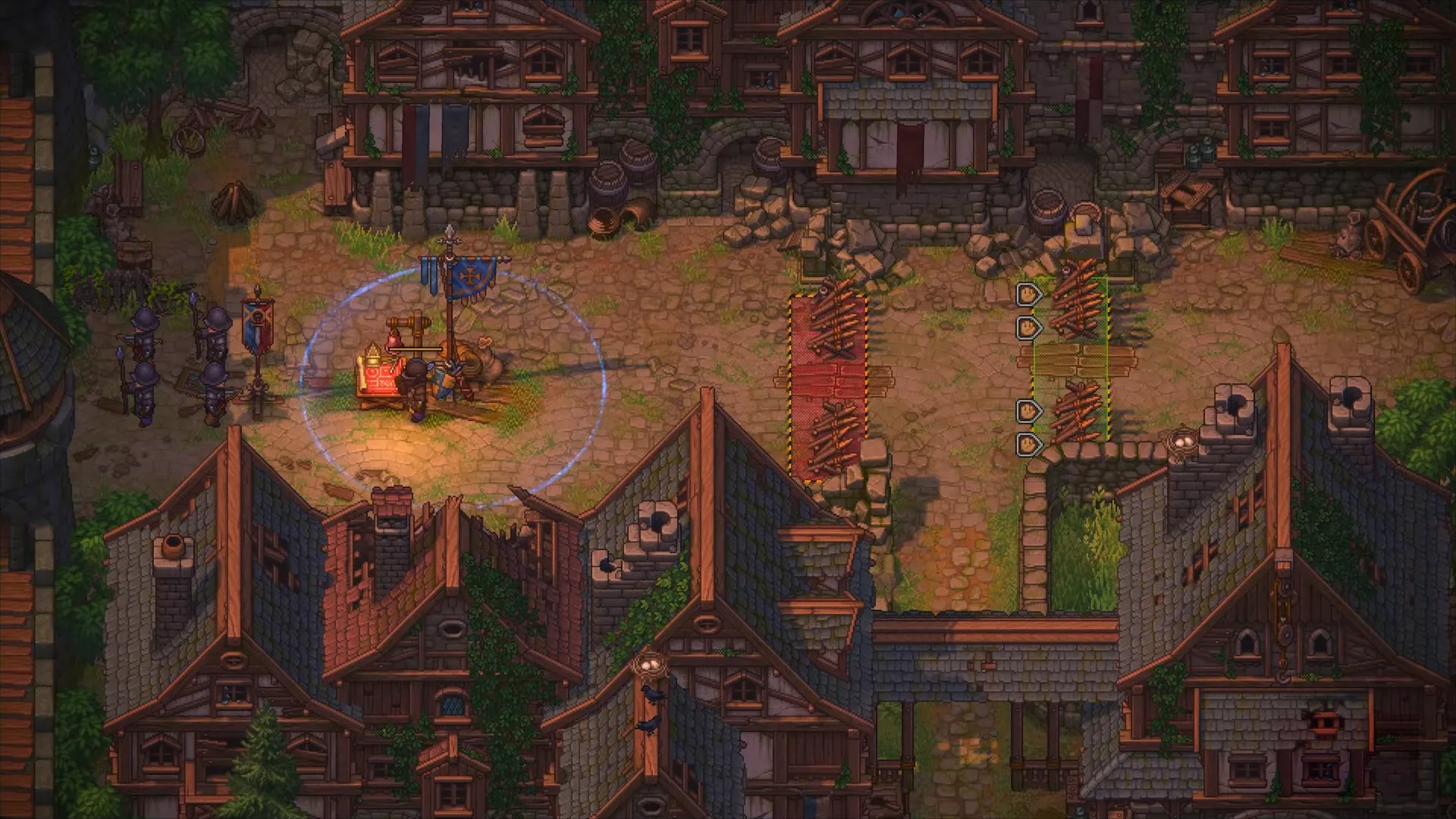
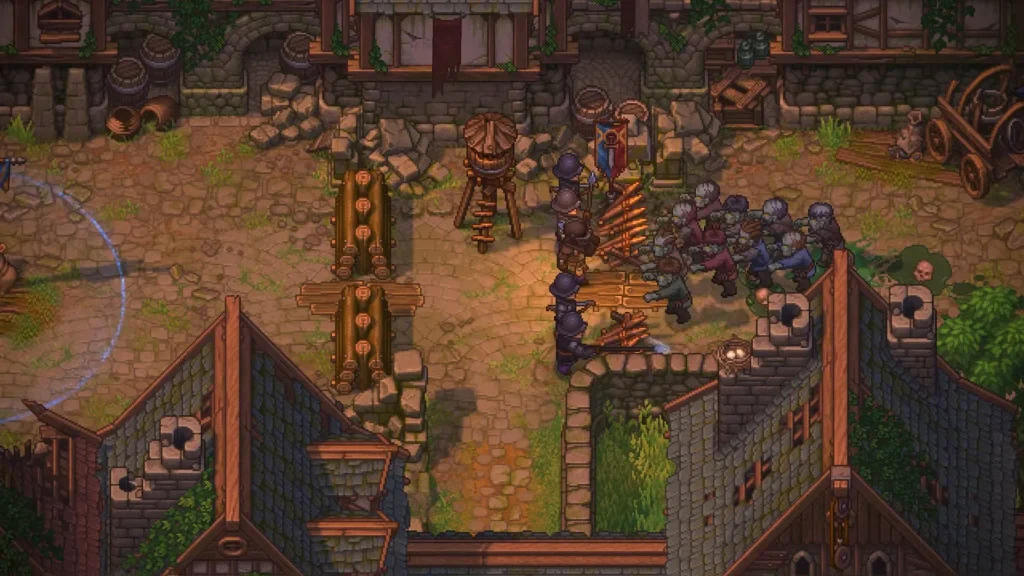
Town battles work like a checkpoint capture game. You move your squads by dragging their flags, then take enemy checkpoints by killing everyone inside and holding the spot until the timer runs out. Win, and a new part of town opens up.
You can lead mercenaries you’ve hired or your own armed zombie troops, and throwing more units at a checkpoint speeds up the capture. Some battles are only available on specific days of the week, so check what’s on before you plan your schedule around one.
Before you head out, build barricades and archer towers at your base to protect your checkpoints once you hold them. Winning battles hands you keys, which let you send looters into zombie-held areas to plunder rare materials you can’t get otherwise. Barracks upgrades come from blueprints bought with points, and the only reliable way I’ve found to earn those points is paying mercenaries to fight for you.
Zombies and Automation Explained
Contrary to any other game, zombies can be really useful in this game. Not only can you build an army with them, but you can also use them as workers and automate material production. Intriguing, right? Well, unfortunately it’s not that simple.
How to Raise a Zombie Army
Corpses with high red-skull levels are your zombie supply. Building an army calls for hearts, bones, brains, and skin harvested from those bodies. Each zombie can equip one tool, and it earns its own tech points from working, which you spend on perks for that specific zombie.
The number of perks it can hold is capped by the red-skull level of the corpse it came from, so save your most corrupted bodies for zombies you plan to invest in. Every zombie you raise carries a mark showing it’s possession-free, which matters once hostile zombies, corrupted townsfolk turned hostile by curses, start showing up.
When Automation Actually Starts
Don’t expect conveyor belts running on day one. I only had two zombies working after roughly 15 hours, and the real factory-line automation hadn’t kicked in yet by then. Once it does, it’s the single biggest upgrade over the first game: full assembly lines where zombies work through the chain end to end. Get there, and zombies stop being a novelty and become how you produce materials in bulk.
Graveyard Keeper 2 Money Making Explained
There are different ways to make money in this game. Let me explain:
Selling What You Produce
Crops from your base plots go two ways: sell them straight to the village shop, or cook them into food that restores more stamina than raw ingredients do. Fishing works the same way. Match the bait to the spot to catch it, then sell it whole or fillet it for food.
As you restore Town buildings, you reopen shops and cafés, and each one you bring back adds a new market for your goods, sometimes unlocking resources you couldn’t buy before.
Burial Certificates and Town Growth
Every completed burial hands you a certificate you can exchange for money. The bigger lever is Town growth. The larger and more prosperous the Town gets, the more corpses you receive, and the better their quality, meaning more skulls on each one.
That feeds straight back into both burial certificates and your zombie supply. Merchant orders add a steadier income once you’re producing enough surplus to fill them regularly.
That’s all you need to know to get started with Graveyard Keeper 2. Do you have any more questions? Let me know in the comments below.
FAQ
Do I need to play the first Graveyard Keeper?
No. The story catches you up during the opening hours. You play a different, “not exactly the same” version of the Keeper, so GK1 knowledge helps but isn’t required.
Is there co-op for Graveyard Keeper 2?
No, it’s single-player only. The store page doesn’t list any co-op mode, and there’s been no developer statement about adding one after launch.
Graveyard Keeper 2