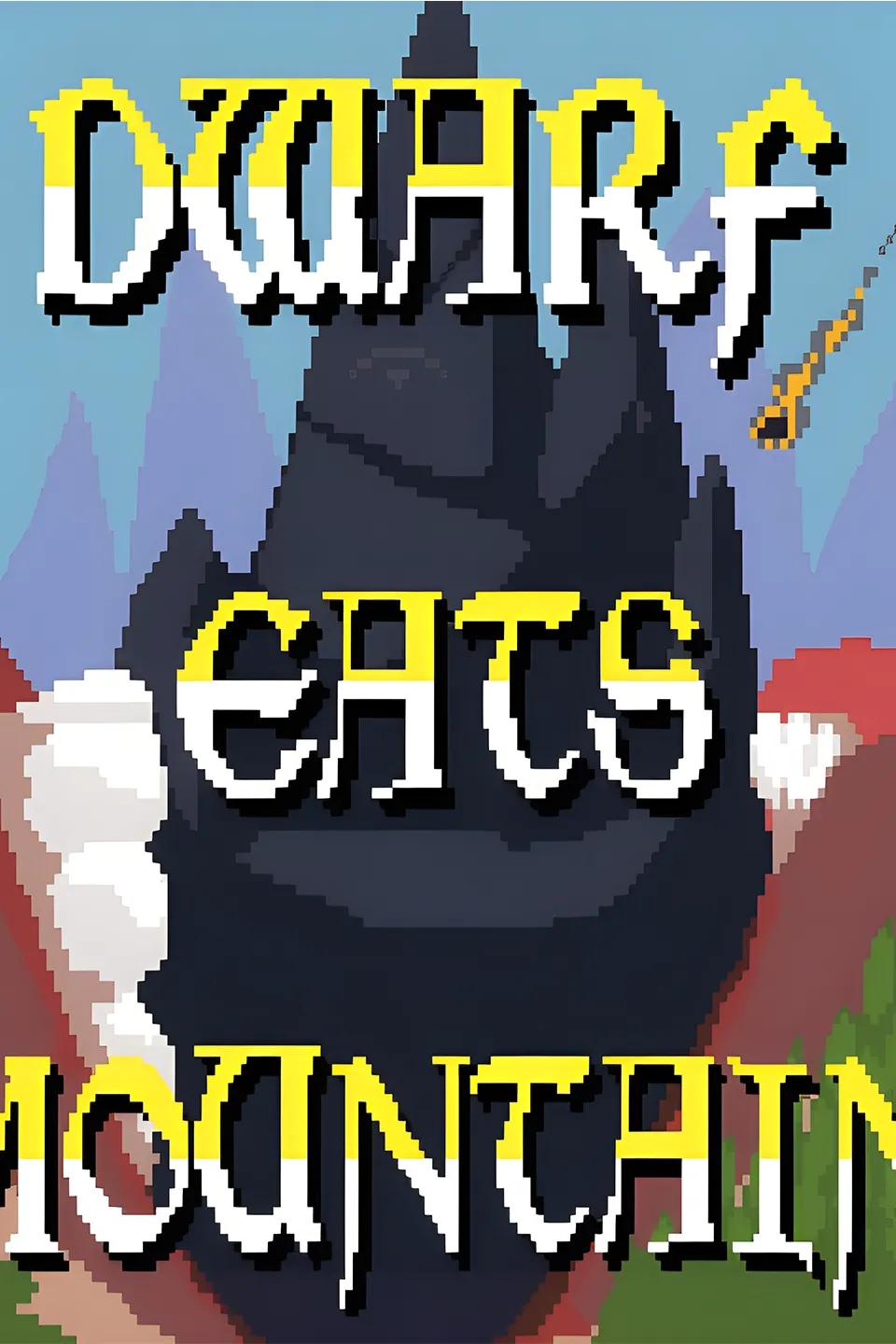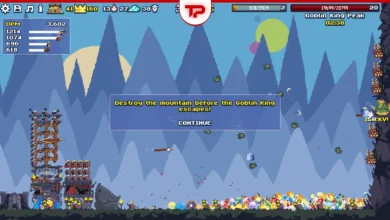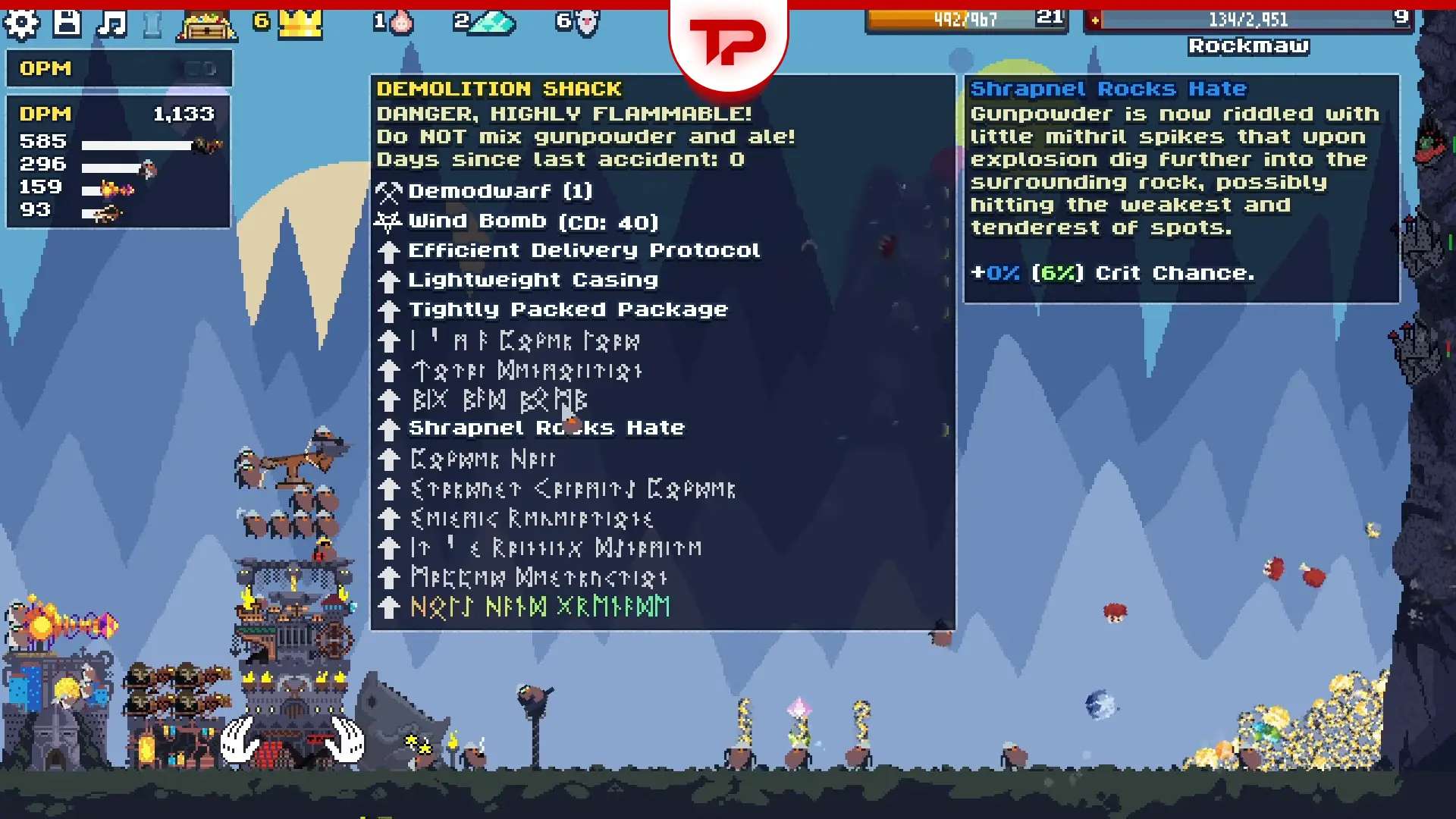


Dwarf Eats is a mining sim where your crew of dwarves blasts through a living, angry mountain that fights back (for real).
This Dwarf Eats Mountain guide covers the mechanics that matter most: which units to prioritize, how to handle calamities, how artifacts and rituals work, and the full prestige and ascension path.
In this guide, you’ll learn the optimal core loop, which units to prioritize and the best prestige and ascension strategies to progress faster.
The Text
The Core Gameplay Loop: It’s All About the Gold
This game has a simple, almost hypnotic rhythm: you smash the mountain, the mountain drops shiny stuff, your guys carry the shiny stuff home, and you use the profits to smash the mountain even harder.
- Break the Mountain: This is what your miners and war machines are for. They tirelessly chip away at the rock, creating gold and exposing other resources.
- Haul the Gold Home: The real heroes of this game are the Runners. They’re the brave souls who dash out under a rain of falling rocks to scoop up the gold and sprint back to your stash. If the gold doesn’t reach the base, it doesn’t count.
- Survive the Consequences: The mountain, or “The Great Mother”, as it’s ominously called, doesn’t like being eaten. The more damage you do, the more it fights back with “calamities” landslides, earthquakes, and all sorts of other unpleasantness.
- Spend and Upgrade: This is where you turn all that hard-stolen gold into permanent power for your dwarven empire, funding research, better weapons, and faster runners.
The tricky part is balance. A run is a constant tug-of-war between your greed for more gold and your ability to protect your dwarves from the retaliation it triggers. If you only buy more cannons, your piles of uncollected gold will just sit there while your runners get flattened.
Active Strategies for Faster Progress
Although Dwarf Eats Mountain is heavily idle-focused, active play helps significantly during the early game and can speed up your progress dramatically. Here’s what you can do manually to give your dwarves an edge:
Wake Stunned Runners. This is the most impactful active action you can take early on. After a rockfall, stunned dwarves can remain inactive for a long time, and your income stops until you snap them out of it. Click the Mountain. You can manually mine the mountain to speed up early clears. This is especially useful when you’re just starting a new run and need to kickstart your gold income.
Also don’t forget to Push Ore Toward the Stash. If you see gold piling up dangerously far from your base, you can manually push it closer to your runners to speed up collection.
The game also has several hotkeys that make active play smoother. The “I” key activates the Alchemy ritual, and the developer is working on adding a full hot bar for ritual management.
Your Toolbox: Key Units and Machines
You’re not just throwing pickaxes at a cliff forever. You’ll unlock a wonderfully oddball arsenal.
Mountain Breakers are your primary damage-dealing crew. You start simple with pickaxes but soon progress to devastating units like Dynamite Throwers, Ballistas, Flamers, and even Laser Cannons. Each unit has its own upgrade tree, so you can specialize them for your play style.
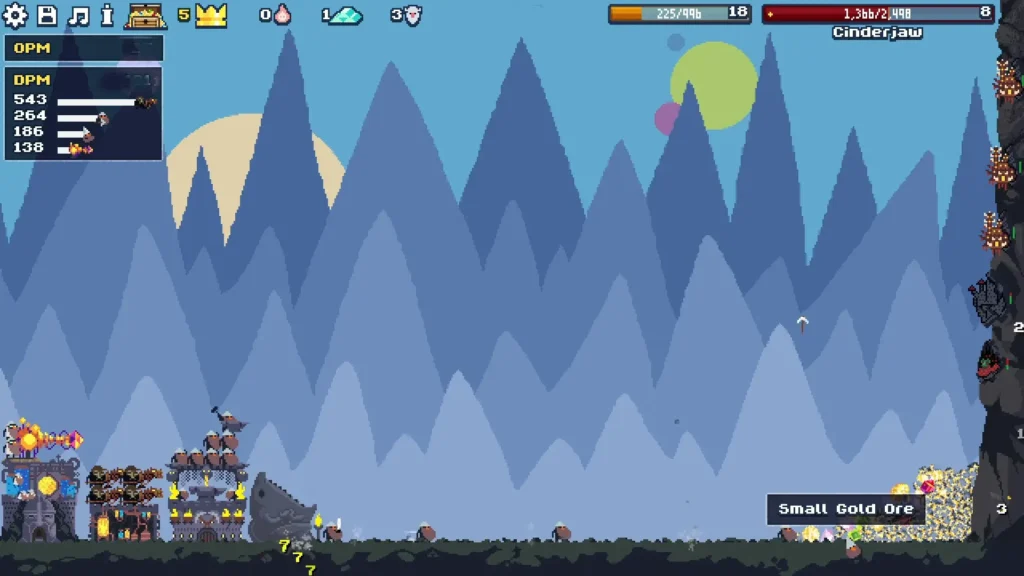
Treasure Retrievers are Your most vital unit. They weave through falling rocks to carry gold back to your stash. Ignoring their upgrades is the single biggest mistake new players make, as they form the bottleneck for your entire economy.
The Mad Support Team are the deep bench of support units that aren’t obvious at first. Scientists make all your other upgrades cheaper, making them a brilliant long-term investment. There are also Runesmiths, Brewmasters, and even Alelords, all of whom contribute to the chaotic mining operation in their own unique ways.
The Great Mother Fights Back
The mountain is an active participant in this war. As you fill the “calamity bar” by dealing damage, the mountain unleashes disasters to crush your dwarves. This isn’t just a thematic detail; it’s the game’s core balancing mechanism. You can’t just build the biggest cannon and walk away. Every step of offensive power must be matched with investments in your runners’ survival and speed so they can actually dodge the chaos and bring the loot home.
Progression, Prestige, and Ascension
The real depth of Dwarf Eats Mountain lies in its incredibly satisfying progression systems. This isn’t a game you finish in a day, so learn this carefully and be patient.
Artifacts & Build Crafting
You can uncover 120+ ancient artifacts that do more than just boost a number. They have game-changing, building effects that let you craft totally unique synergies between your units. Some of the best early artifacts to look out for include Rocket Boots (movement speed is incredibly valuable for runners), Sapphire Key, Lava Lord Totem, Great Slayer’s Axe, and Bloodstone Idol. Adapt your builds around strong artifact drops rather than forcing the same setup every run.
The Prestige Loop
Eventually, a run will slow down, and that’s your cue to Prestige. This resets your current run but gives you powerful Prestige Points (PP) to spend on 96+ permanent prestige upgrades, making every future run faster and more epic. You earn PP every 1-3rd mountain kill, and each upgrade costs PP equal to its tier.
So, When to prestige? Don’t drag out a slow run for too long. The moment your progress feels like a grind, it’s time to prestige. A good rule is to reset once upgrades become extremely expensive, mountain clears slow down heavily, or progress starts feeling stagnant. Early prestige upgrades snowball quickly and make future runs dramatically faster.
The Ascension System
Once you reach Tier 6 prestige, you unlock Ascension. This wipes all your prestige upgrades except T6 upgrades, but your ascension rank permanently buffs all T6 upgrades. Ascending now grants +25 PP per rank.
Rare Resources: Mithril & Mountain Souls
Keep an eye out for Mithril and Mountain Souls. These are rare currencies you’ll spend on tough, powerful choices later in the game. Mithril is used for rune upgrades, unit enhancements, and the Alchemy ritual. It can drop from any damage hit to the mountain, but the chance is very tiny and scales with Luck and Mithril-Luck (a stat obtained from the Spelunker’s Guild, artifacts, and prestige)
A Tip: In prestige tier 3, you can unlock the Dwarf Eats Mountain Bulldozer. This will add a great deal of automation and helps a lot.
Practical Dwarf Eats Mountain Tips to Get Started
Before you hop in, here are a few things I wish I’d known from day one:
In the early game, prioritize runner upgrades. “Carrying Capacity” and “Stun Resistance” are game-changers and will prevent a massive, frustrating gold bottleneck.
Even though this is an idle game, clicking on stunned runners to wake them up early on makes a huge difference. They can stay zoned out for a while after a rockfall, and your income stops until you snap them out of it.
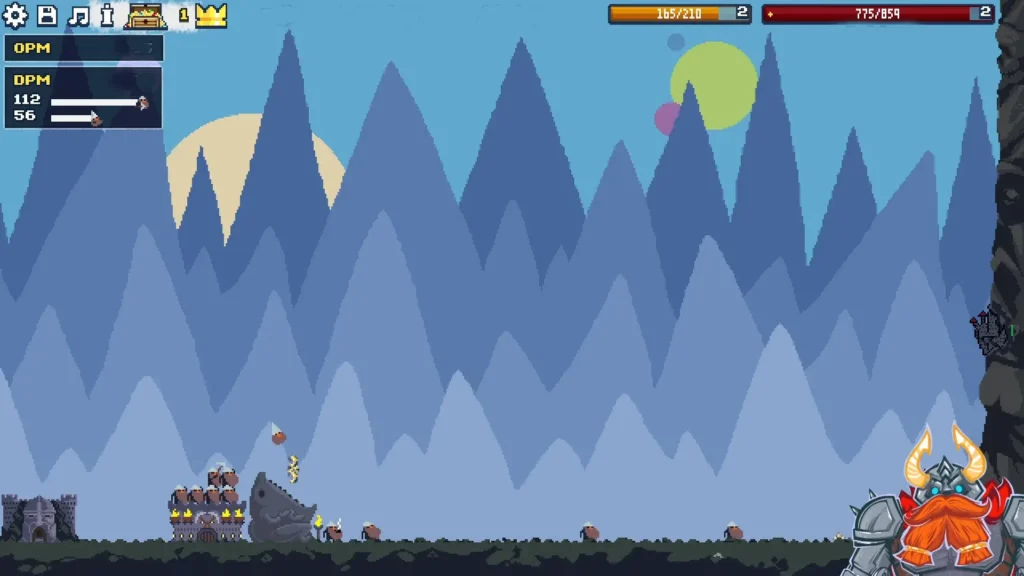
If you prefer a more idle playstyle, Flamers are your best friend. Their “Fire Fields” can overlap, creating vast, self-sustaining areas of damage on the mountain that require very little attention from you.
Use Ballistas. Ballistas are uniquely good at destroying monster dens, which are a primary source for artifacts. If you’re on the hunt for cool loot, a ballista-focused strategy is the way to go.
And The biggest trap is dragging out a slow run for too long. The moment your progress feels like a grind, it’s time to prestige. The permanent upgrades you get will make the next run so much faster.
The Final Verdict & What to Expect
Dwarf Eats Mountain is a game about the pure, simple joy of seeing numbers explode while a pixel-art mountain crumbles under your might. It’s perfectly suited for both short, active bursts and leaving it running in the background to watch the chaos. It’s been brilliantly described as an unashamed explosion of color and incremental gameplay, and the community has quickly given it “Very Positive” reviews.
FAQs
I have piles of gold just sitting there. Why isn’t it collecting?
You’ve neglected your Runners. Gold on the ground is worthless; Runners are the only unit that brings it back to your stash. Upgrade their speed and carrying capacity immediately.
What’s the best early game unit?
Flamers are widely considered a top-tier choice for early to mid-game. Their ability to create overlapping fire fields allows for great passive damage, making them perfect for an idle playstyle.
How do I get the cool artifacts?
Focus on deploying and upgrading Ballistas. One of their primary functions is to automatically seek and destroy monster dens, which are a key source for finding new artifacts.
Are there other games like this?
Fans often compare it favorably to Gnorp Apologue, another unique incremental game. If you enjoy deep progression systems, pixel art, and min-maxing weird little creatures, you’ll feel right at home here.
Can I play this on a potato?
Absolutely. The minimum system requirements call for “potato or 2.7 GHz Dual Core” and only 130 MB of storage space. Your toaster could probably run it.
What’s the best idle unit?
Flamers are excellent for passive play thanks to their overlapping Fire Fields.