

Between raids, the Monolith, three separate currencies and a workshop that barely explains itself, most new players spend their first few hours in Active Matter confused. In this guide we have covered what actually matters: how raids work, how to build a loadout you won’t cry about losing, how progression works, and the tips the tutorial never mentions.
In This Guide:
What Is Active Matter and How Does It Work?
Active Matter is a hardcore extraction shooter. You’re an operative stuck in a time loop. You leave your Shelter, drop into an unstable zone, loot, fight monsters and other players, then escape through an extraction portal. If you die, everything you carried outside your safe container is gone.
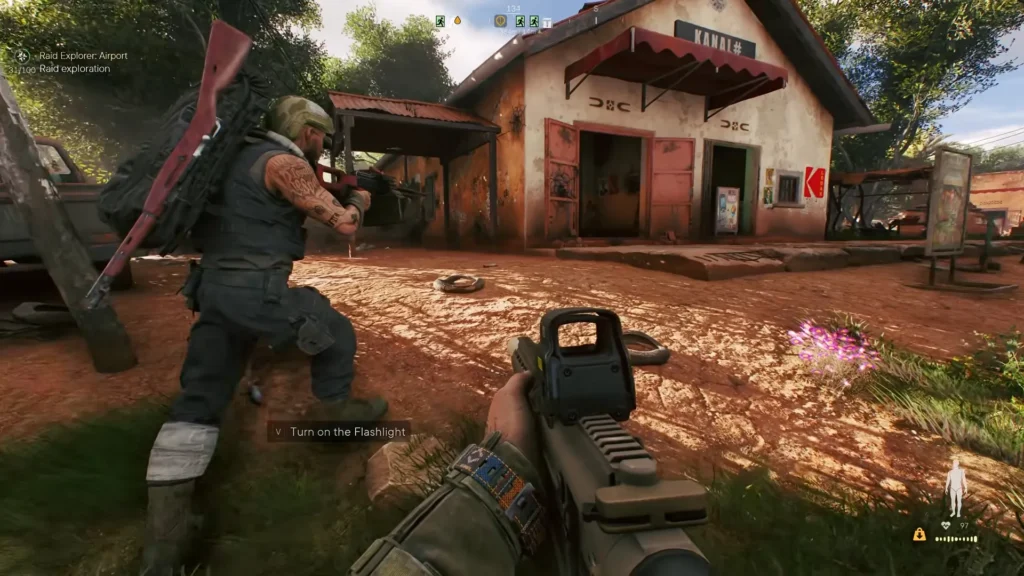
Active matter itself is the blue resource the game is named after. You get it from clusters on the ground, from killing transformed creatures, and from other players. You can collect up to 300 in a single raid, and each one is worth roughly 100 credits when refined, so a good run is a solid payday on its own.
It’s also your revive currency. Your first death in a raid costs 10 active matter to come back, and the cost climbs with each death after that.
Isolated Raids vs Open Raids: PvE and PvP Explained
There are two ways to play:
- Isolated Raid (PvE). No other players at all. Solo or with a pre-made group. You can still do every investigation, quest and daily here.
- Open Raid (PvPvE). Real players plus monsters. You pick your matchmaking mode: Any, Solo only, or Squad only, with an autofill squad toggle.
A few things I figured out in my runs that are worth knowing:
- Loot in Isolated Raids is weaker, and some of the higher-paying daily objectives are Open Raid only.
- Unstable Zone maps (like Military Base Unstable Zone and Headquarters Unstable Zone) are a battle-royale style mode. Shorter timer, fewer objectives, and no PvE option.
- Old guides claiming PvE costs tickets or is limited by your edition are out of date. That restriction was removed.
One tip from experienced players: Squad only can be the better choice even if you play alone. Squads make noise, which tells you exactly where everyone is, and they clear AI for you.
Settings and Crossplay Options You Should Change First
This is the single biggest thing console players miss. There was no forced wipe at launch, so PC players who have been at this for a year kept all their gear.
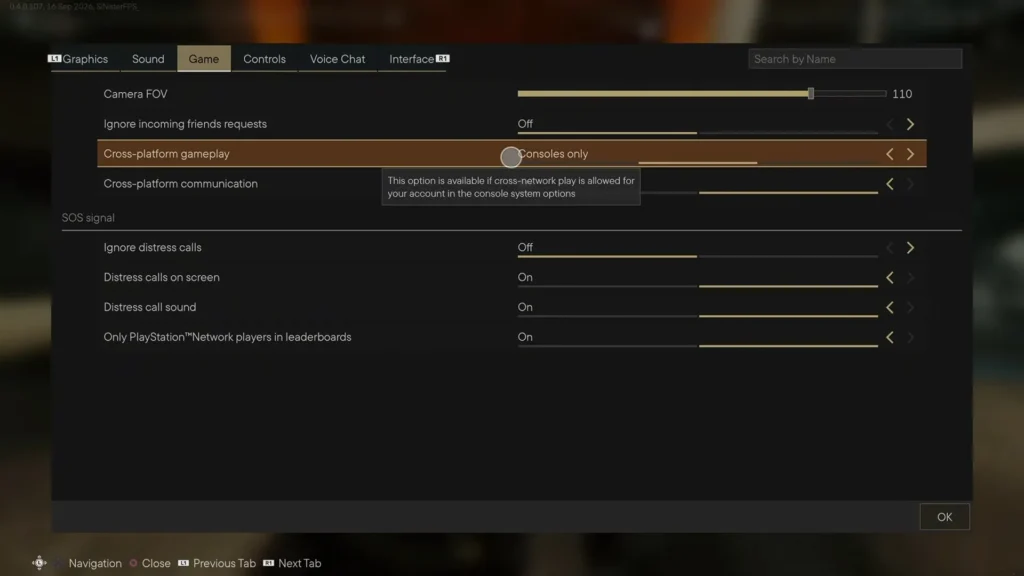
Go to Options → Game → Cross-platform gameplay and set it to Consoles only. Everyone on Xbox and PlayStation started at the same time as you. Switch to All Platforms later, once you’re confident.
Building Loadout in Active Matter
- Use the auto-equip button at the top of the gear screen. It pulls the best armour and helmet from your stash into every empty slot instantly.
- Don’t skip leg plates. Rented kits load you up with a helmet and vest and leave your legs bare. Good players shoot legs on purpose to break your movement.
- Always bring a rig. A small rig adds 625 volume, the same as a basic backpack, and gives you fast access to mags and meds.
- Always bring a flashlight. Lighting in these zones changes without warning, and areas go pitch black.
- Bring a resurrection beacon if you have one. It respawns you at your spawn point with no gear, but you can sprint back and grab your body.
- Early on, just run a shotgun. It’s strong against monsters and players, and you unlock it cheaply on the Monolith.
Loadout Trick Nobody Tells You: a heavy weapon normally eats most of your backpack volume. Drop it into your safe container instead. Because the container works on slots rather than volume, the gun fits, and you keep it even if you die. You lose the container itself, but the contents come out with you.
Active Matter Refiner, Replicator and Fusion Explained
The Refiner breaks down extracted items and gives you Credits and different types of Chronotraces.
The Replicator uses your unlocked blueprints and materials to create equipment. Some crafts take time, while Fusion can create certain items instantly.
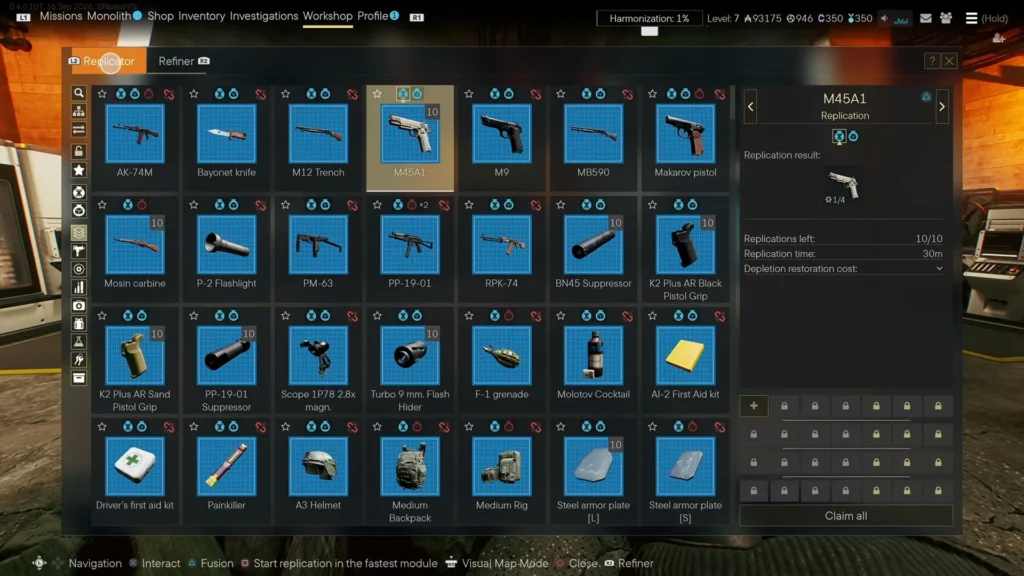
One mistake worth avoiding is blindly refining every monster part you find. Monster parts can be used to craft Chronogenes, which give your character useful buffs such as faster looting or increased carrying capacity.
With The Replicator you have three options:
- Timed replication. Cheaper, takes real time, and each blueprint has a limited number of charges. When you run out, you recharge it with chronotraces.
- Instant fusion. You get the item immediately, but it costs more chronotraces.
- Variant fusion. Only on some weapons and equipment. Gives you a different version of the item.
One mistake worth avoiding is blindly refining every monster part you find. Monster parts can be used to craft Chronogenes, which give your character useful buffs such as faster looting or increased carrying capacity.
Monolith Progression and Monolith Tokens
The Monolith is your main progression tree. Access levels run Alpha, Beta, Gamma, Delta, Epsilon, Zeta, Eta and up. Each level has requirements, and one of them is always spending Monolith Tokens. Over a full run you’ll spend well over 100,000 of them.
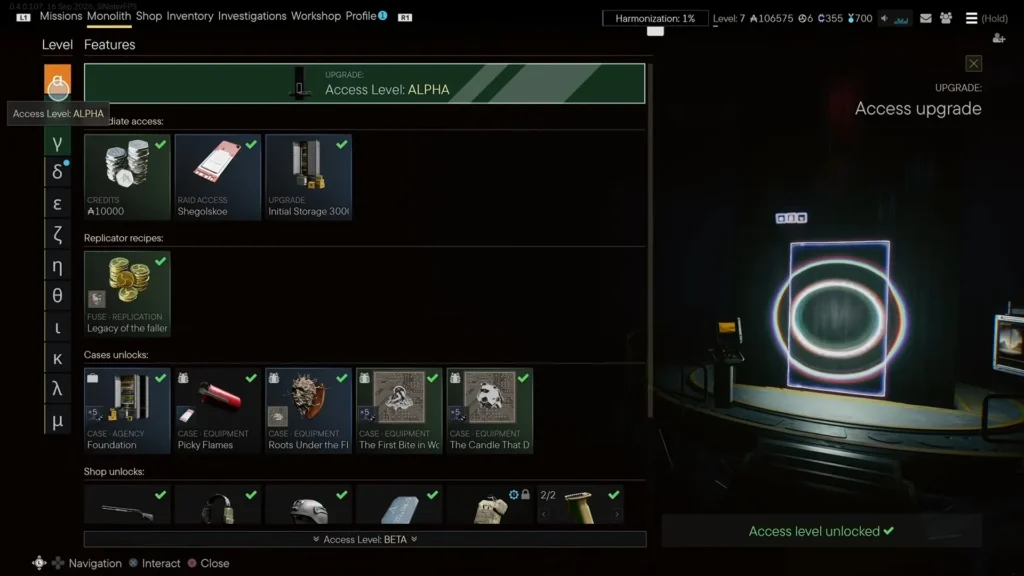
You earn tokens from end-of-raid objectives on every map, in both PvE and PvP, though PvP pays more.
Unlock these first:
- Legacy of the Fallen (Alpha): Costs about 50 tokens. Lets you trade 3 dog tags for 1,000 Monolith Tokens, once per day. It pays for itself almost immediately.
- Shelter and operative objective upgrades: Every extra objective slot means more end-raid quests per run, which snowballs your token income.
- Cases, at every level. These unlock investigations, the side-quest chains that hand out storage expansions, Prime, weapons and new maps like Park, Downtown and Gigastructure.
You can hold three investigations active at once, and you don’t lose progress on them when you die. Keep three running at all times.
You can also spend tokens to skip some requirements, like “kill 30 Devourers.” Useful, but not every step can be skipped.
Credits, Prime and Merits Explained
Four currencies, and they are very different from each other.
Credits
Everyday money. Weapons, ammo, plates, meds. Earn them from contracts, loot and refining active matter.
Monolith Tokens
Progression only. Spend them on the Monolith.
Prime
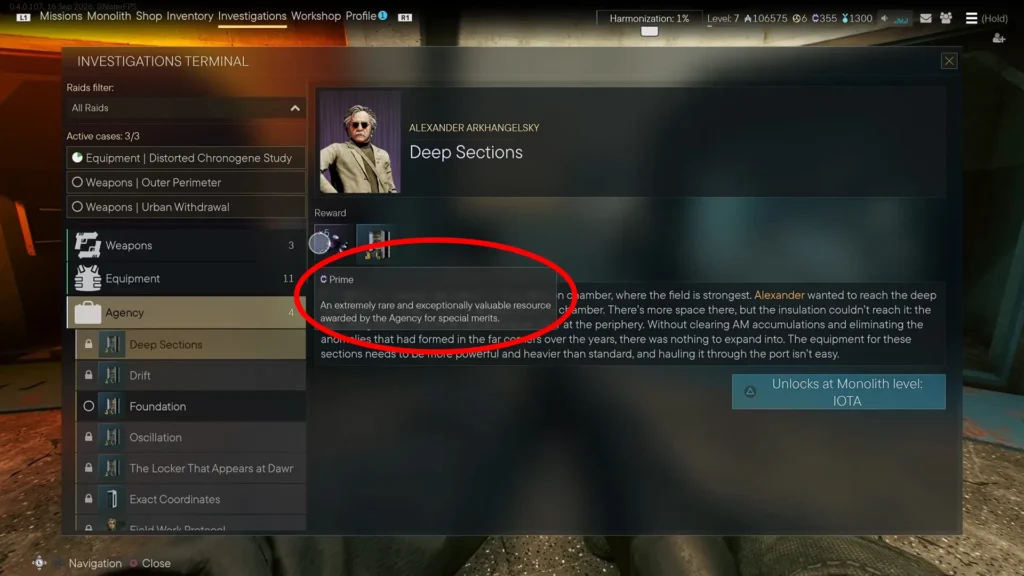
Premium currency for safe containers, beacons and similar. It comes from investigations and the daily priority objective highlighted in purple. You can convert it into Monolith Tokens, at roughly 500 Prime for 5,000 tokens.
Merits
Added right before launch and tied to Harmonization Cycles. You earn 250 per day from completing three objectives, up to 3,500 from clearing all Monolith access levels, and 7,500 when you prestige. The cap is 10,000, and anything above that is not credited, so spend before you hit it.
Harmonization and Wipes Explained
When you reach the end of the Monolith, you can harmonize (also called self-wipe or prestige). You choose a permanent reward, then start over. You lose credits, stash, blueprints, Chronogenes and anything you placed in your Shelter. You keep your Prime, dog tags, prestige rewards and your edition’s starting equipment, which is returned to your stash.
Two things make this less painful than it sounds. Prestige rewards are genuinely good, so plenty of players reset within days of finishing. And after a reset, you can spend Monolith Tokens to skip investigation objectives you’ve already completed, so you don’t grind the same quests twice.
Do you have any tips that could help new players? Tell us in the comments below!