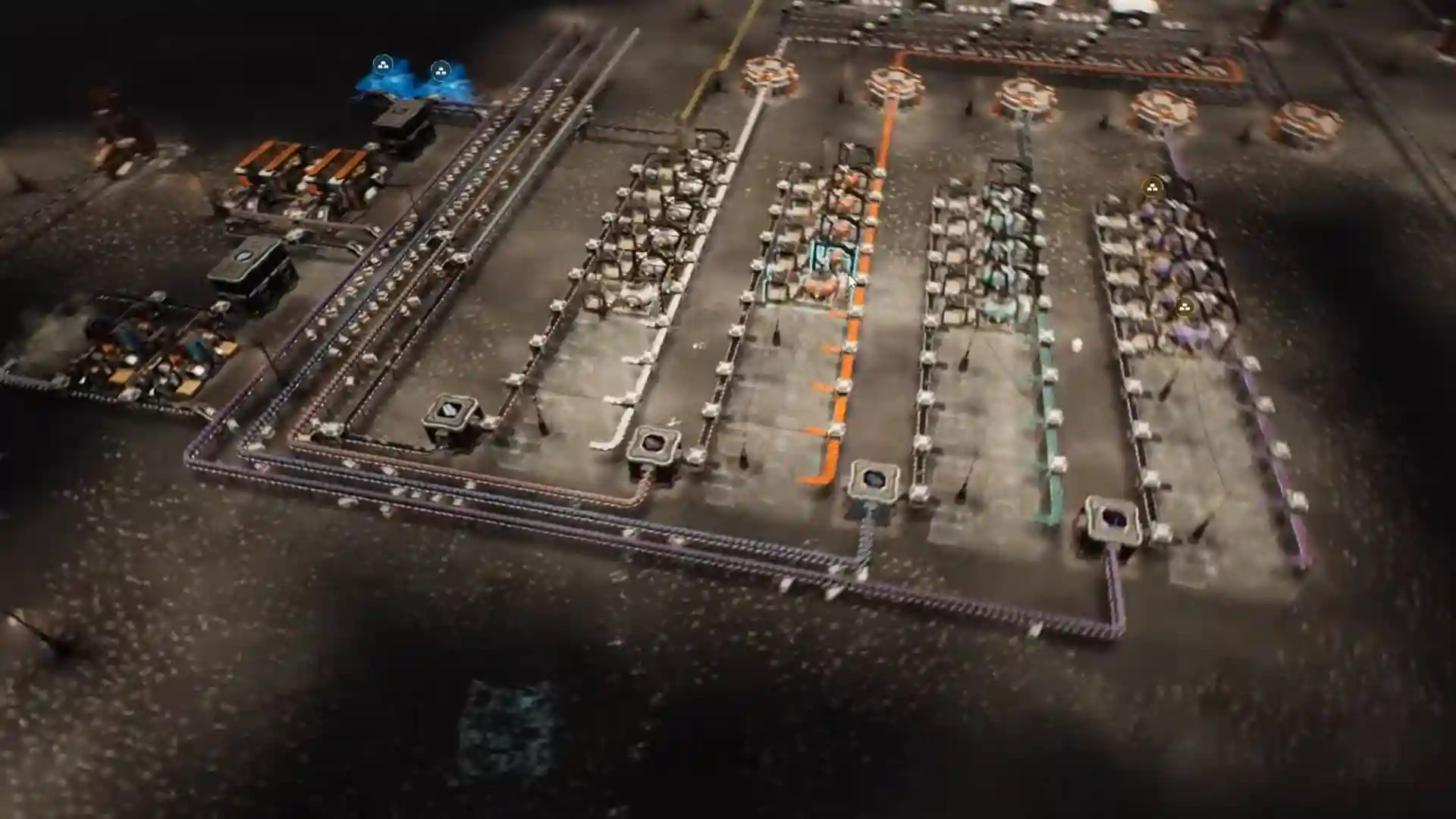


The Crust, the lunar colony-builder from VEOM Studio left Early Access on September 10, 2026. Feeding your colonists ties directly into your mining and manufacturing chains, which is what trips most people up. Here’s how it all fits together, from raw Slag to a plate on a Dining Table and how you should automate the whole process.
In This Guide:
How Food Works in The Crust
Every colonist needs oxygen, a bed, food, and somewhere to eat it. Food doesn’t grow on its own. You have to put some effort into it:
Slag (a leftover from refining Regolith and Ice) → a Farm turns Slag into Organics → a Kitchen turns Organics into Food → colonists eat that Food at a Dining Table.
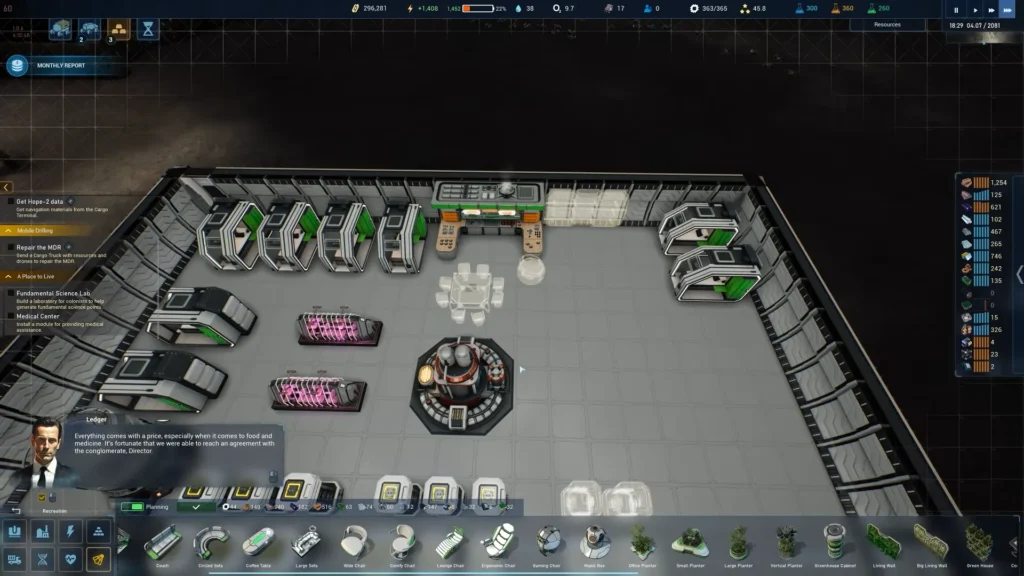
Keep in mind that your food supply is tied to your mining operation. If you’re not refining enough Regolith and Ice, you won’t have enough Slag, and it won’t matter how many farms you build. Organics also spoils if it isn’t kept refrigerated, which is why every farm comes with a built-in cold storage buffer for its output.
How to Produce Food
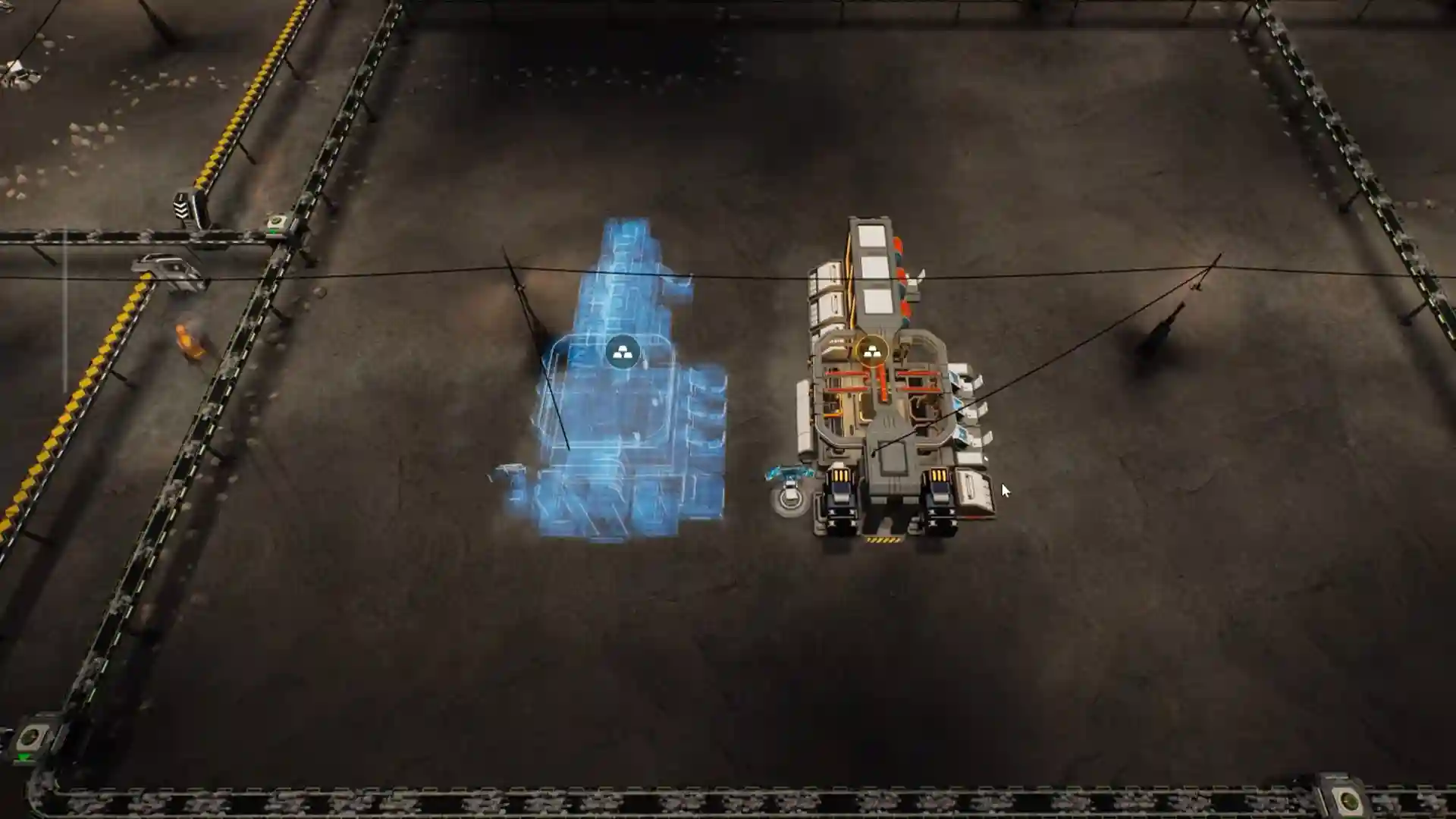
Three buildings turn Slag into Organics: the Hydroponic Farm, the Large Hydroponic Farm, and the Mushroom Farm. All three also need Water and Power running to them.
Organics
Organics is the raw food resource. Colonists can’t eat it directly. It has to pass through a Kitchen first. It’s also the same resource used to make Carbon Fiber and Medicines, which matters a lot once your colony grows (more on that at the end). Since it spoils, don’t let it sit around; keep it moving into storage or straight into a Kitchen.
Hydroponic Farm
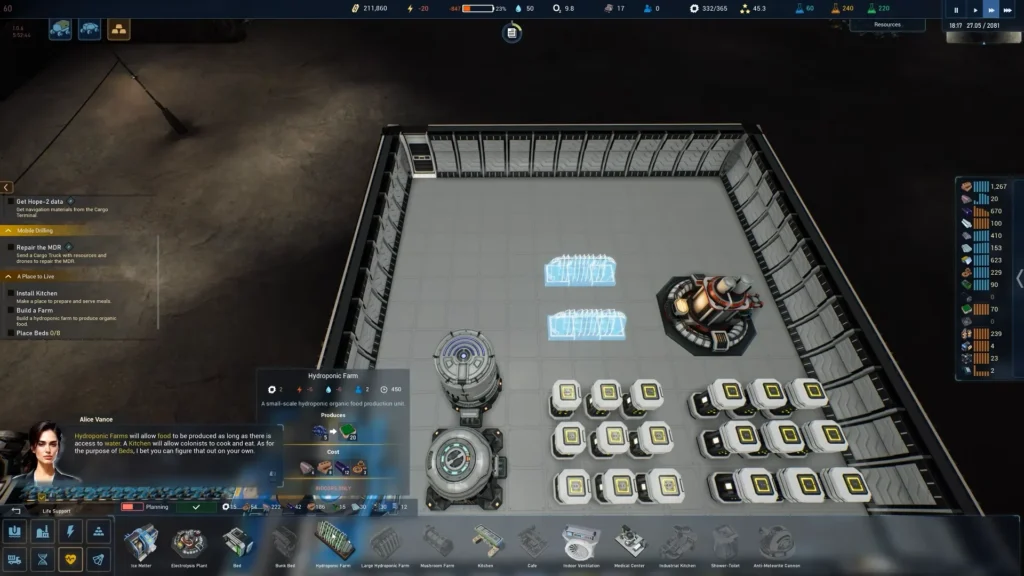
Your first and cheapest food building. It turns 5 Slag into 20 Organics every 400 seconds so about 3 Organics a minute, and needs 2 Biologists to run.
Large Hydroponic Farm
This is just the upgraded version of Hydroponic Farm. It turns 10 Slag into 50 Organics every 500 seconds, about 6 Organics a minute which is double the output of a basic Hydroponic Farm, and slightly better use of your Slag too (5 Organics per Slag instead of 4). It costs more to build, but it’s the better long-term investment once you can afford it.
Mushroom Farm
An alternative that turns 5 Slag into 10 Organics every 180 seconds, about 3.3 Organics a minute. On paper that looks close to a basic Hydroponic Farm, but it burns through Slag twice as fast for the same Organics (2 per Slag instead of 4), needs 4 Biologists instead of 2, and its upkeep material is microprocessors which is usually a scarcer resource early on than the titanium plates a Hydroponic Farm needs. That’s why most players stick with the Hydroponic line unless they have Slag and microprocessors to burn.
How Kitchens Turn Organics Into Food
Kitchen
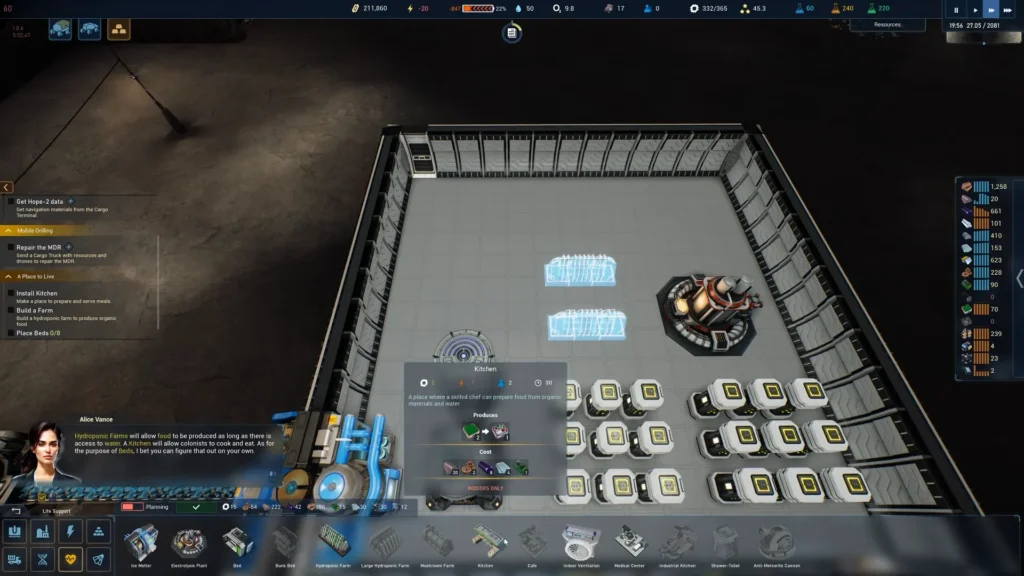
The Kitchen turns Organics into actual Food, and you need at least one in every base. At its base rate it converts 2 Organics into 1 Food per minute, and needs a Cook assigned to it. Unlike farms, the Kitchen has no conveyor belt connections at all just an internal buffer (128 Organics in, 64 Food out), so Organics has to be carried to it, not piped straight through a belt.
Industrial Kitchen
This is the bigger, later-game version of the Kitchen, added a few updates before 1.0. It works the same way: Organics in, Food out, a Cook required, just at a larger scale. Worth switching to once you’re feeding a big colony instead of running several small Kitchens side by side.
How to Automate Food With Conveyors
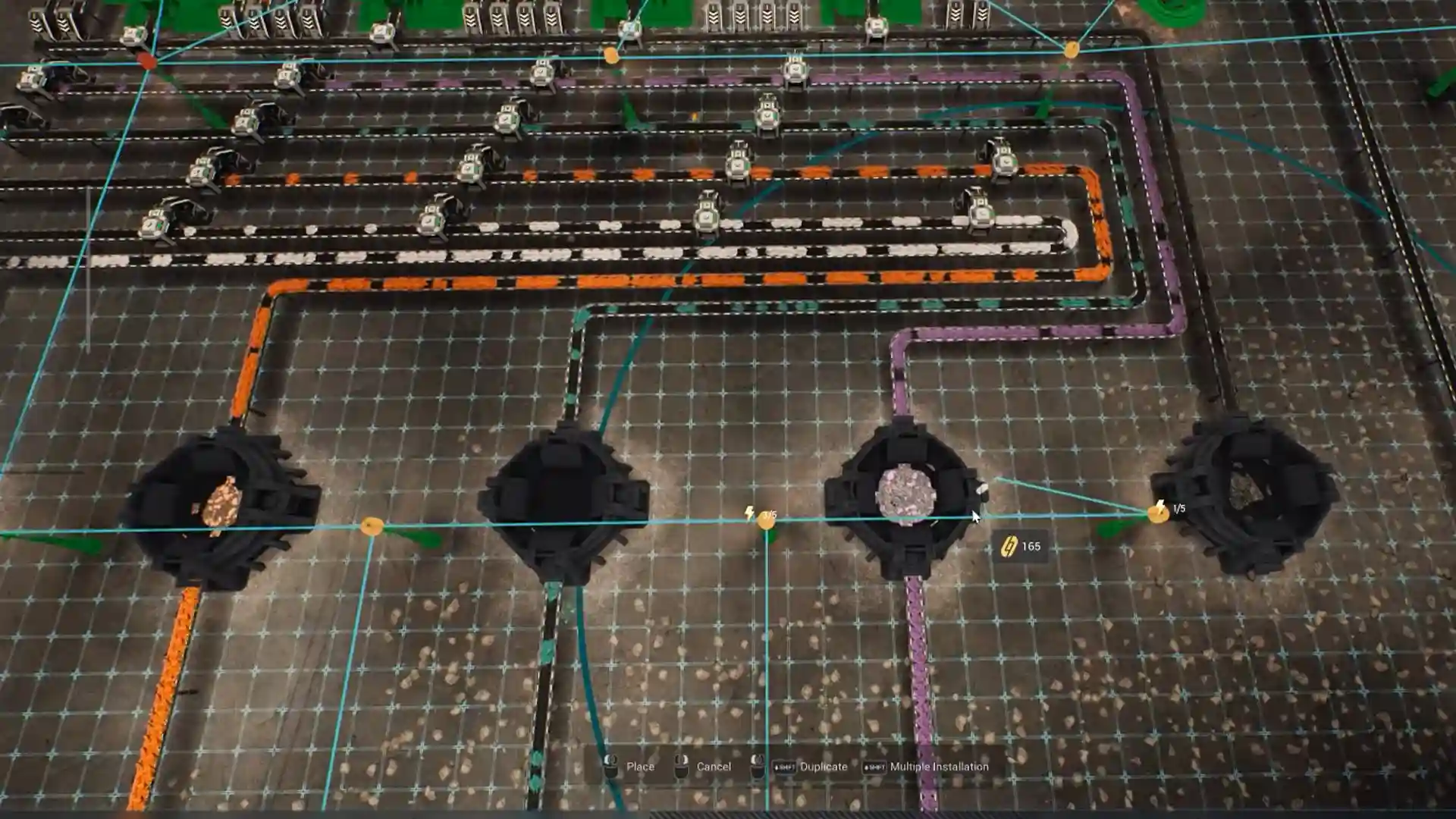
Farms connect to conveyor belts on both ends: Slag in, Organics out. That means you can run a belt straight from your Regolith or Ice refining line into a farm, and another belt carrying Organics out to storage.
The Kitchen is the exception. Since it has no belt connections, something has to physically carry Organics into its buffer and carry finished Food back out, the best option being a Hauling Drone. Keep Kitchens close to your Organics storage and dining area so hauling distance doesn’t become the bottleneck.
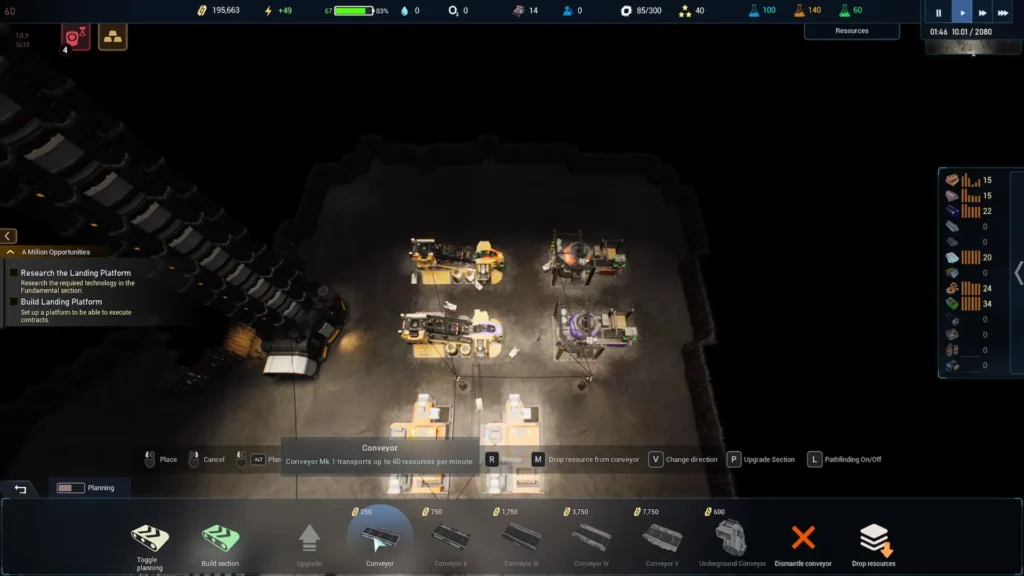
If more than one building draws from the same Organics line (a Kitchen and a Carbon Fiber Factory for example), use a Distributor’s priority setting to decide who gets fed first when supply runs short. Otherwise it splits evenly and both end up short.
Why Are My Colonists Hungry Even Though I Have Food?
You might have enough food but see that your colonists are still hungery. The reason is usually one of these:
- No Cook actually assigned and working the Kitchen (check they haven’t been reassigned to another job)
- No Dining Table near the Kitchen or food storage
- Food stuck in a Cold Storage Cabinet that never gets hauled over to a Refrigerator near the dining area
- A Distributor set with the wrong priority, quietly routing Organics or Food somewhere else
How Many Farms and Kitchens Do You Need?
Based on the game’s own production numbers, here’s roughly how many Kitchens each farm type can keep running at full speed:
| Farm | Organics per minute | Kitchens it can feed |
| Hydroponic Farm | ~3 | About 1.5 |
| Mushroom Farm | ~3.3 | About 1.5–2 |
| Large Hydroponic Farm | ~6 | About 3 |
So one Large Hydroponic Farm can comfortably run three basic Kitchens, while a single small Hydroponic or Mushroom Farm covers closer to one or two.
Food vs. Carbon Fiber: Managing Your Organics
Organics doesn’t only go into food. The Carbon Fiber Factory also runs on it, turning 4 Organics and 6 Water into 1 Carbon Fiber a minute. Carbon Fiber is a mid-game building material you’ll need constantly, even the Large Hydroponic Farm itself needs Carbon Fiber to build. So your farms end up supplying two competing production lines from the same Organics.
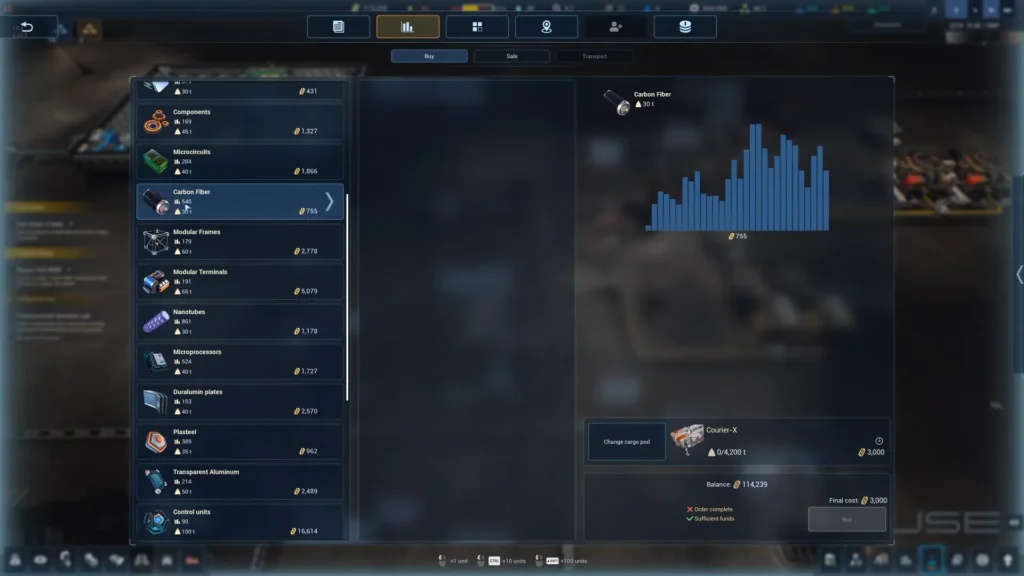
Players run into this trade-off a lot: build up Carbon Fiber and your Kitchens start running dry; keep Kitchens fed and Carbon Fiber production stalls. These are a few ways I found to keep both sides happy:
- Use a Distributor’s priority setting to decide whether Kitchens or the Carbon Fiber Factory get first access when Organics run low.
- Once your colony is established, build a farm dedicated purely to Carbon Fiber instead of pulling from your food supply.
- Buying Food or Carbon Fiber through contracts to cover a short-term gap is a normal strategy and is often cheaper than overbuilding farms you don’t need long-term.
Overall cooking in The Crust game is a simple but crucial process that many people are struggling with. I tried to answer the most common questions players are asking. If you found a useful tip please tell us in the comments below.