

Leather kept blocking every piece of gear I wanted to forge once I reached the Mall, and Welcome to Elderfield never actually explains where it comes from. It’s not sold anywhere, and it’s not something you stumble into. You have to craft the Leather yourself through a couple of processing stations.
Here’s the exact chain you can use to keep yourself stocked, plus what it’s actually worth saving it for.
What Is Leather in Welcome to Elderfield?
Leather is a crafting ingredient that is described in the game as “tough but flexible.” Leather can be sold for 60 gold if you’d rather cash it in than craft with it. It isn’t sold in any shop and I haven’t seen it drop directly off enemies. Every piece you ever own comes from processing raw material.
How to Get Leather (Step by Step)
The full chain looks like this:
- 1x Bloody Skin + 2x Crushed Bones + 2x Salt, processed in a WFitching Mortar → Scraped Hide.
- Scraped Hide, smelted in a Furnace (1 Coal, about 2 hours) → Leather.
Both stations are easy to reach early on. I have to say that my Witching Mortar came free the moment I placed my starter Workbench. Also, the Furnace opened up naturally through Hans and Molly’s early questline. That said, I was never locked out of Leather for long.
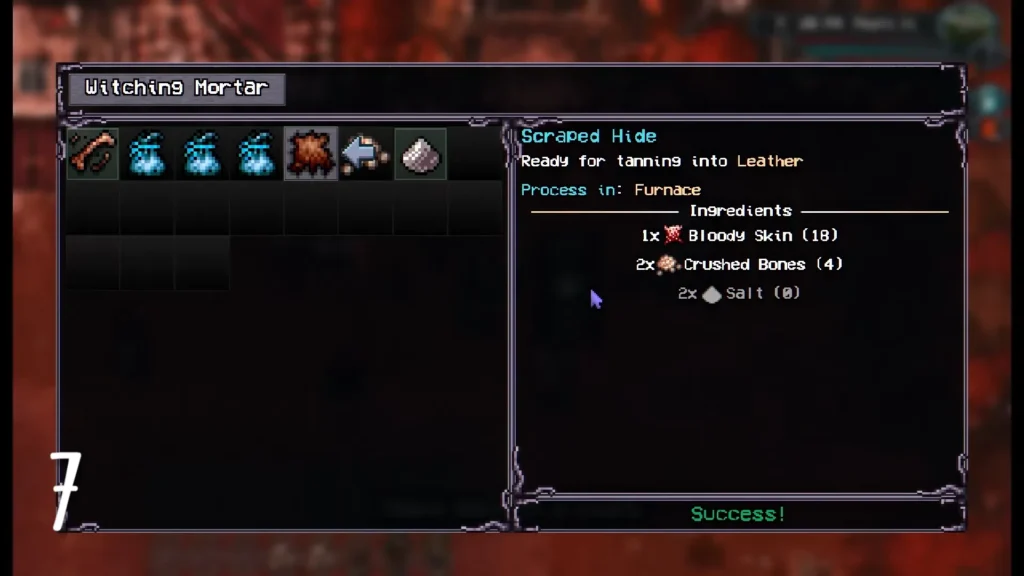
Where Can I Find Bloody Skin, Crushed Bones and Salt?
Bloody Skin: Dropped by most enemies you fight around the Farm, Town and Mall. I stopped running short on it once I realized regular combat kept my stock full. That means you don’t need to bother foraging it.
Crushed Bones: Made from Bones in the same way Witching Mortar and Bones come from grinding Mystery Meat, which drops frequently off the same enemies.
Salt: Comes from Salt Rock, which I mine in the Mall Mine and Old Woods Mine, then run through a Grinder.
What Is Leather Used For in Welcome to Elderfield?
Leather shows up constantly in armor forging, and the amount you need increases fast the higher you push through the equipment tiers.
| Armor Tier | Leather per Piece |
| Iron (Helmet, Chestplate, Greaves, Legguards) | 2x |
| Verdite (Greaves, Legguards) | 4x |
| Plantium (Helmet, Chestplate, Greaves, Legguards) | 8x |
| Plague Doctor (Boots, Legguards) | 10x |
It also turns up in a handful of other late-game armor recipes, so you might want to keep a running stockpile rather than crafting the exact amount you need for one item at a time.
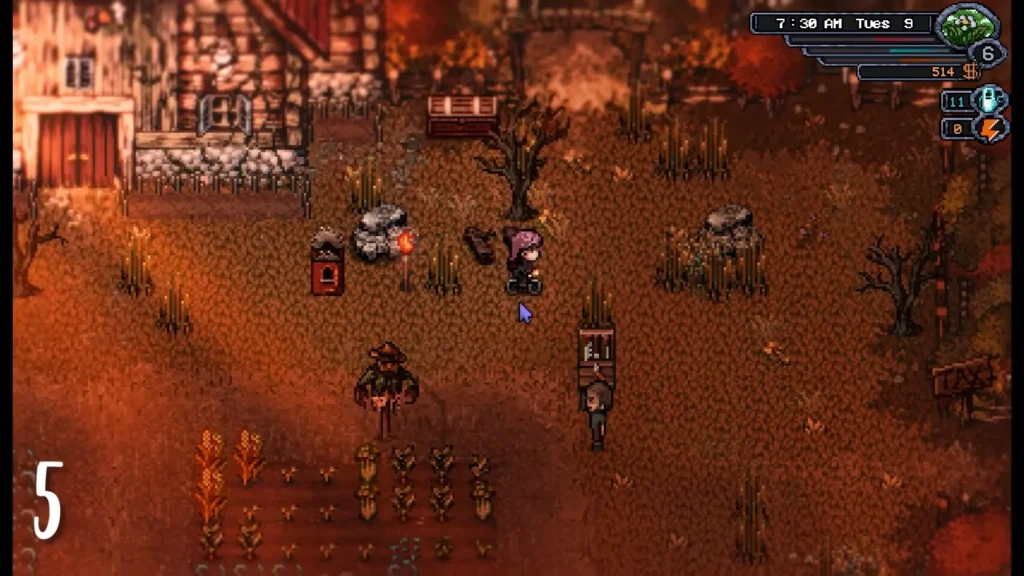
Leather Farming Tips
- Fight instead of forage. Bloody Skin comes from combat drops, not gathering nodes. So, clearing Farm, Town and Mall is the fastest way I’ve found to stack it up.
- Batch your Scraped Hide. The Witching Mortar step is quick, so process Bloody Skin into Scraped Hide in bulk, then queue up Furnace runs since those take the real time.
- Keep Coal stocked. Each Furnace run costs 1 Coal, so running out of Coal is usually what slows my Leather production down, not the hide.
- Mine Salt Rock in bulk. This will enable you to grab it whenever you’re already in the Mall Mine or Old Woods Mine for other ores, instead of making dedicated trips just for Salt.
Can I buy Leather?
Not that I’ve found. It can only be crafted, through the Scraped Hide → Furnace chain.
Is Leather the same as Rawhide?
No. Leather comes from Scraped Hide in a Furnace, Rawhide comes from Thick Hide on a Drying Rack.
What do I need to unlock before I can make Leather?
A Witching Mortar (comes free with your starter Workbench) and a Furnace (unlocked early through Hans and Molly’s questline).
How much does Leather sell for?
60 gold. Though you’d rather craft with it than sell it once you reach the armor-forging stage.