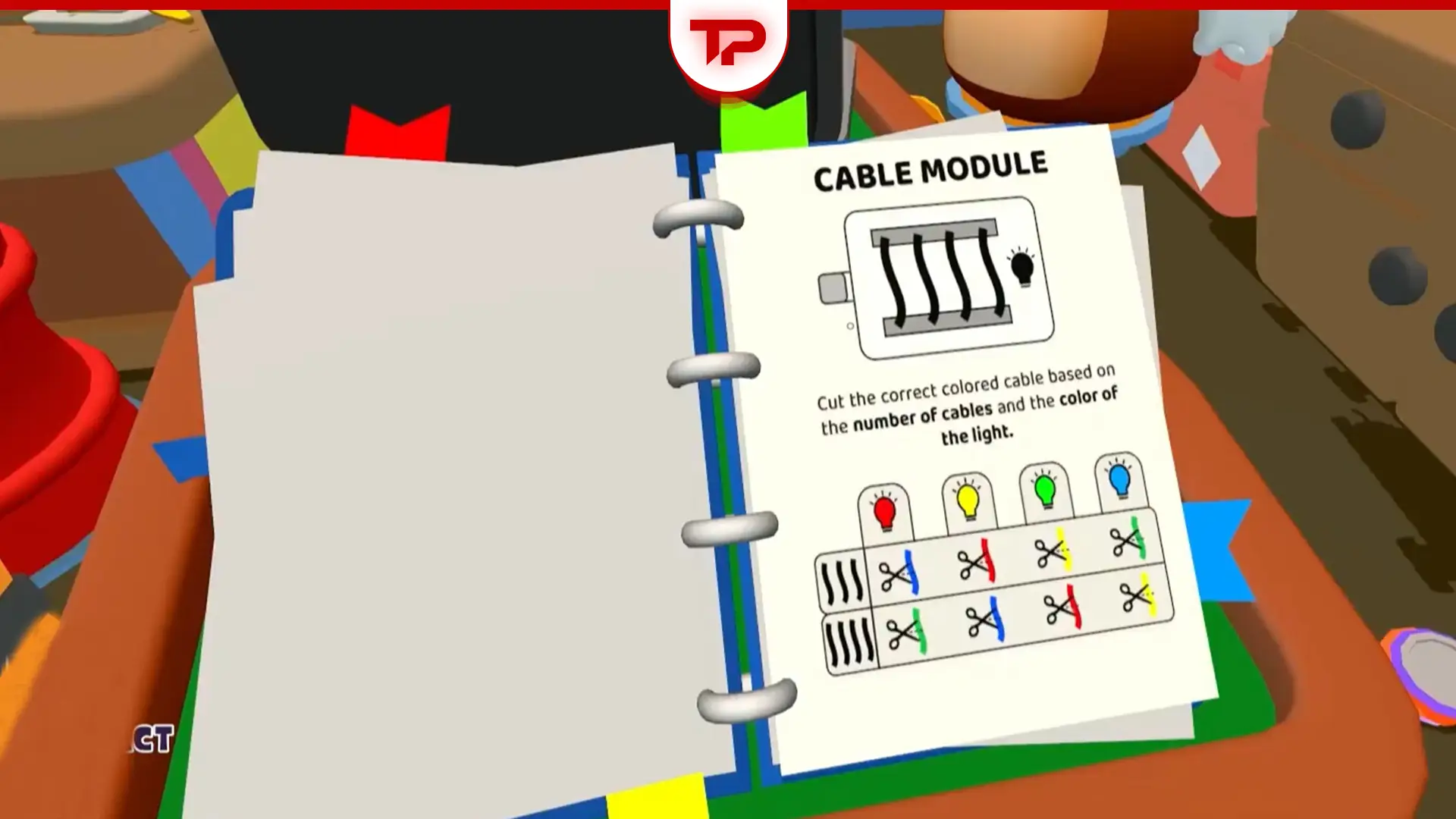


If you’ve spent any time in BOMBANANA, you’ve almost certainly lived through the classic moment where someone yells Open the BOOK! only for the Mute to freeze, flip through random pages, and watch the timer hit zero.
The book (officially the bomb disposal manual) is the single most important object in the entire game, and at the same time it is the number-one cause of mid-round arguments and temporary friendship terminations. This guide exists to turn that chaos into something manageable.
About the Book:
Who Uses the Book and How
The Mute Monkey is the sole owner and reader of the book. Their job is to locate the correct section, cross-reference the details the team provides and then gesture the final instruction.
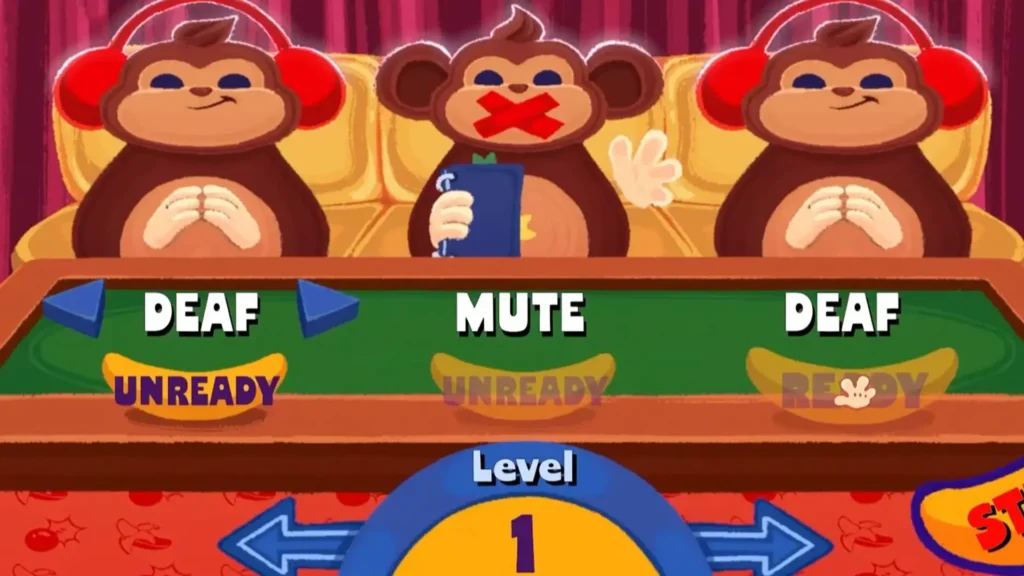
The Deaf Monkey watches those gestures and converts them into clear spoken commands for the Blind Monkey.
The Blind Monkey, who is the only one who can physically interact with the bomb, then executes the action after repeating the instruction back for confirmation. Information is designed to flow in only one direction. Trying to reverse or short-circuit this chain is one of the fastest ways to create a new crater in the floor.
How the Book Actually Works
The BOMBANANA book/manual is not a single endless wall of text. It is carefully organized by module type, with each major puzzle family occupying its own section and sometimes spanning multiple pages.
A critical detail that trips up almost every new Mute is that the book has multiple pages. If the page currently open does not match the module the team is describing, the Mute must keep flipping until the correct section appears.
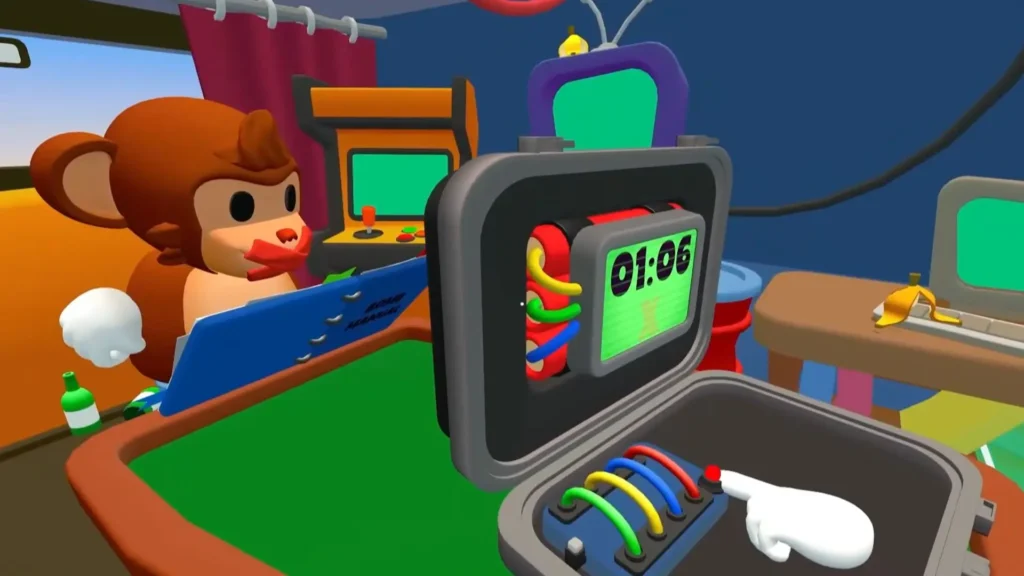
Note: Some modules also contain stages. After a partial success or a mistake, the relevant row or column can change, which means the Mute often needs to re-check the book from scratch rather than relying on earlier information.
Practical Lookup Flow
A reliable sequence that successful teams use looks like this:
- The Deaf Monkey begins by clearly stating the module name and its position on the bomb.
- The Mute immediately flips to the matching section in the book.
- Once the Mute has located the correct row or column, they gesture the answer using the agreed upon signals.
- The Deaf translates that gesture into spoken instructions, the Blind repeats the instruction back for confirmation, and only after that confirmation does anyone actually touch the bomb.
Skipping the repeat-back step is one of the most common ways teams turn a solvable module into an explosion.
Gesture Dictionary
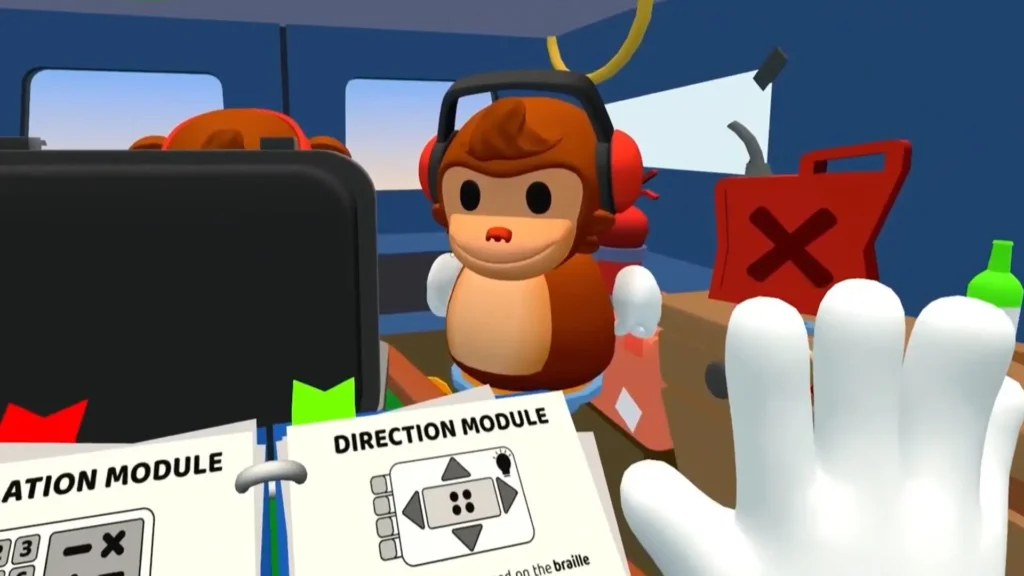
Before the timer even starts, the team should agree on a small, clear set of gestures and stick to them for the entire session.
- Numbers 1–9: Fingers (hold them high and clear)
- Yes (Confirm): Big nod or thumbs up
- No (Wrong): Hard head shake or middle finger (Why would someone lose the opportunity to show their middle finger to his/her friends?)
- Wait (Hold): Open palm
- Repeat: Spinning finger
- Up or Down: Thumbs or head tilt
- Directions: Point or use 1=up, 2=right, 3=down, 4=left (clockwise is the most common code)
Module-Specific Book Survival Tips
In the table below, you can find the guide for the most common modules in the book:
| Module | What to Do |
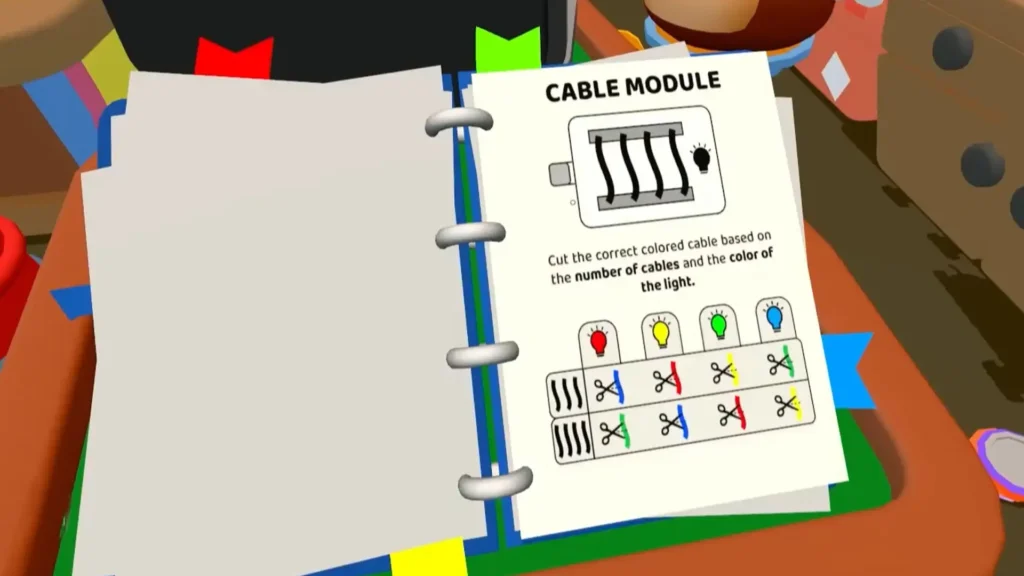
| Cable | The Mute looks up the combination of total wire count and indicator light color, then gestures the specific wire number that must be cut. Empty slots are ignored, only actual wires are counted. |
| Switch (Lever Sets) | This one requires the Deaf to read the colors from left to right while the Mute looks up each individual color and gestures whether that slider should be pushed fully up or fully down. |
| Directional arrow or D-pad | Modules combine a Braille number felt by the Blind with the light color called by the Deaf. The Mute crosses those two pieces of information and gestures the correct direction. |
| Math and keypad | Modules usually begin with the Deaf reading the full expression and the resulting light color. The Mute then finds the matching button based on rules such as even-or-odd combined with color. |
| The symbol wheel | Requires someone to rotate the dial until a particular symbol produces a sound. The Deaf must describe that exact symbol with extreme precision. Differences like rounded hourglass versus sharp hourglass matter while the Mute matches the symbol against the current order of the three colored lights. |
| Piano | In this one, the Deaf calling the light color and the Blind reports the Braille on the keys. The Mute uses the combination of key letters and light color to indicate which numbered key should be pressed. Keeping a standard piano layout (C D E F G A B) visible the first time this module appears saves a surprising amount of panic. |
| Soundboard | Typically, requires pressing buttons until a sound plays, after which the team uses Braille numbers, colors, and sometimes the distinction between X marks and dots to determine the correct sequence from the book. |
Common Book-Related Disasters: How to Avoid
Most explosions that feel unfair can be traced back to a handful of recurring mistakes. Some of the main mistakes I experienced playing with my dumb friends:
- The Mute forgets that pages need to be flipped.
- The team fails to name the module and its position before dumping details.
- Gestures are delivered too small, too fast, or too ambiguously for the Deaf to read cleanly.
- The Blind acts on the first instruction without repeating it back.
- After a single mistake the team tries to patch the error instead of performing a full module reset, or the group simply opens an external voice chat and bypasses the Mute entirely, which removes the entire point of the game’s design.
Each of these problems is preventable once the team treats the book as the central authority and protects the communication chain around it.
Pro Mute Mindset
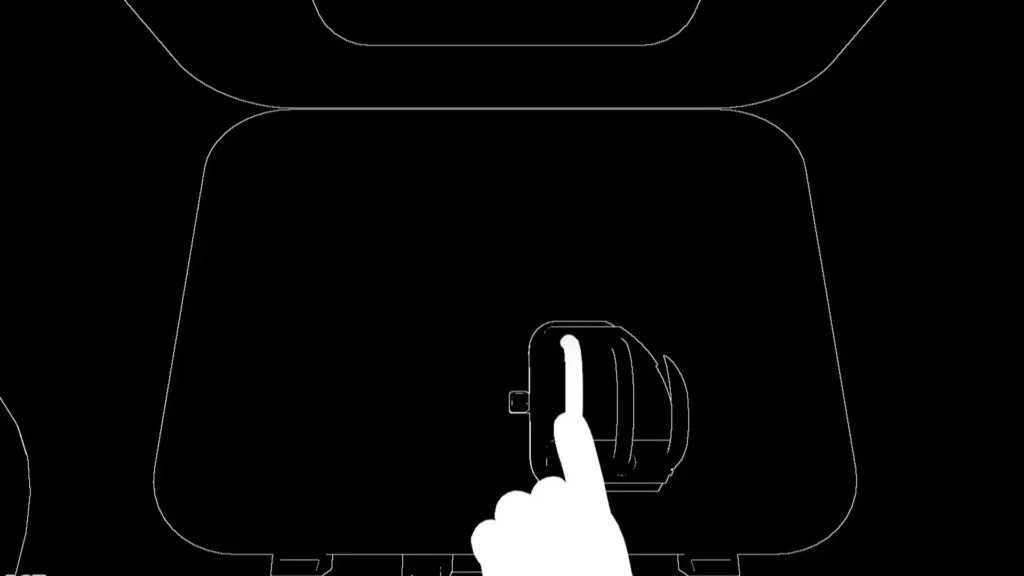
The best Mute players do not wait for a complete description before moving. The moment the Deaf mentions a blue wire or a red light, their hand is already turning pages toward the relevant section. Anticipation turns the Mute from a passive reader into the silent strategist of the team. When the book is used this way, the controlled chaos of BOMBANANA starts to feel less like three confused monkeys and more like a single, slightly dysfunctional machine that actually knows what it is doing.
Master the layout of the book, lock in your gesture dictionary early, keep callouts clean and ordered and the same bomb that once felt impossible becomes just another puzzle you already know how to solve.

