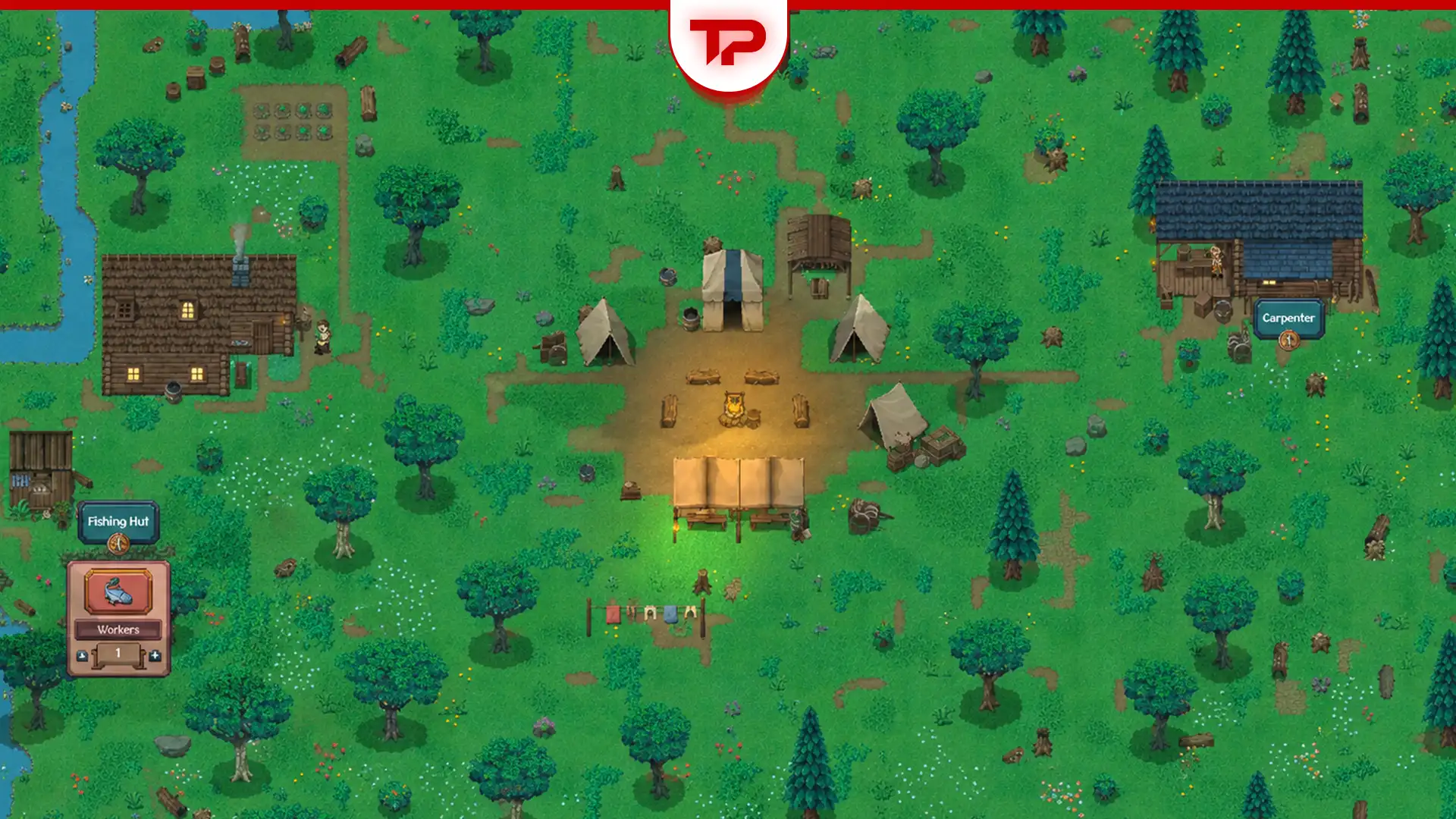


Welcome to one of the coziest city-builders around. You begin with three tired refugees and a single campfire in the middle of nowhere. Your job? Turn that tiny campsite into a thriving medieval kingdom complete with farms, trade ships, magic academies, stone walls and soldiers who can handle goblin raids.
This guide walks you through every important system and gives you the practical advice that actually helps. I’m already in love with this game (I’ve been playing the Demo and I purchased the full version immediately after August 19th release), hope you feel the same.
About Hearth and Hamlet:
The Core Loop of Hearth and Hamlet
The heart of the game is simple. You gather resources by holding down the mouse button (it automatically gathers at maximum speed, so no frantic clicking is required).
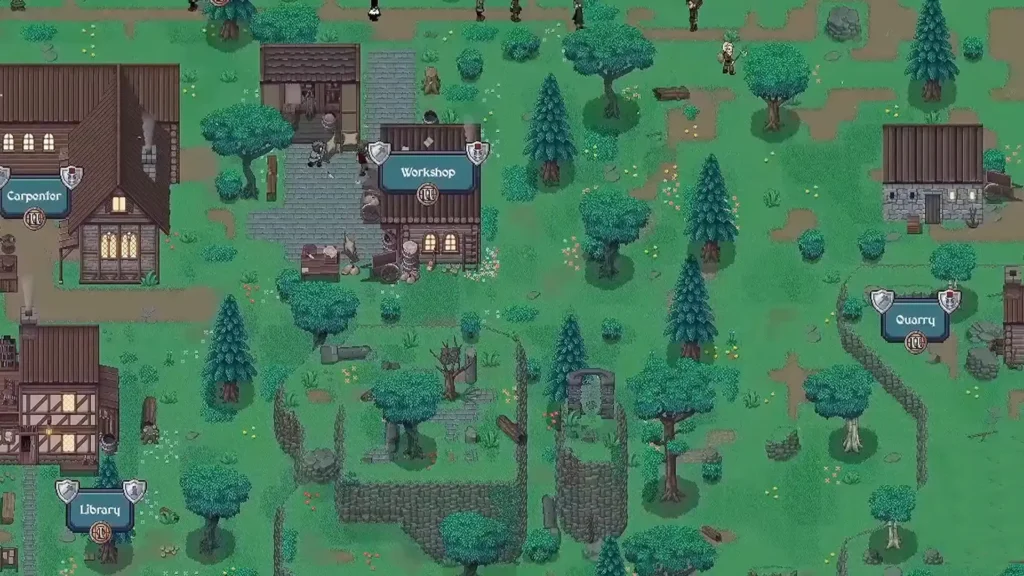
Once you have workers, you assign them to automate production. You spend those resources on buildings and upgrades, unlock research that makes everything stronger and keep a healthy food surplus so your population keeps growing. And let me tell you something, FOOD is really important in this game. Manage it and you manage many things.
Every new system actually feeds back into this loop. Just learn the basics early and the later stages feel much smoother.
Getting Started: The Critical First Hour
Your very first actions set the pace for everything that follows. Hold-click on wood until you can upgrade the starting camp.
Assign your first spare worker to wood production right away. The next camp upgrade unlocks fishing, so move workers onto food as soon as possible. Food is the single most important resource in the early game because surplus food directly controls population growth.
Build the Fisherman’s Hut and Woodcutter’s Hut the moment you can afford them. Keep a small but steady food surplus at all times. If the food security timer drops too low, population growth stops completely.
When the Chief’s House becomes available, prioritize it. This building unlocks the quarry, hunting cabin, and carpenter, which dramatically expand your options.
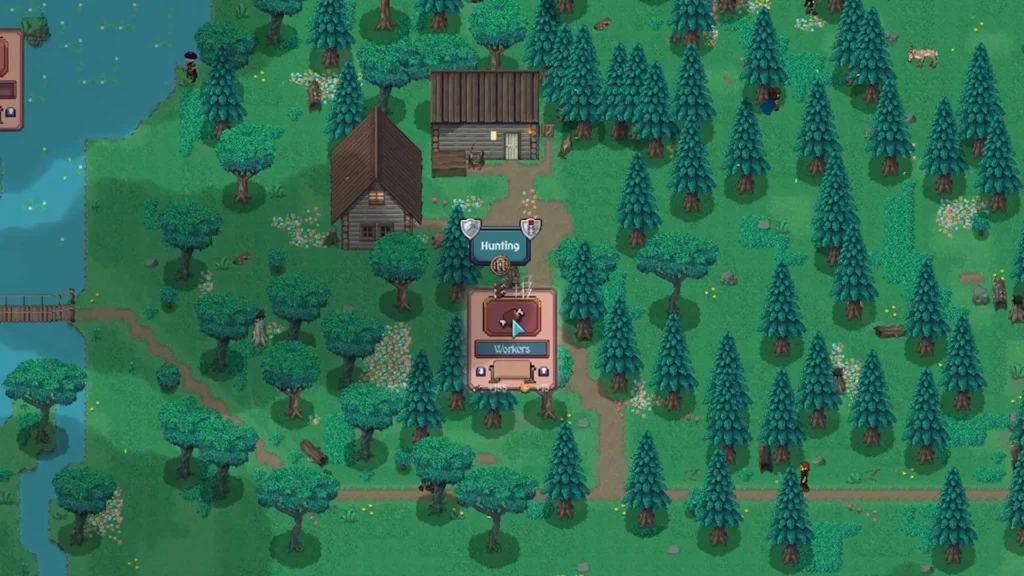
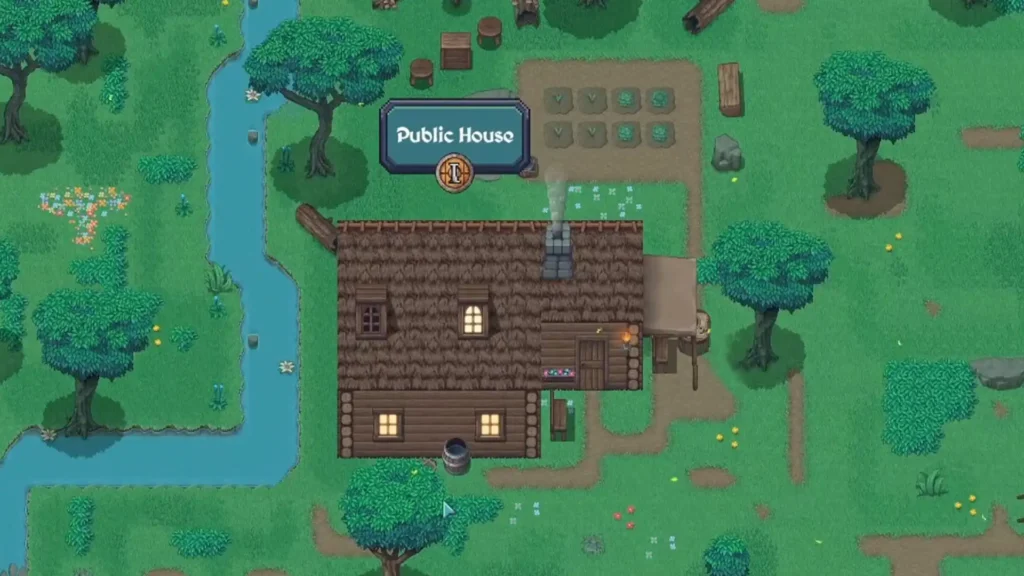
Hunting produces more food per worker than fishing in the early stages, so shift workers over once the hunting cabin is built. The Public House (tavern) should also come online relatively early because its happiness bonus gives a flat production increase that helps every resource.
Resources and Why They Matter
Here are the most important resources you should manage in this game. Manage them and everything becomes smoother:
- Food is the foundation of your entire kingdom. A consistent surplus creates population growth multipliers (low, medium, or high depending on how comfortable your food situation is). Without that surplus, your town simply stops expanding.
- Wood is used in almost every early and mid-game building.
- Stone arrives a little later and quickly becomes a constant requirement.
- Iron unlocks after you build the Town Square and is essential for tools, soldiers and many important upgrades.
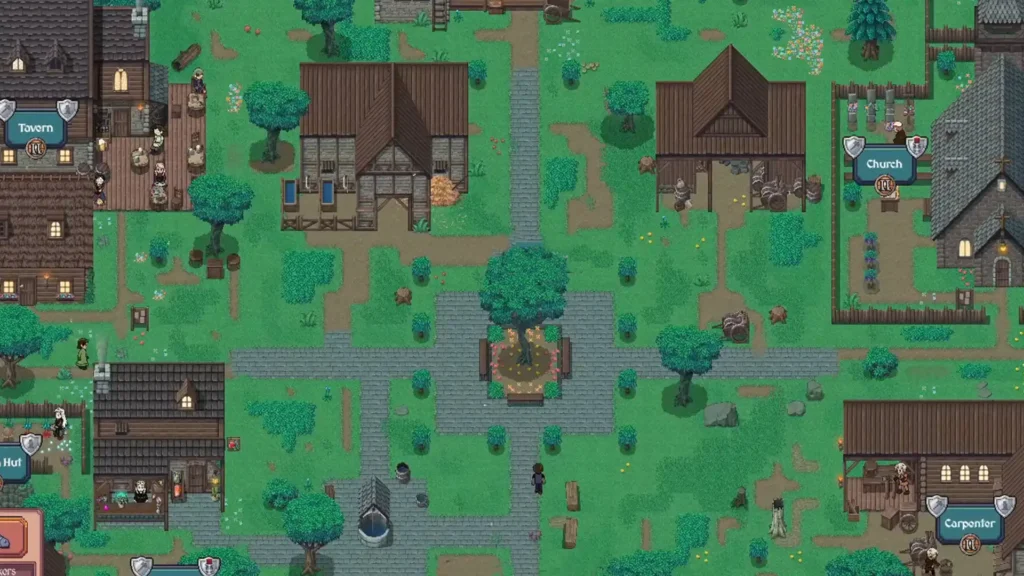
- Gold becomes the main bottleneck once you reach the mid-game. You obtain it by crossing the river, through hunting, via trade and eventually through taxes (I hate taxes when I suppose to be the one who pays).
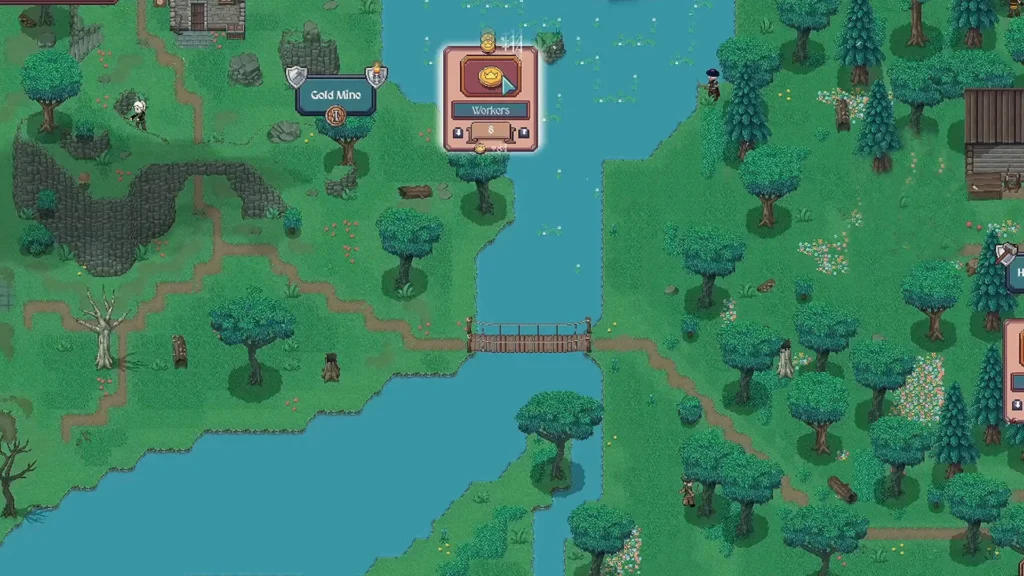
- Magic appears in the late game from the swamp area and powers advanced systems.
- Blueprints are the ultimate progression gate. Higher-tier blueprints (expert/blue and later purple) are required for the best building upgrades and are mainly purchased through the Library.
Oh, and watch your storage limits carefully. When a resource hits its maximum, any further production is completely wasted. Expand storage or reassign workers before that happens.
Workers, Population & Housing
Population growth only happens when you maintain a food surplus (also don’t forget to turn off the lights!). Housing capacity comes from nearly every building you construct or upgrade, with dwellings providing some of the biggest jumps.
You will constantly reassign workers as better production methods become available. Early on, hunting outperforms fishing. Later, the farm usually becomes the most efficient pure food source, although hunting remains valuable because it also generates gold.
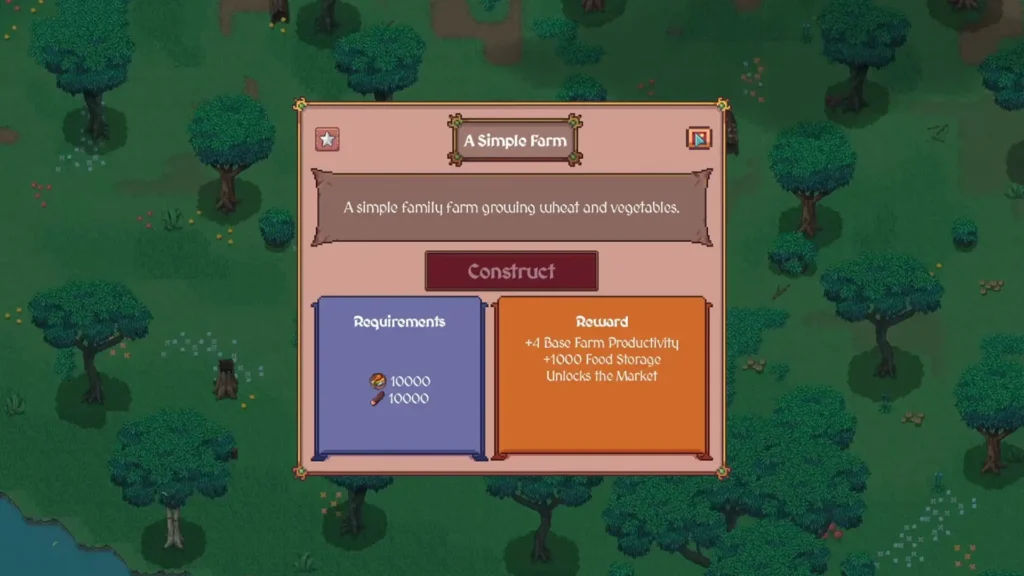
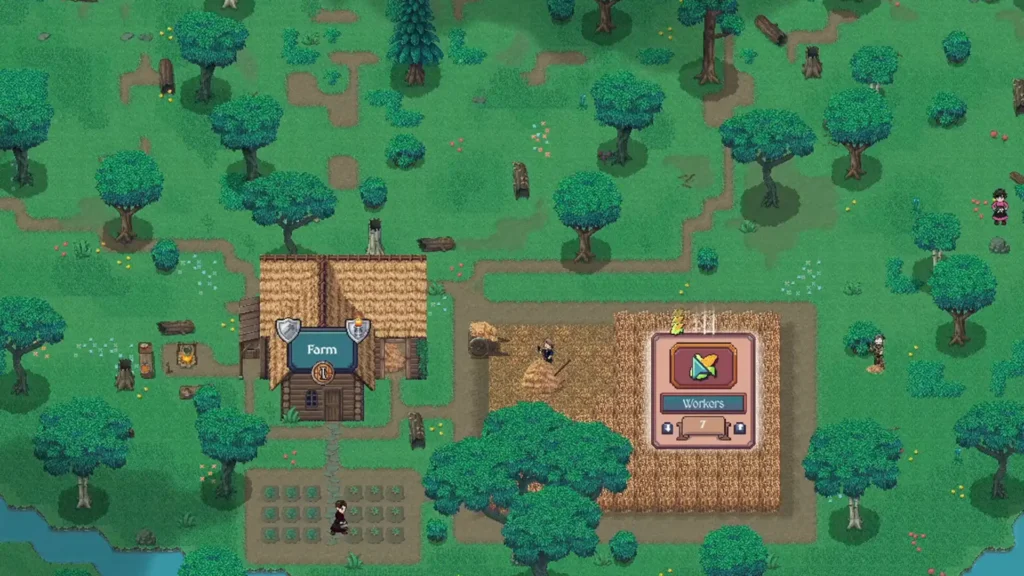
Always try to keep a few spare workers available so you can react quickly to new buildings or sudden needs. In the later stages the game converts individual workers into work teams that scale with your total population, which causes production to explode once your town gets large enough.
Happiness and Its Powerful Effects
Not surprisingly, happy citizens produce significantly more resources. Happiness bonuses come mainly from the Public House, the Church, certain research options, and temporary shop items such as drinks or potions.
As I learned, military conscription, enemy raids, and harsh taxes all reduce happiness, sometimes by large amounts. A strong happiness percentage acts like a free multiplier on almost everything you do, so it is worth protecting and improving.
Research: What Is Actually Worth Grabbing
Every major building has its own research tree. Not all research is equally valuable. Early priorities should be anything that increases global production, personal click power or tool multipliers (the +50% style bonuses are especially strong).
Extra worker slots on your main production buildings are also excellent. Storage research only becomes important once you start hitting capacity limits regularly. Critical-hit chance and personal gathering bonuses feel fantastic and remain useful for a long time. Soldier-related research can wait until raids actually begin.
Military & Defense in Hearth and Hamlet
Here’s another fun yet challenging aspect of the game. Once your settlement grows large enough, hostile groups start appearing: goblins, giant rats, orcs, skeletons, plant monsters and tax-collecting soldiers from your old homeland.
Build the Guard House and train a modest number of soldiers when the first threats arrive. Soldiers cost food and iron to recruit and have ongoing upkeep. Raising the conscription percentage gives you more troops but hurts happiness.
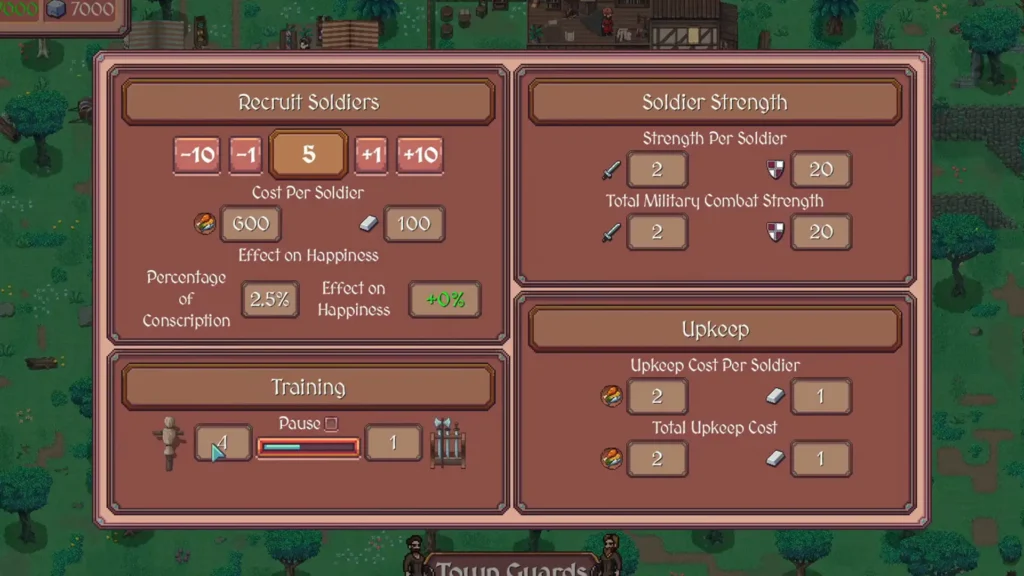
Walls (both northern and southern palisades) grant a powerful first-strike advantage. Build both sides. You can later unlock special battle rewards for defeating specific enemy types, which is usually worth the investment.
Keep your army just large enough to win the current threats. Over-recruiting drains your economy and happiness for very little extra benefit. After a defeat you typically lose resources and suffer a heavy happiness penalty, so rebuild quickly and strengthen your defenses.
Trade: The Solution to Most Bottlenecks
The Market (and later the port and shipyard) completely changes how you play. You can send caravans and ships to distant locations that have high demand for the resources you have in surplus (most often food).
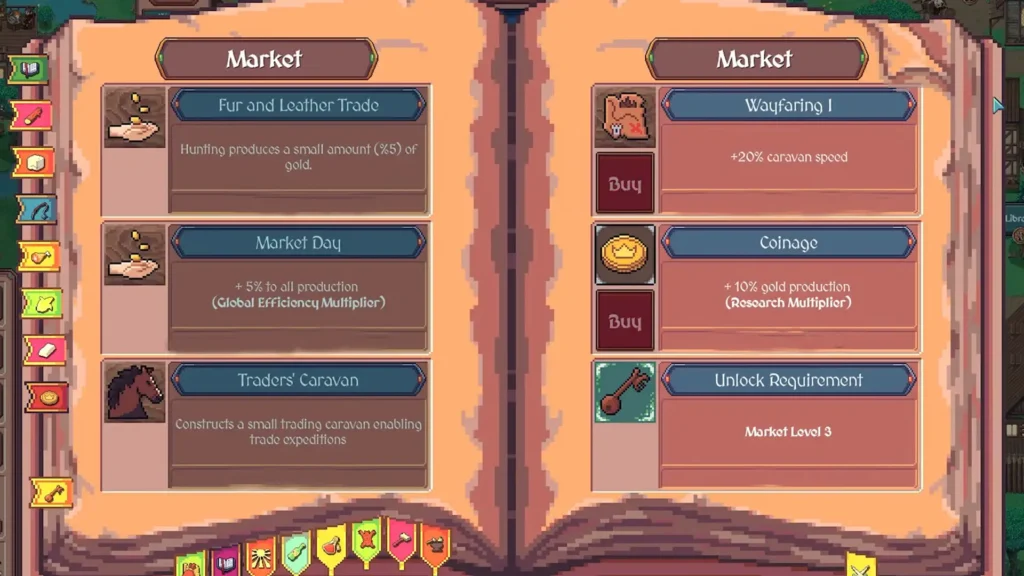
In return you receive gold, magic, iron or whatever you currently need. Upgrading caravan and ship size and speed makes trade dramatically more profitable.
Once you can run multiple expeditions at the same time, trade becomes the fastest way to solve almost any resource shortage. Converting excess food into gold or magic is simply one of the most reliable strategies in the mid-to-late game.
Hearth and Hamlet Magic & Blueprints
In Hearth and Hamlet, magic is gathered from the swamp area once you unlock it. Assign workers there and improve the related buildings.
The Library is where you buy blueprints, which are required for higher building levels and advanced research. Always keep a small stock of blueprints on hand because you will spend them quickly when upgrading key structures.
The Magic Academy and the later Cathedral open powerful new options, including holy weapons that are especially effective against undead enemies.
Quality-of-Life Features and Helpful Habits
Clicking the resource icons at the top of the screen lets you fast-travel directly to those locations. You can pin the building or upgrade you are currently saving for so the costs stay visible.
A tip I know: Manual clicking remains surprisingly useful even in the mid-game because of critical hits and location-based inspiration buffs. The construction and research advisors give useful notifications when something becomes available or affordable, so just pay attention to their icons.
Common Mistakes and How to Avoid Them
Well, I’d say that the biggest early mistake is letting food slip into deficit, which freezes population growth. Manage your food and you’ll manage everything!
Another frequent error is building every available upgrade the instant it appears, which can drain your resources and stall progress. The other mistakes (which I made too, so take it easy):
- Recruiting far more soldiers than you need wastes food, iron and even happiness.
- Ignoring storage limits leads to long periods of wasted production.
- Forgetting to move workers when a better food or resource method unlocks is also common. Roads provide a strong global bonus and are easy to overlook.
Finally, many players under-use trade once it becomes available, even though it solves most bottlenecks faster than pure local production.

