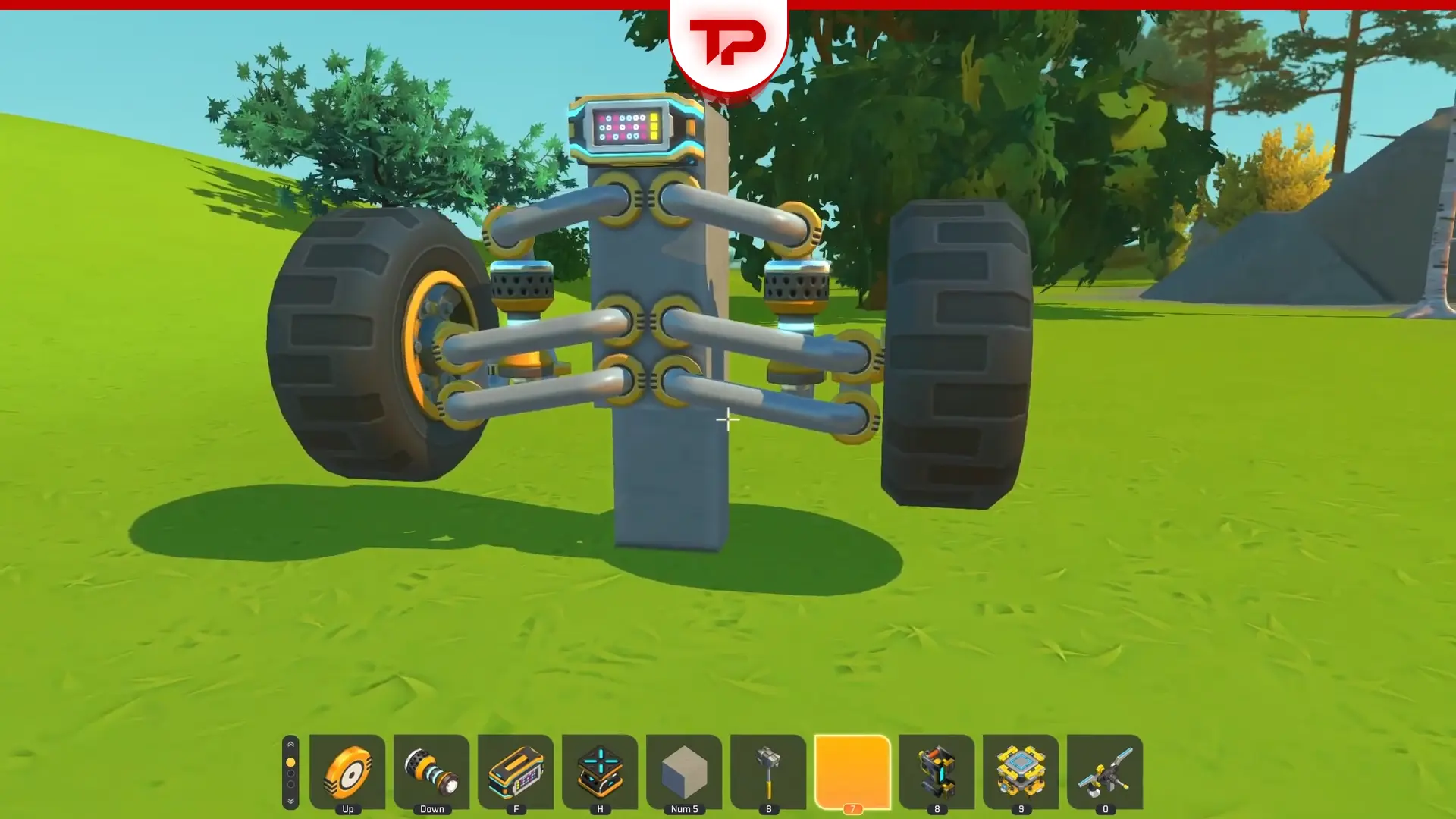


Scrap Mechanic Wishbone suspension is the build everyone wants, and the one that keeps folding under their vehicle. Two arms on a wheel that finally moves the way it should. Simple on paper. But a bit more complex in action. So without further ado, here is how to build a Double Wishbone Suspension that holds up, and what to do when it doesn’t.
What You’ll Read:
How to Build a Double Wishbone Suspension
The whole thing is two arms stacked on top of each other, both hinged to your chassis, both meeting an upright that carries the wheel. Get that right, and the rest is detail. Since you need it, though, Here’s the detail:
1. Pick your mounting points on the chassis. You want the upper arm sitting directly above the lower one, with a decent gap between them. A cramped space will ruin your wheel’s geometry.
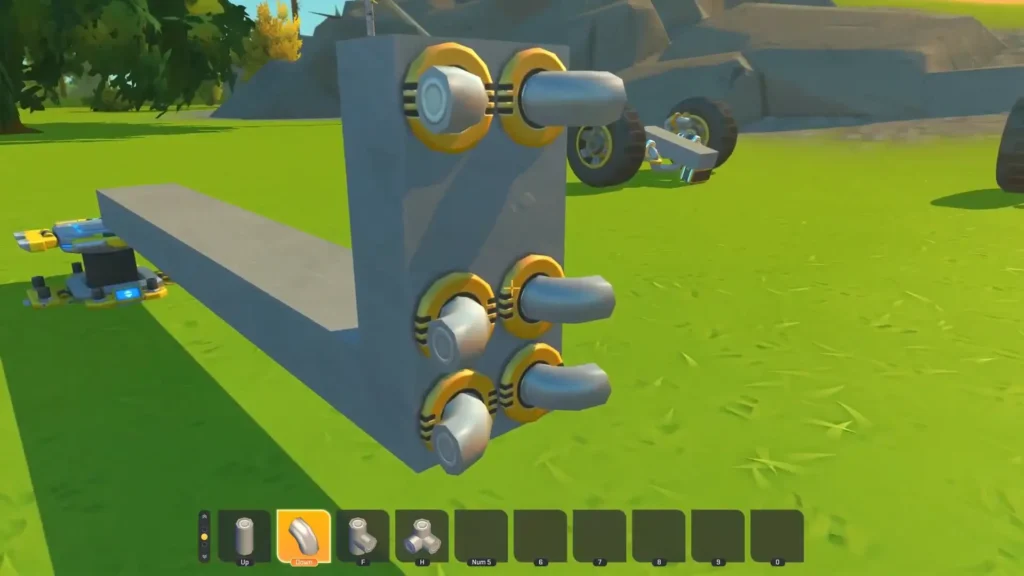
2. Build both arms from blocks or pipes, same length top and bottom. Longer arms give you more travel and a softer ride. Short arms are stiff and twitchy.
3. Attach each arm to the chassis with a bearing. Both bearings need to face the same way so the arms swing on the same axis. A reversed one is the classic reason a wheel tucks itself under the car.
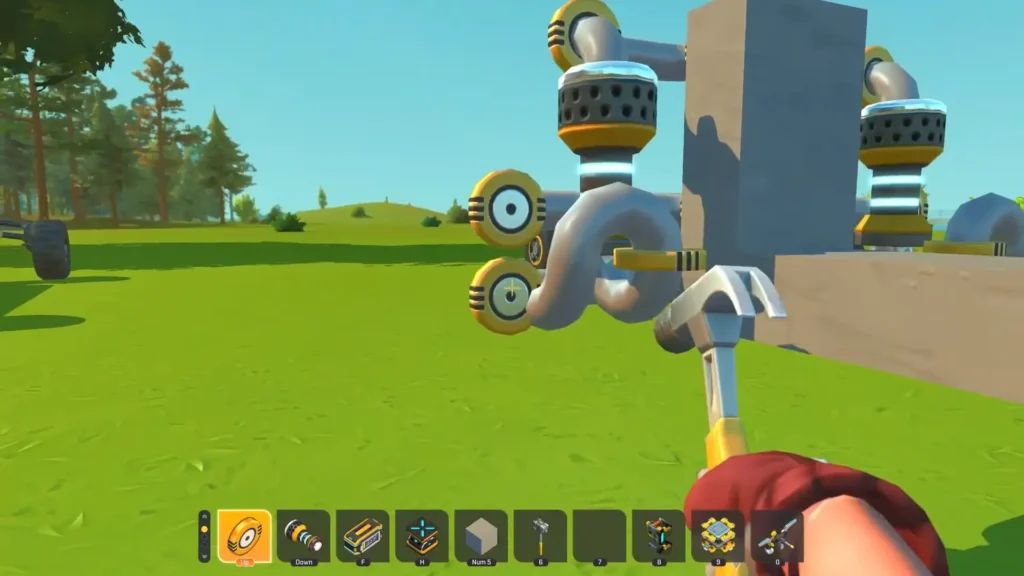
4. Build the upright, the vertical piece the wheel bolts to, and connect both arm ends to it, again with bearings. This is the part people half-ass. Make it solid.
5. Weld every single joint. Missed welds are the number one cause of the folding and twisting mess you see in every Steam thread.
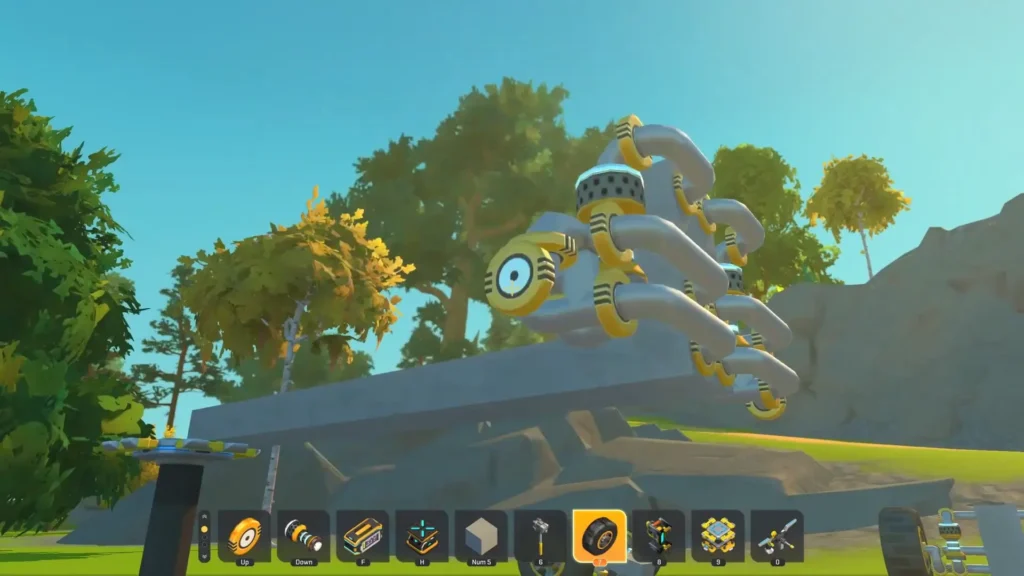
6. Add a bump stop under the lower arm so it can’t droop past its limit. A block in the right spot does it.
7. Add your restoring force: a (suspension part) between the lower arm and the chassis, or controlled (bearing) torque if you want adjustable stiffness. Don’t leave the suspension stretched at rest — that’s asking for shake.
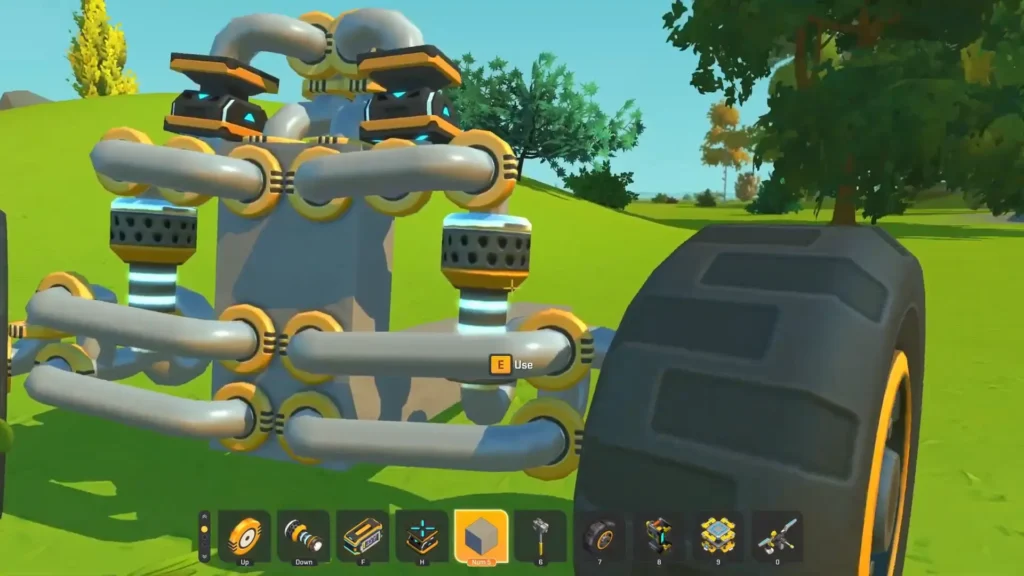
Single Wishbone vs Double Comparison
| Single | Double | |
|---|---|---|
| Arms per wheel | 1 | 2 |
| Space needed | Low | Higher |
| Alignment control | Loose | Precise |
| Best for | Compact, cheap builds | Heavy or fast vehicles |
One arm works fine on a small scout. The second arm is what stops your wheel from leaning under load.
Bearing Flex Suspension (No Suspension Part At All!)
I recently saw a post where a player posted a wishbone build that had no suspension parts. No controllers, no springs. Just bearings. And it still could easily go through bumps! How?
The reason is that bearings in this game aren’t rigid joints. They behave more like very strong magnets that pull harder the further apart you drag them. Your lower arm sits on the shortest link. So moving the wheel up and down forces those bearings apart, and they snap back. That’s your spring.
I like this a lot for tight builds. It costs almost nothing, it fits in spaces where a real suspension part won’t, and it sidesteps the stabilisation glitch entirely. In Survival you can stack two bearings on top of each other for the same effect.
Fair warning from the guy who built it: Survival bearings are much weaker than Creative ones. So this may need reworking or may not hold at all. Test it before you trust it with a mining rig.
Scrap Mechanic Wishbone Suspension Testing
You’ll know something is wrong the moment you pull the lift away. The car hangs in the air, or the wheels tuck themselves under the chassis like the whole thing gave up. Some builds just vibrate until the frame shakes apart.
Four things cause it, in order of how often they’re the culprit: a missed weld somewhere in the arm assembly, a bearing facing the wrong direction, a suspension part left stretched at rest, or simply too many moving parts for the game to keep track of.
Run these four checks before you call a build finished:
1. Drop it off the lift and watch the wheels.
2. Lift one end, remove the lift, see if it falls naturally or hovers.
3. Drive over repeated bumps.
4. Turn hard under acceleration and watch for wheel fold.
Then repeat the whole thing on the other physics setting. New 1.0 worlds run Smart physics by default; older worlds keep whatever they had until you change it under Options > Gameplay > Physics quality. In multiplayer, only the host can switch it.
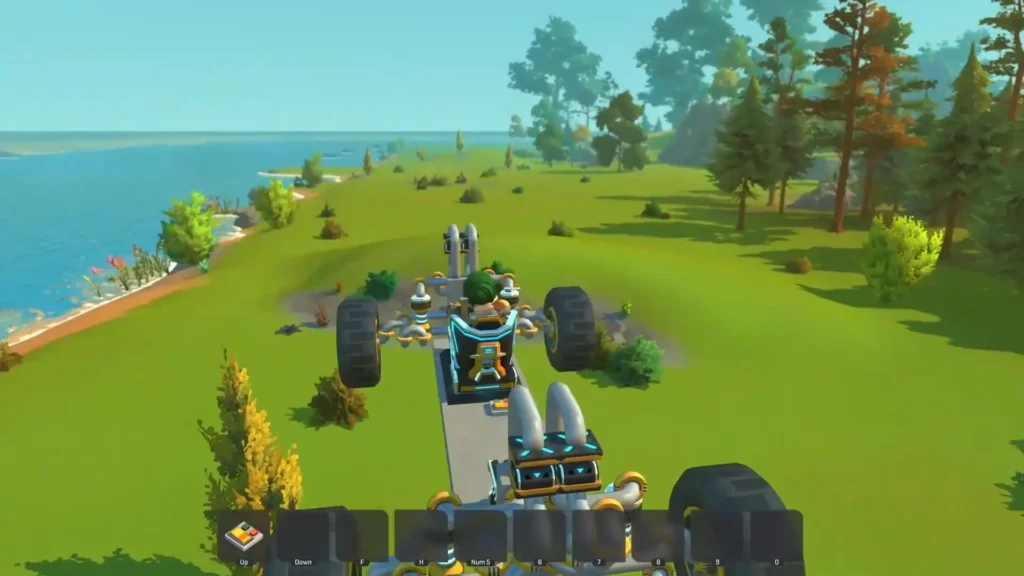
Does Wishbone Suspension Work in Survival
Short answer: sometimes, and not the way it did in Creative.
This trips up more people than any other part of the build. A design that runs perfectly in Creative can go unstable in Survival. Players have been reporting that exact contrast since 2021, and the guy behind the July 2026 bearing flex build says the same thing about his own creation. Why though?
The usual causes are weaker Survival bearings and weight you didn’t account for. A light scout car is not the same test as a truck hauling a drill, a saw, and four crates of loot. Those tools swing around and shake the frame while you drive.
My advice: keep work vehicles mechanically simple. Save the fancy wishbone geometry for something you’re actually going to race.
That’s everything I know about Scrap Mechanic Wishbone Suspension in version 1.0. Got a build that survives Survival without shaking itself apart? Drop it in the comments; I want to see it.
FAQ
Are old 2020–2021 wishbone tutorials still worth following?
For the geometry, yes. For the exact settings, no. Anything made before December 2024 predates the physics overhaul, so the arms and bearing layout still make sense, but the behaviour won’t match.
Do longer arms make the suspension softer?
Yes. Longer arms give the wheel more vertical travel and more leverage, which softens the ride. Short arms feel stiff and react harder to every bump.