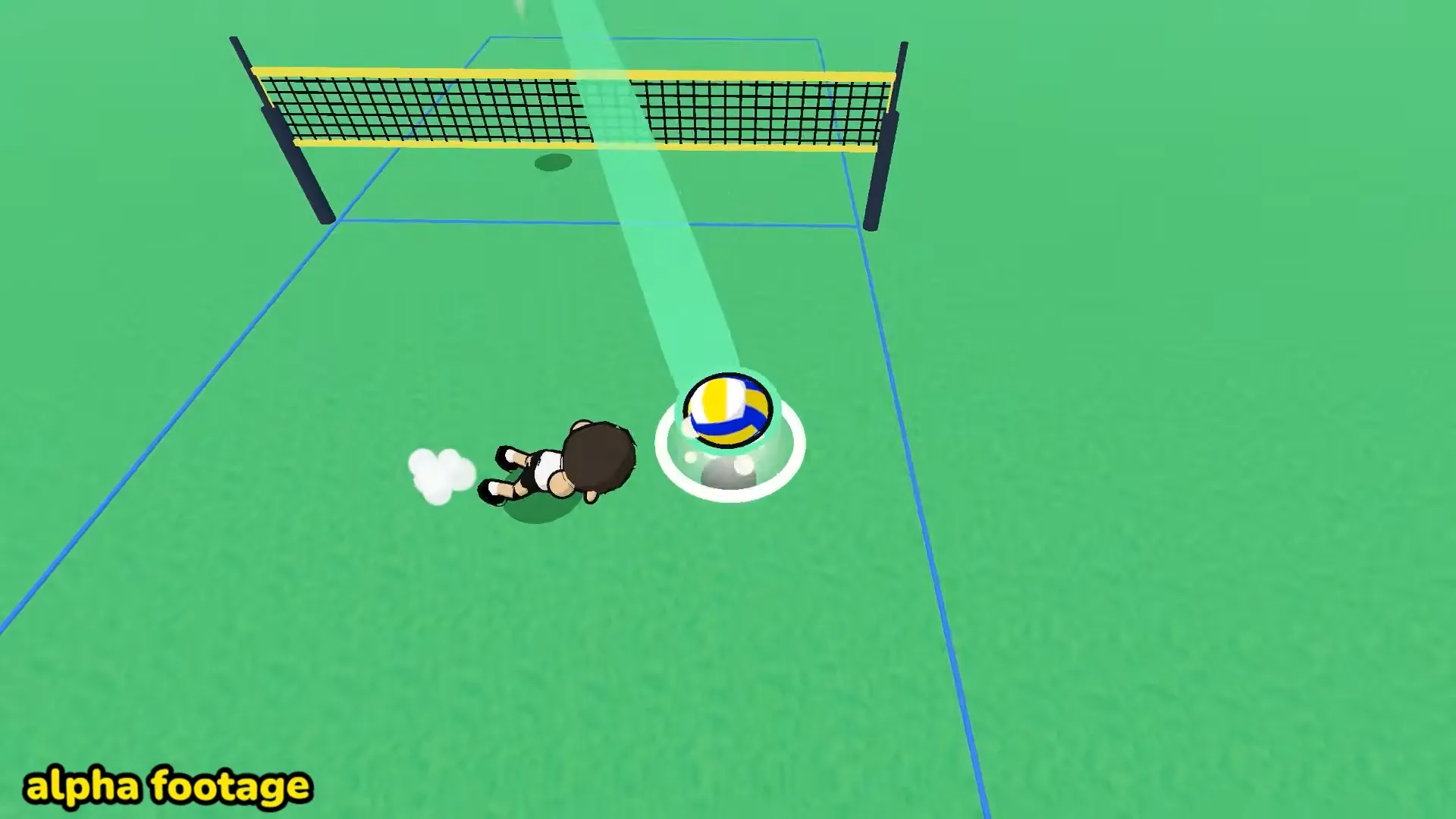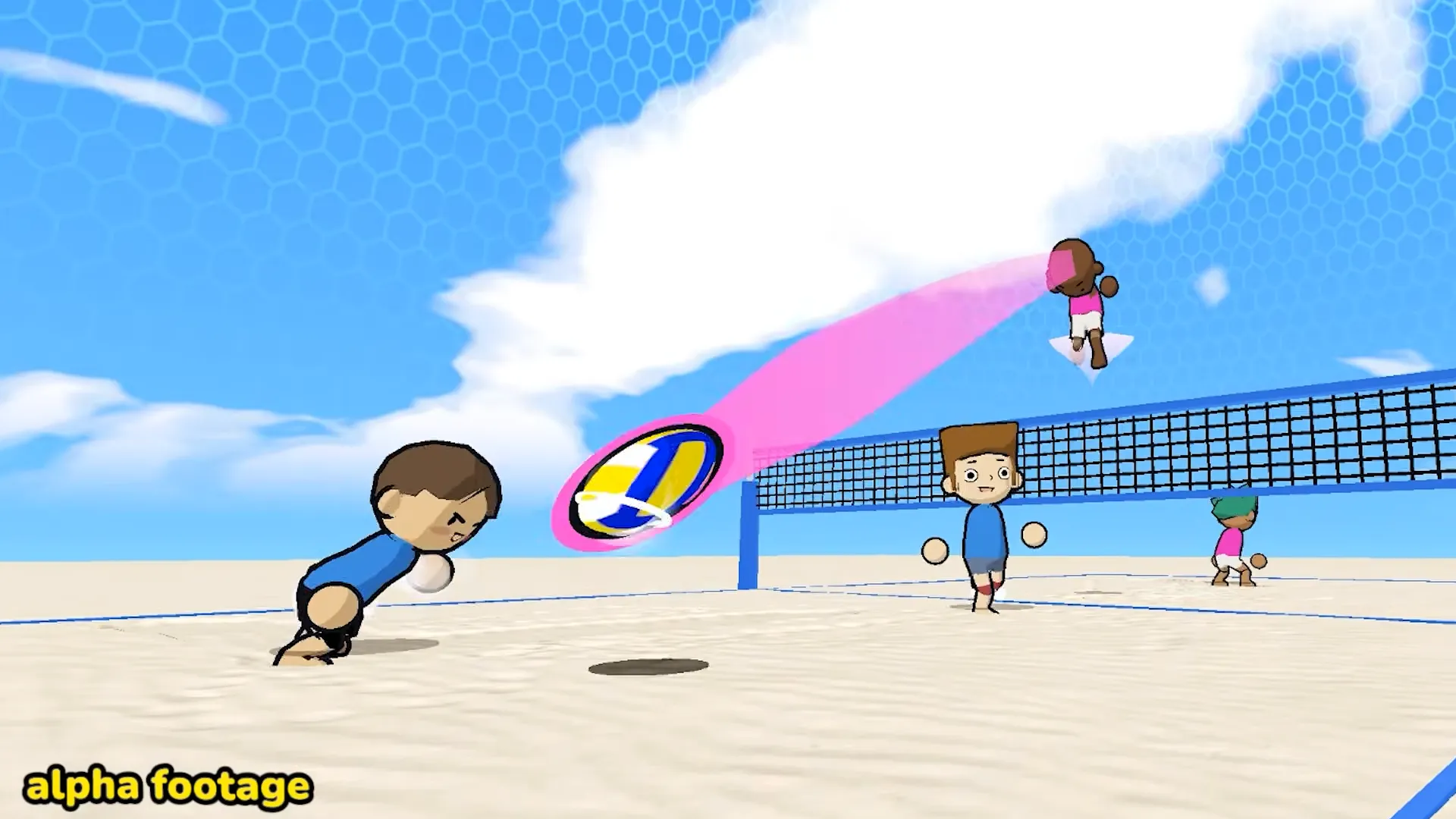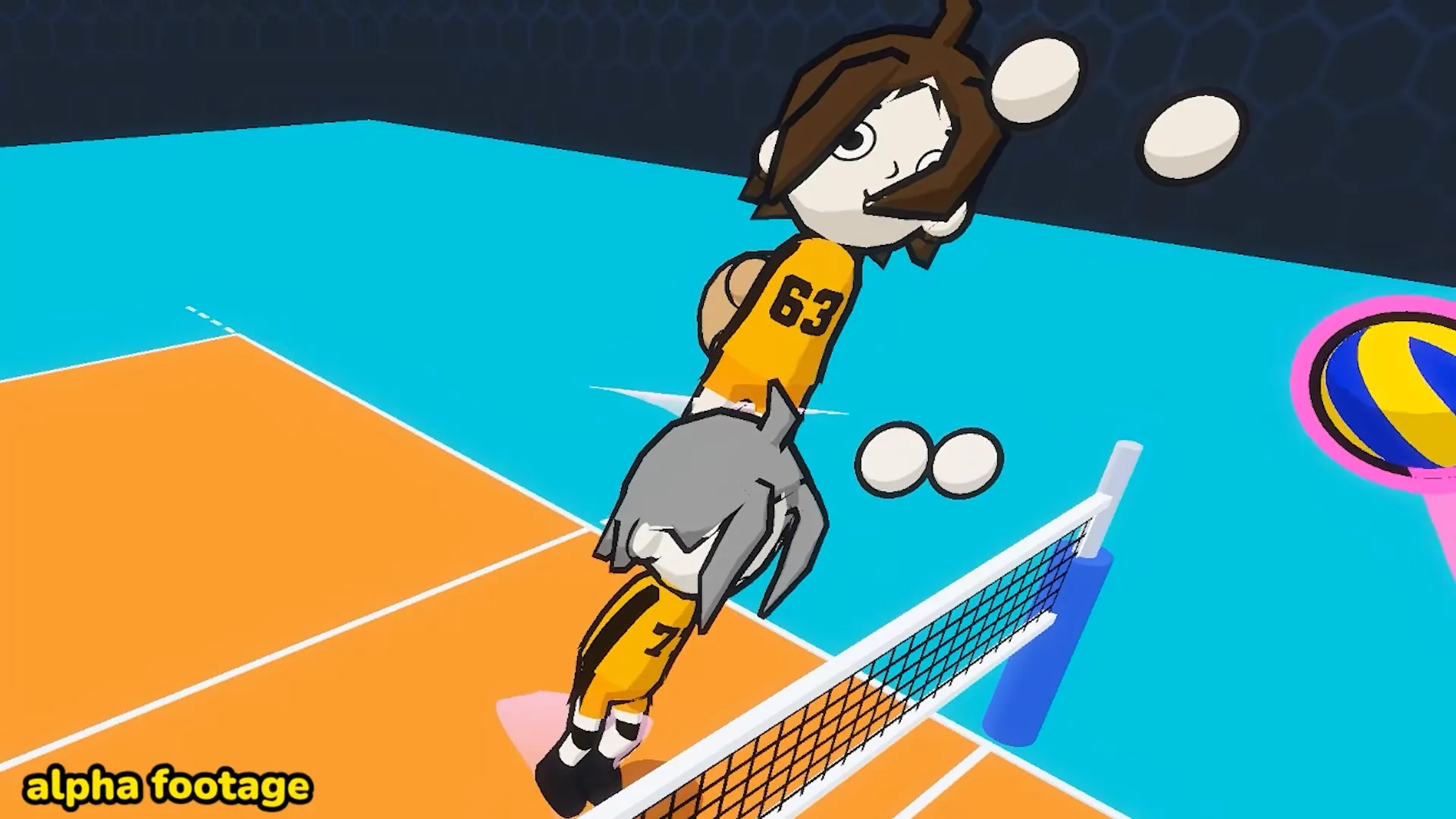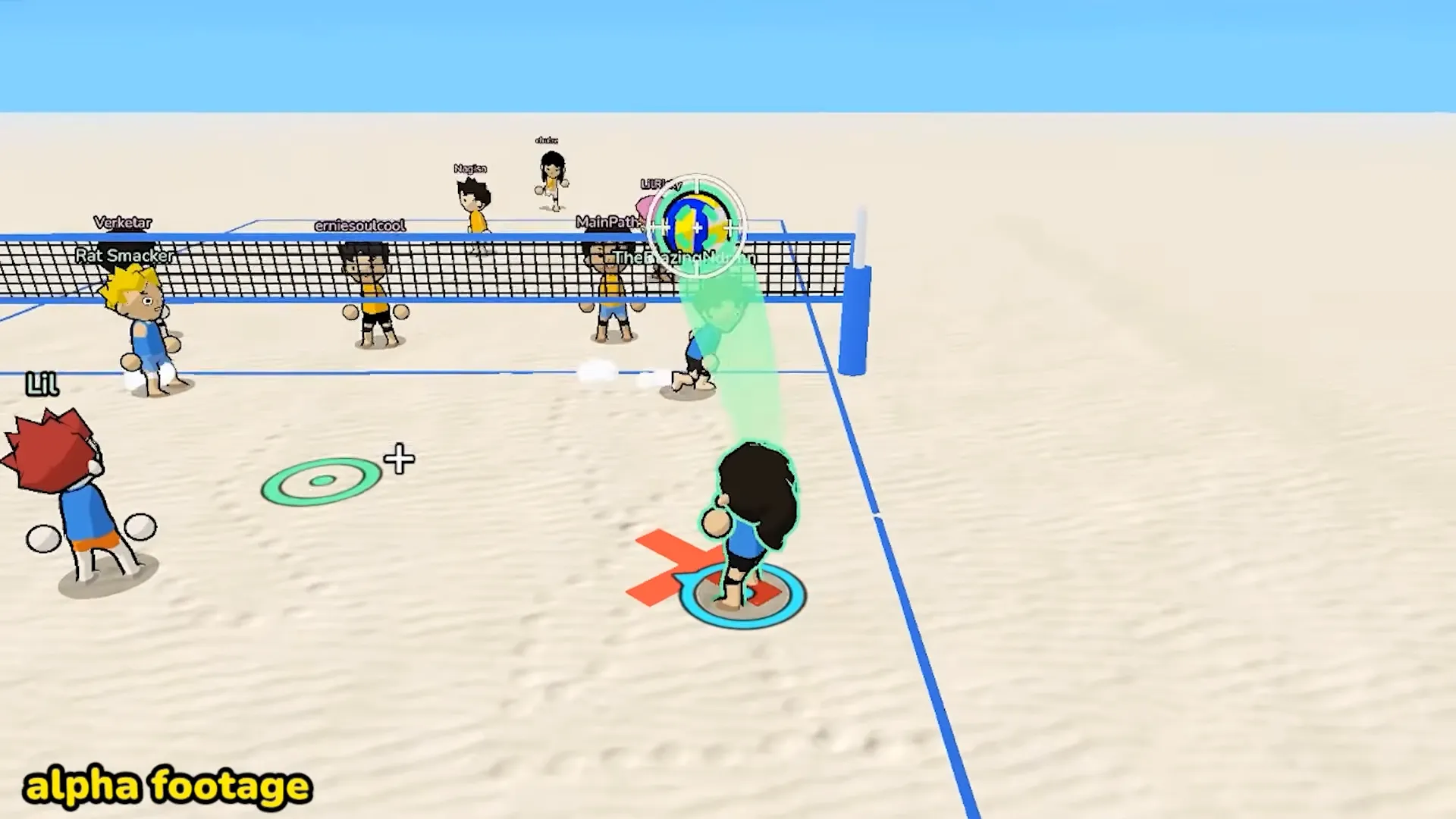


Just Volleyball is an arcade volleyball game where you control one player, aim every hit with your cursor, and regularly knock your own teammates over. It’s goofy, but the teamwork is real. This Just Volleyball guide walks you through the controls, serving, setting, and blocking. You will master this game by the end of this guide. So stick around.
Disclaimer: This guide is based on the Just Volleyball demo released for Steam Next Fest (October 19-26, 2026). The full game is scheduled for November 4, 2026, so some mechanics may change at launch.
What You’ll Read:
Just Volleyball Controls
These are the demo’s default keys:
| Action | Key |
|---|---|
| Move | WASD |
| Sprint | Ctrl or double-tap W |
| Strafe | Shift |
| Jump (hold to charge) | Space |
| Bump, receive, spike | Left click |
| Dive, block | Right click |
| Set | E |
| Change camera | C |
| Zoom | V or mouse wheel |
How to Play Just Volleyball
Below are the basics of how to play Just Volleyball. So skip this part if you already know what to do.
Aim With the Cursor
Every touch goes where your cursor points. Receive, set, spike, serve, all of it. Point at your own side and the ball stays there. Point across the net, and it goes over. That sounds obvious until a rally gets fast and you send a free ball into your own back row. Receivers should aim at a teammate. Spikers should aim at open court.
Basic Rules
Your team gets three contacts. You can’t touch the ball twice in a row yourself, but blocks don’t count as touches. There’s no net-touch foul, but stepping into the opponent’s court is a fault.
Pro-Tip: Start with Practice and Tutorial. Then, try some bot matches. Don’t underestimate the bots.
Stamina, Sprinting, Strafing
Sprinting, diving, and super jumps all drain the same stamina bar, so don’t blow it early. A dive takes roughly two-fifths of the bar, and low stamina shortens the dive. Strafing (Shift) lets you shuffle sideways while still facing the cursor, which is how you read an attacker. You can’t sprint while strafing. If a ball gets past you, forget the strafe and run.
How to Serve
There are different ways to serve. I recommend trying all of them to see what works best for you.
Simple and Jump Serves
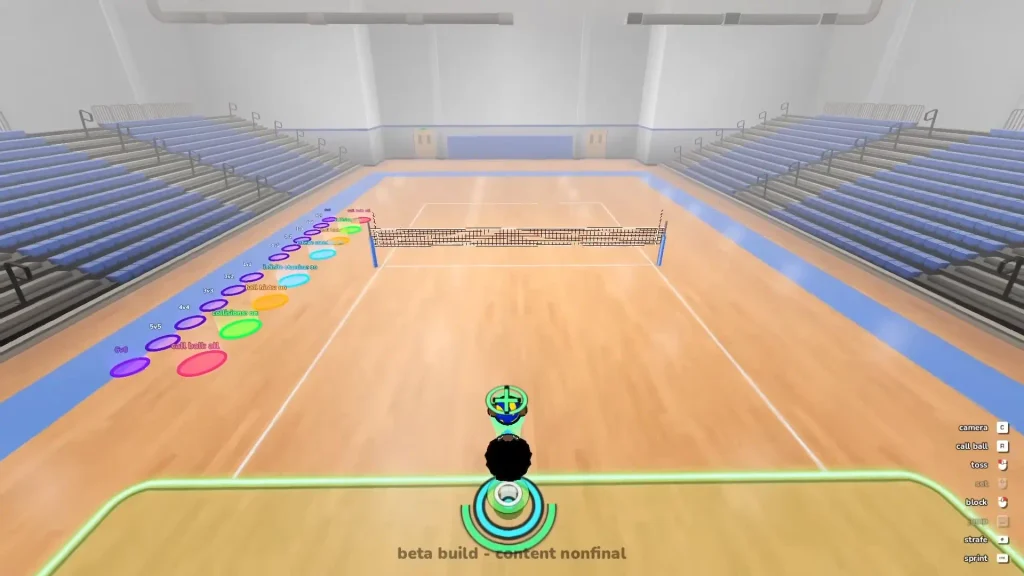
Serve from the highlighted service area, not from inside the court. Left-click tosses the ball. A cursor close to you sends it straight up, and a distant cursor throws it outward.
For the easiest serve, toss just in front of you, move the cursor to the opponent’s side, and click again without jumping. For a jump serve, toss, jump, and hit it overhead. Either way, move your aim across the net before contact. Leave it on your own side and the ball goes out or dives straight into the floor.
Float Serve
Toss, jump, then hold S (down on the stick) while you charge and release the airborne hit. The ball flies in an irregular, floaty path that’s annoying to receive.
Spike Serve
This is the serve people complain about most, and for good reason, since it dominates lobbies full of newer players. Here’s how to do it:
Aim the cursor far forward and toss at max distance. Back up to leave room for a run-up. Start sprinting (Ctrl or double-tap W) as the ball reaches its peak, then jump late and hit it while it’s falling, at full power. Aim deep, because shots aimed closer to the net travel slower. You can also charge the jump first and then hold sprint for a faster approach.
Tape Serves
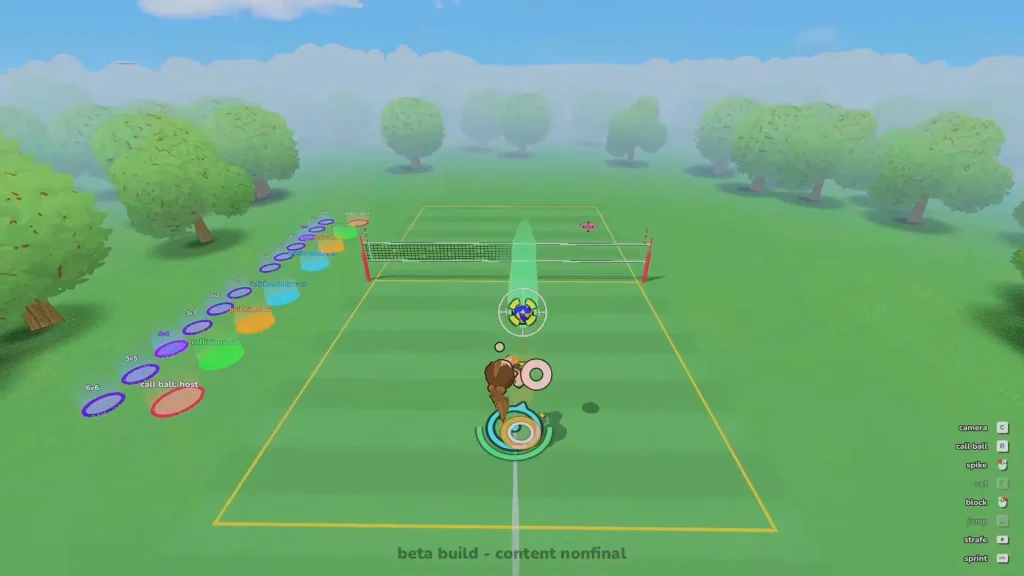
Aim at the net tape (the white strip along the top) or just below it. With good timing, the ball clips the net and drops over, which is hard to read. It can also bounce back onto your side, so it’s a gamble.
It works best in 1v1 and 2v2. In 2v2, both defenders tend to back up for a hard serve and can’t reach the short drop. In 6v6, someone usually guards the front.
How to Receive and Dive
A good receive is perhaps the most effective part of the game. And there are two ways to do it.
Bumping
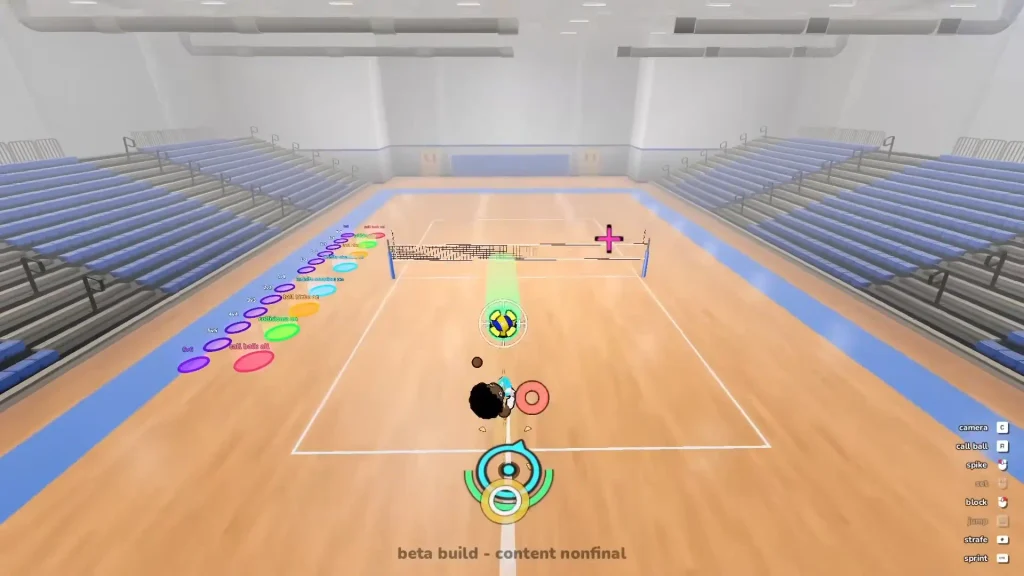
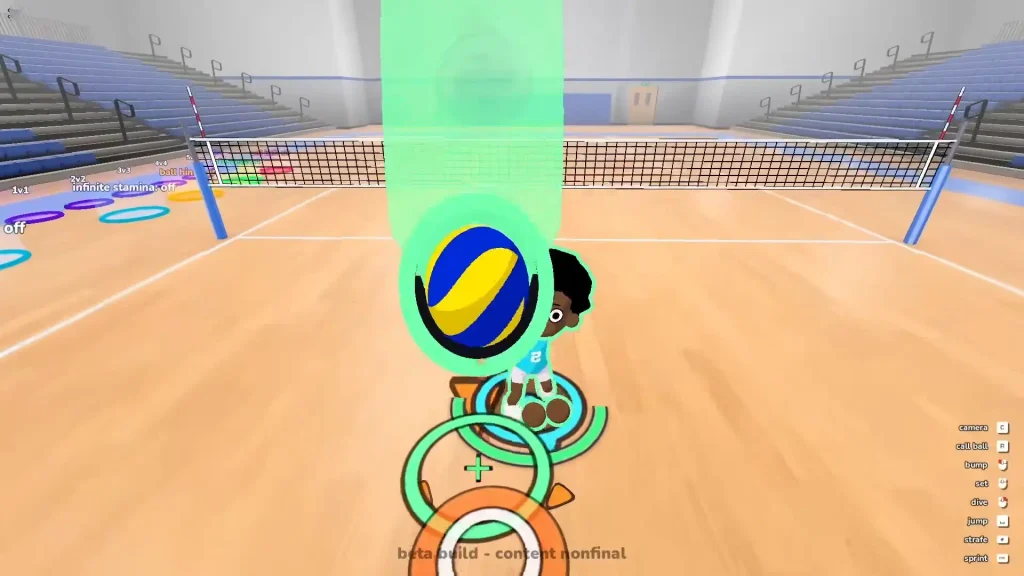
Left-click to bump. Wait until the ball is overhead, then click, and it flies toward your cursor. Aim at your setter. A pass that drifts away from them forces a chase and hands the other team a free ball.
You can also pre-click where the ball will land and hold there. Try this if your connection is laggy. Get under the ball early, strafe while you read the attacker, and only sprint once a ball is clearly out of reach.
Diving
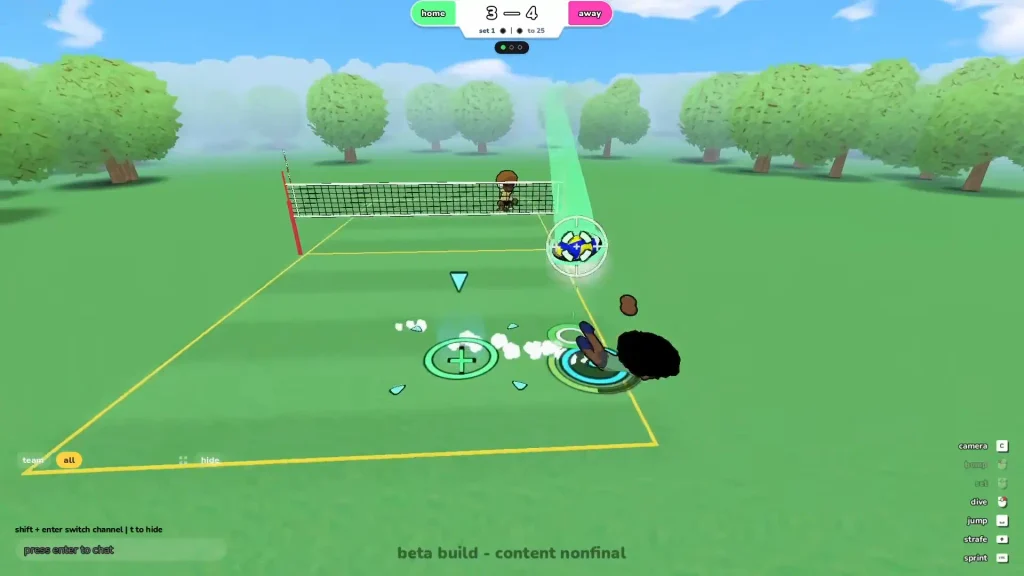
Right-click to dive. A successful dive sends the ball toward your cursor with no extra click, so point it across the net first if you want a direct return. Save the dive for balls you can’t otherwise reach, like a deep corner.
Don’t dive at a ball dropping straight onto you. You can miss it completely, so bump instead. If you dive with no stamina left, you’ll lie on the floor for about two seconds.
How to Set
Press E and the ball goes where your cursor points. Tap for a high set. Hold briefly for a lower, quicker one. Don’t assume more charge means more height.
Players use real volleyball numbers to call sets, which are:
| Call | Where it goes |
|---|---|
| Four | Left side of the net |
| C quick | Close to the net |
| Pipe | Down the middle, toward the back row |
Don’t feed the same spot every time. A predictable set walks your hitter straight into a block. If a defender creeps toward the net, go quick. If both defenders sit back, send a high set so your hitter can swing down steeply. Ask what your hitter wants, too. One setter kept lobbing high balls to a teammate who was begging for quicks.
How to Spike
Jump with Space, then left-click in the air to spike. Higher contact and a bigger charge add power.
Your movement keys still count mid-jump. Hold forward for extra power, left or right to curve the ball, or leave it neutral for a normal hit. Sprint-jump attacks hit harder than standing ones.
To fool the block, approach one way and aim the other after you jump. Start your run even if the setter hasn’t picked you yet. A hitter who stands still gives the setter nothing to work with.
The super jump (BAM jump) is still in, but the timing changed. Fully charge the jump, then release when the green outline shows. It drains your stamina, and none comes back in the air. Players say it’s hard to land and rarely worth the cost.
How to Block
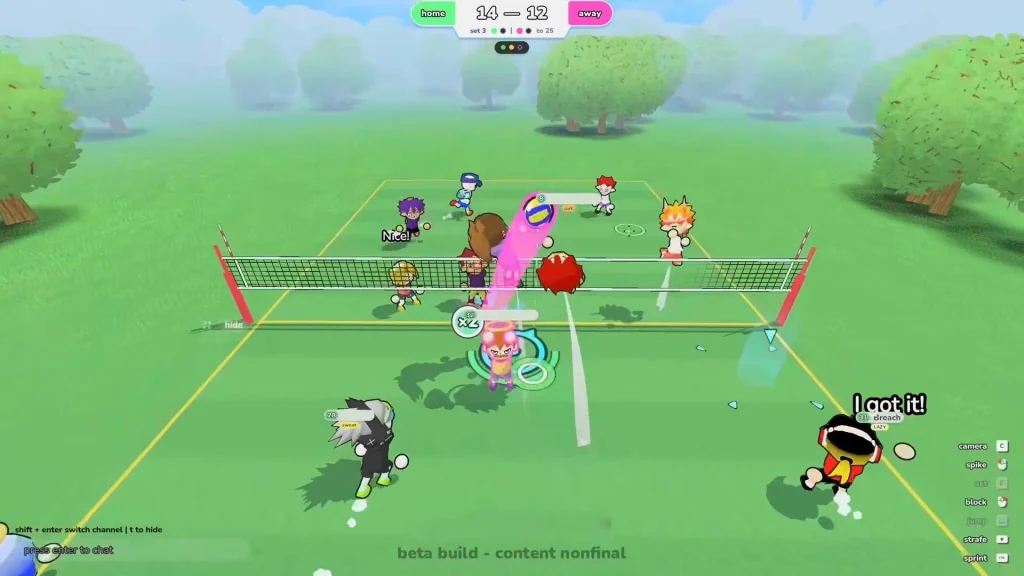
Jump with Space, then right-click in the air to block. Try to react to the attacker’s jump instead of guessing.
Strafe so your body faces the hitter. If you face the wrong way, you get a glancing touch or miss the ball completely. Read the attacker’s approach, then use your movement keys to slide into the lane you expect them to hit.
Aim the block straight down, right under the spiker. I like this because the ball has a shorter trip back, so your opponents get less time to react.
Check what your teammate is covering. If they take cross-court, you take the line. Stay ready for the other lane too, since blocks fail. Even a block that doesn’t stop the ball can still close off a lane.
Teamwork and Positioning Explained
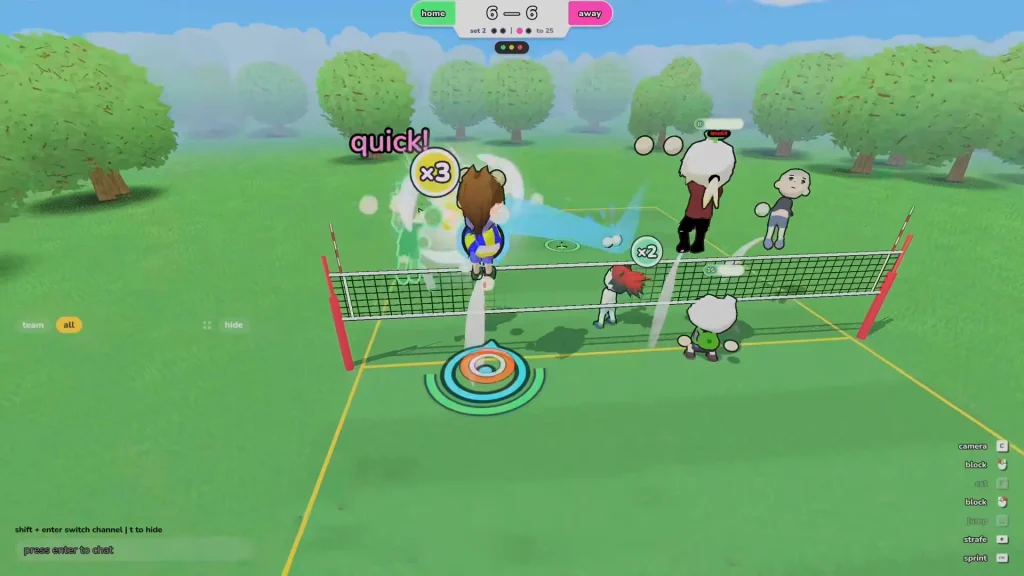
There are no fixed positions in Just Volleyball. Everyone starts a rally in a spot, but nobody has to stay there. That’s why the developer’s trailer showed four players blocking at once. Too many people ran to the net.
So talk! The setter usually takes the second ball, so tell your team you’re doing it. Random teammates often don’t know volleyball roles, and yelling at them won’t help. If the pass is bad, you may have to take the first contact yourself.
Don’t send everyone forward. Keep one or two players back for balls the block bounces onto your side. Trust me, saving one of those is worth as much as scoring.
Spacing matters too. Dives and blocks knock teammates over, and one badly timed dive can take out two players and cost you the rally.
That covers everything about how to play Just Volleyball. Found a serve or set trick I missed? Tell me in the comments, and I’ll add it to the guide.