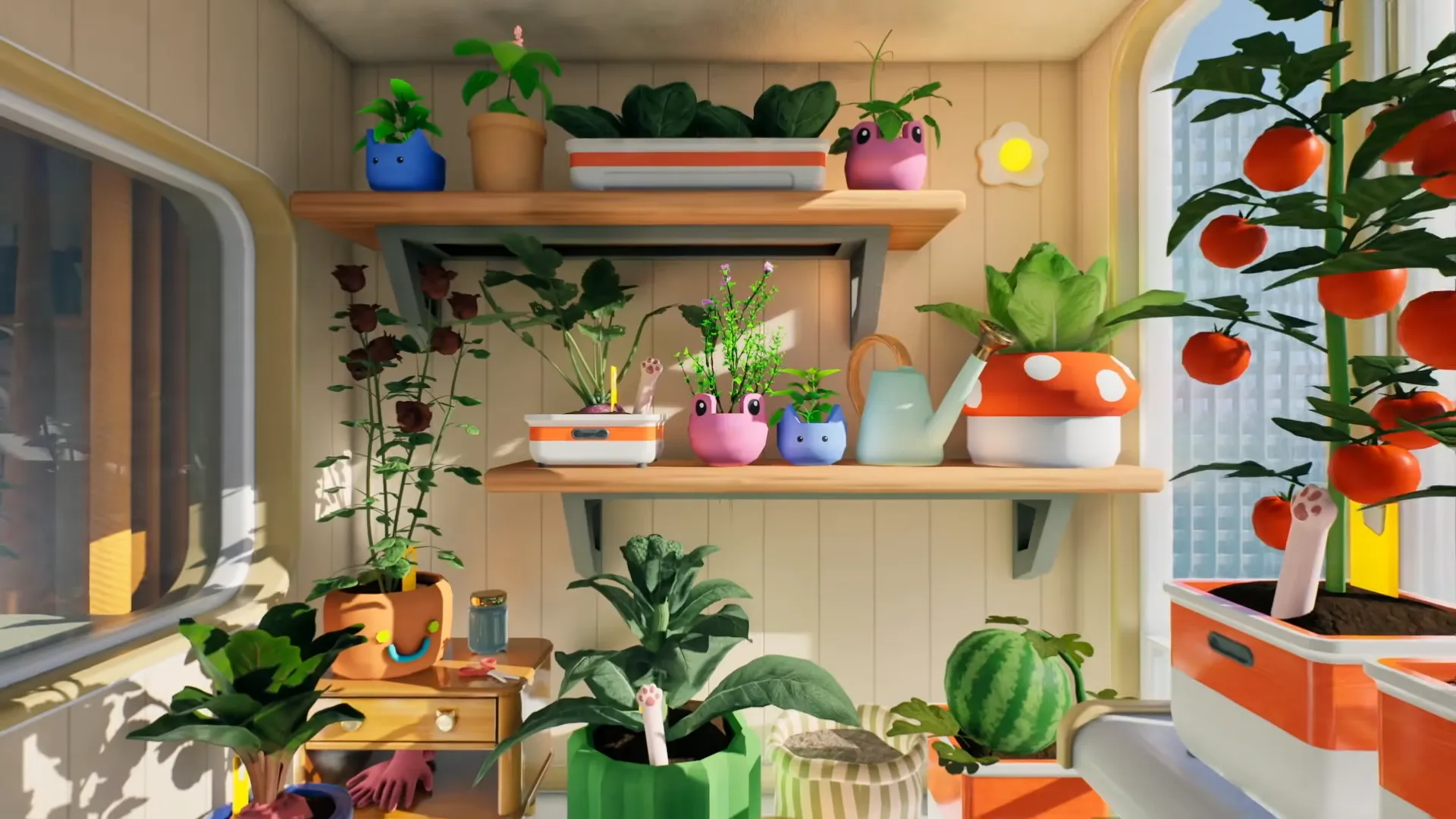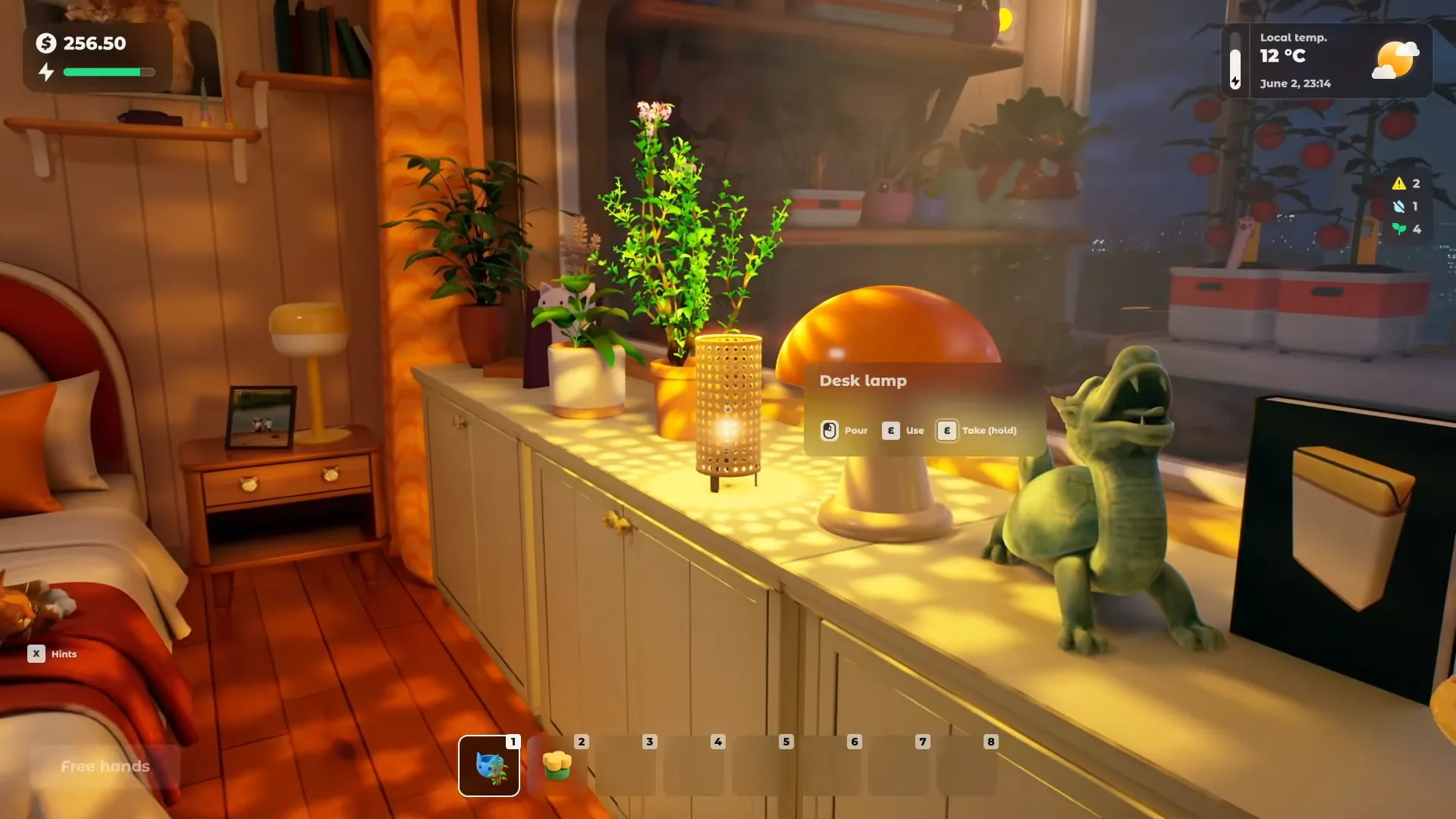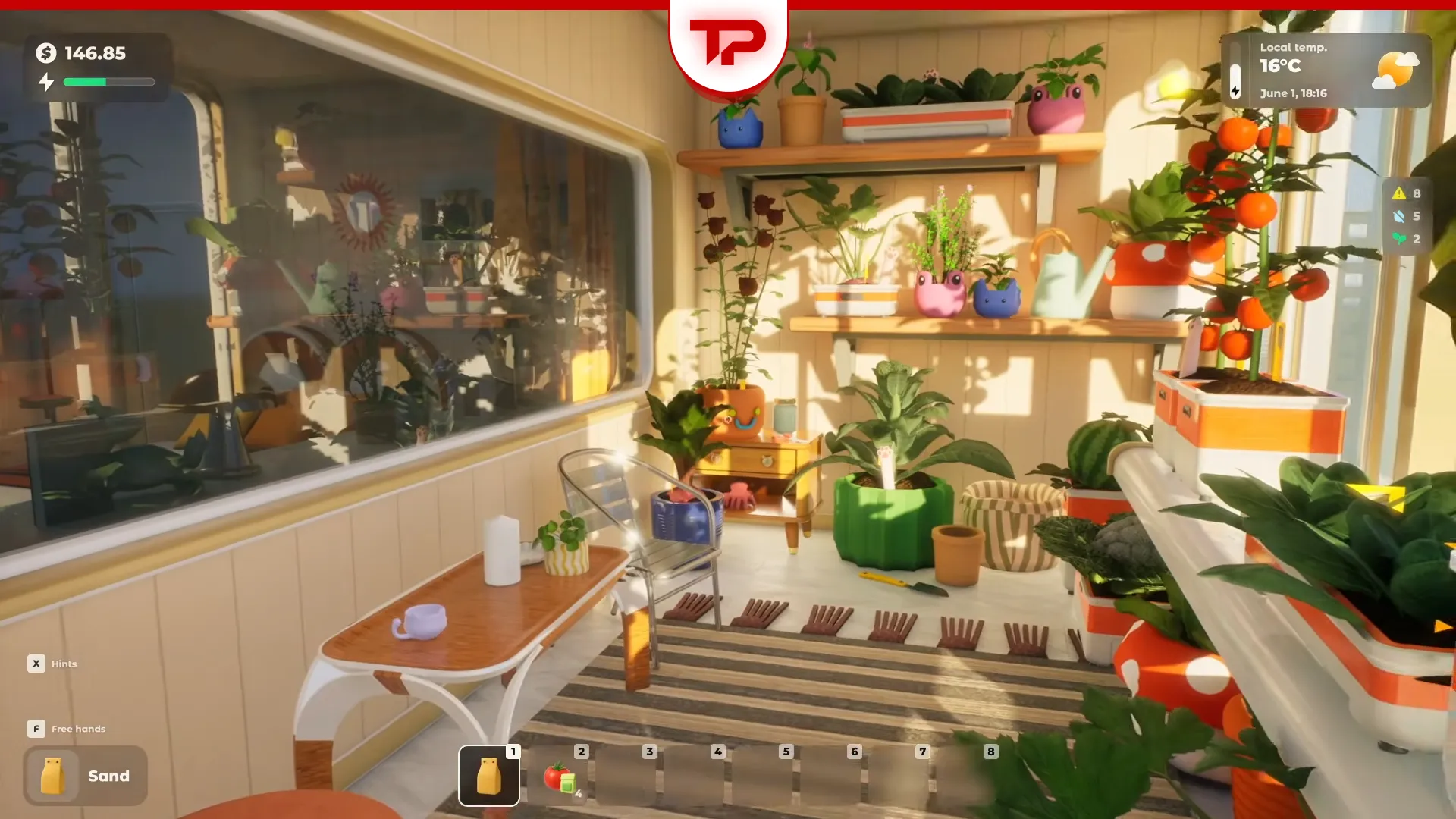


What is the best game for a chilly Saturday evening? You read my mind. The answer is a cosy simulation game. I have a good option for you: Tiny Eden. Developed by Bajka Games, this game lets you grow plants in a futuristic city.
There are various types of plants in the game. Knowing all of them may seem difficult, but I’m here to give you some useful information about the plants in Tiny Eden.
Jump to
Tiny Eden Plants: Every Type I Could Find
There are around 40 types of plants in Tiny Eden, including microgreens, root vegetables, flowers, and berry bushes. During my playthrough, I’ve only managed to grow some of them. Here are the plants I’ve harvested in my little house:
- Tomato
- Basil
- Onion
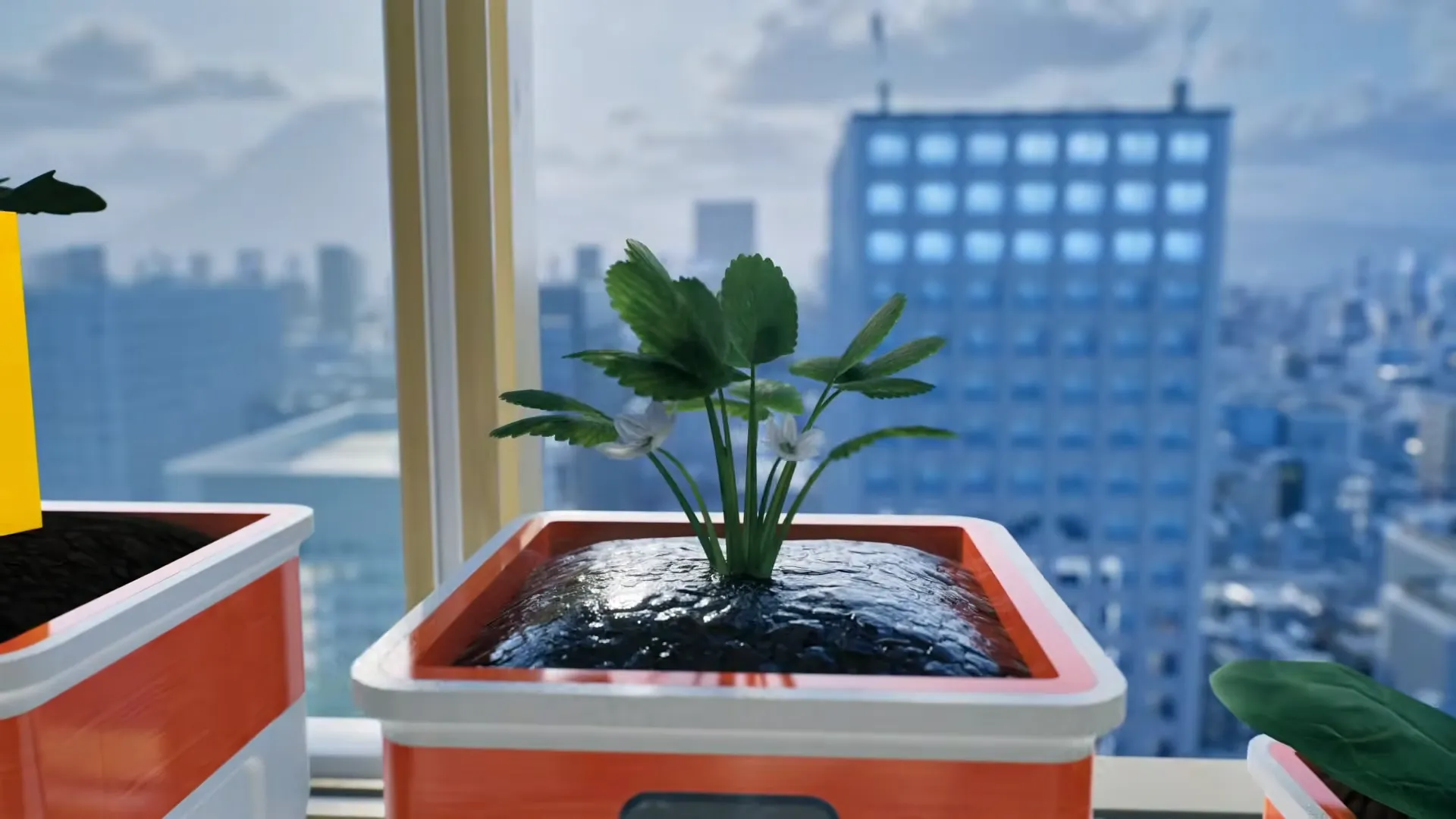
- Strawberry
- Lettuce
- Pepper
- Bean
- Cornflower
- Radish
Let me make a clarification: this list contains the plants I grow in Tiny Eden. I will grow more and update the list regularly. Visit this page if you want to track my progress!
How to Harvest Plants in Tiny Eden
Once in the Mature stage, the harvesting process is really easy. However, you need the right tool, guys. Let me give you an example using strawberry seeds I harvested.
First, I purchased the pruning shears for strawberries from the store. The order was delivered to the parcel box in the lobby. Then, I collected the shears from there and equipped them through the toolbar. Once the strawberries became ripe, I equipped the shears and used them directly on the strawberries to collect the harvest.
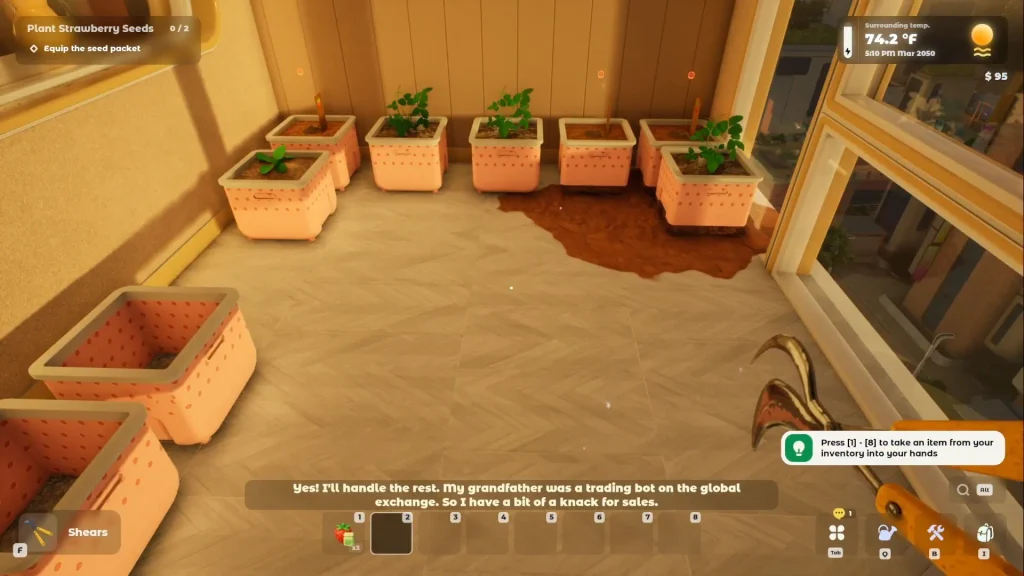
Here is the process in a short version:
- Grow the plant until it reaches the Mature stage.
- Purchase the pruning shears if you do not already have them.
- Collect the shears from the parcel box.
- Equip them from your toolbar.
- Approach the ripe plant and use the shears on the harvestable part of the plant.
- Collect the harvested crop.
Once harvested, your crops become part of Tiny Eden’s main progression loop. You can take the ingredients into the kitchen and turn them into dishes. They can be sold to residents of the apartment building.
One thing worth keeping in mind is that harvesting a crop and removing a plant are two different things. If a plant is mature and healthy, use the shears to harvest it. Do not use the plant-removal option unless you actually want to clear the plant from its planter.
Soil and Nutrients for Tiny Eden Plants
Tiny Eden treats soil as its own puzzle. Every plant has different growing requirements.
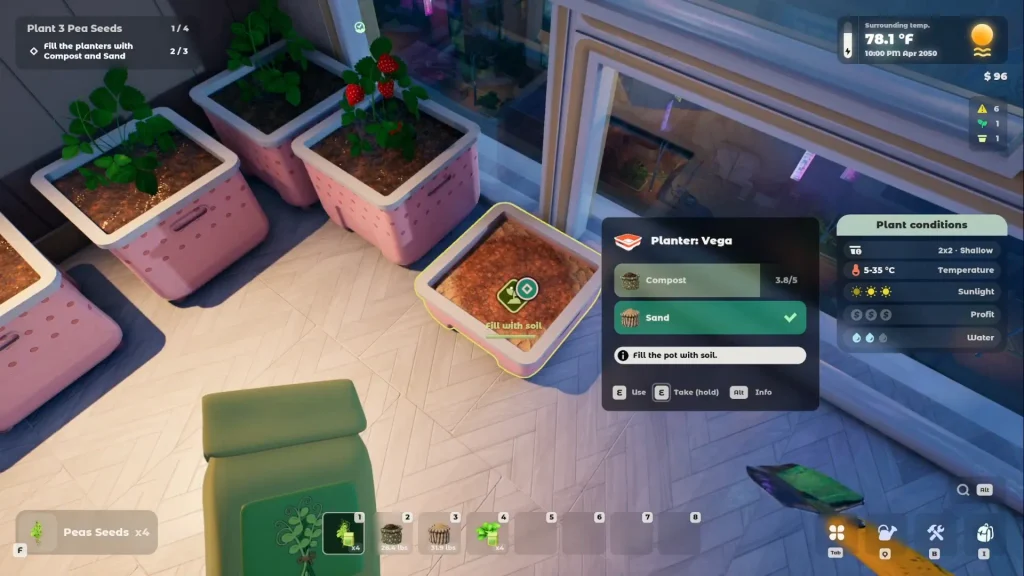
Getting the soil right is half the challenge. There are seven components to work with: compost, sand, clay, perlite, coco coir, peat, and one secret ingredient the game never names.
Underneath that, the system is tracking a lot: NPK levels, micronutrients, aeration, water permeability and retention, and acidity. None of it stays static. Plants pull nutrients out of the soil as they grow, and fertilizers, soil-borne diseases, and other factors keep shifting the environment underneath them.
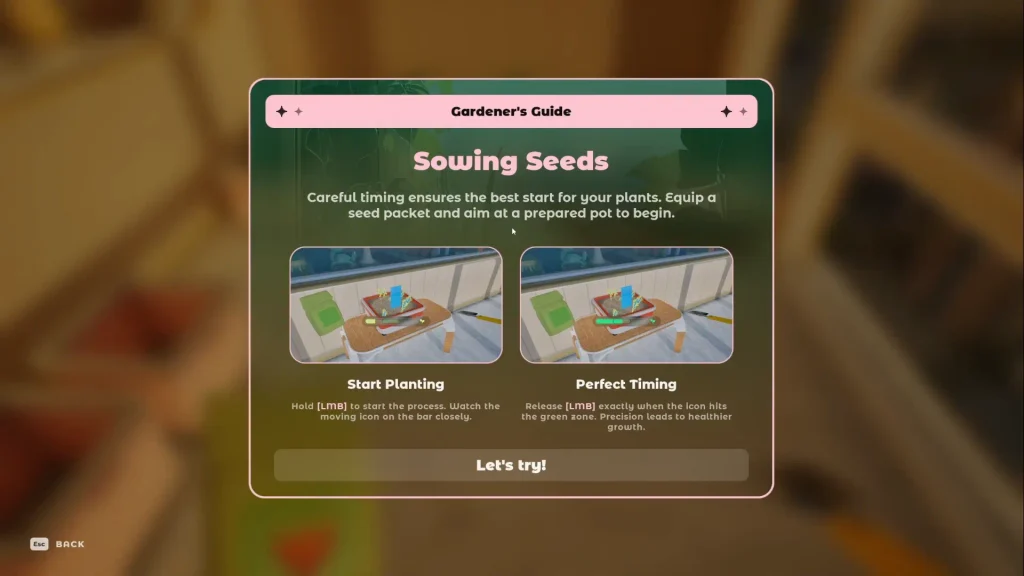
Don’t reuse the same soil mix for every plant. Check what a plant actually needs before you plant the seed, then build the planter around that.
Light and Temperature for Plants in Tiny Eden
Light and temperature matter just as much in Tiny Eden. Where you place a plant decides how much light it gets. If the natural spot isn’t right, shading nets and grow lights let you adjust it either way.
Temperature is trickier, since it shifts with both location and season. I found out that balconies sit warmer than rooftops but cooler than indoor spaces. You’ve got heaters and air conditioners if you need to push it further in either direction.
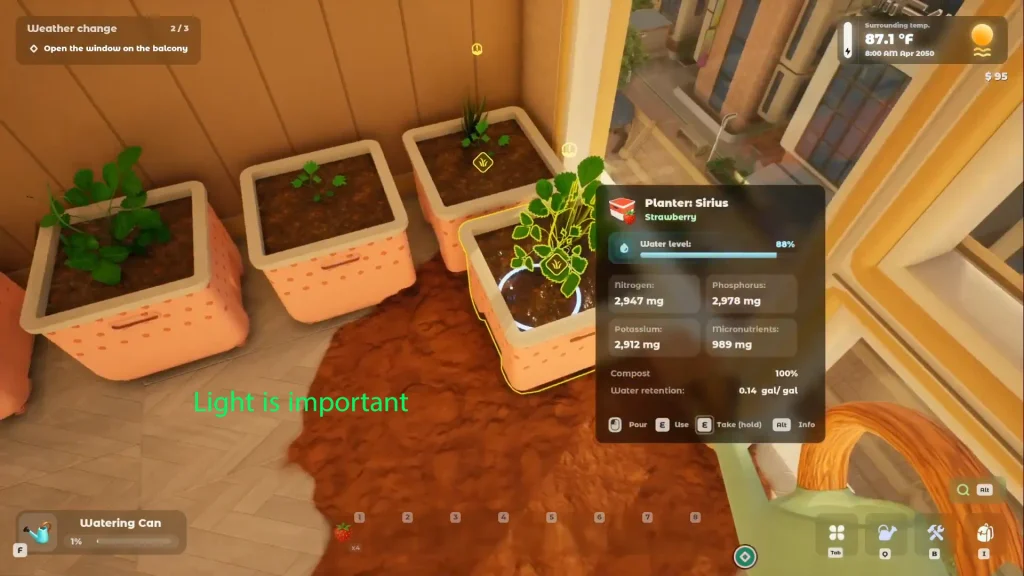
Every room and balcony carries its own conditions, and those conditions shape how well a plant actually grows there. The rooftop deserves special mention too, only a handful of plants will grow up there. Don’t just plant wherever there’s free space. Check that the spot actually matches what the plant needs, light and temperature both.
Tiny Eden Plants: Growth Stages
Plants in Tiny Eden move through four growth stages: Sprout, Seedling, Mature, and Wilting.
The Sprout and Seedling stages are the high-maintenance ones. You’re keeping growing conditions steady, pulling weeds, and treating disease when it shows up.
Mature is harvest time, though the plant still needs upkeep even after that. Wilting comes last, and often signals it’s time to replace the plant. None of this is plant-and-forget. You’re maintaining the right conditions at every stage, not just the first one.
Tiny Eden Plants: Companion Planting
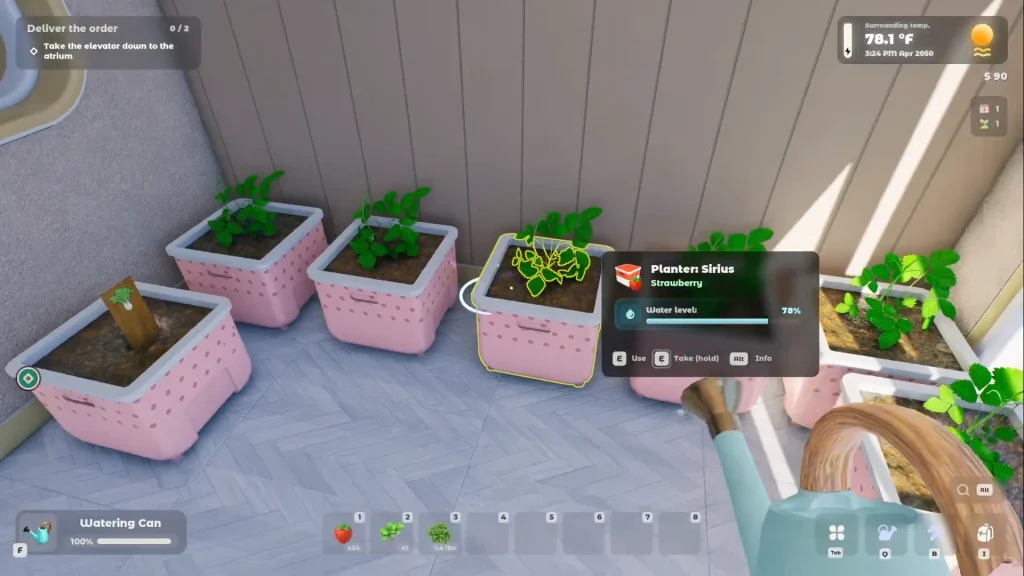
Companion planting is part of Tiny Eden too. What you grow next to a plant can affect it just as much as soil or light. For instance, basil helps keep pests off tomatoes, which makes it a solid neighbor for them.
Root space and nutrients factor in as well. Different plants root at different depths; some go deep, others stay shallow. Crowding a plant into too little space will hold back its growth.
Not every pairing works, though. I mention Tomato and cabbage as examples of a bad combo, since cabbage eats into the nutrients tomatoes need. Tomato and basil succeed for the opposite reason. Their root systems occupy different parts of the soil, so they’re not competing for the same space.
So far, these are the combinations I would confidently include:
| Combination | Result |
|---|---|
| Tomato + Basil | Good companion |
| Tomato + Cabbage | Avoid planting together |
How to Unlock New Seeds in Tiny Eden
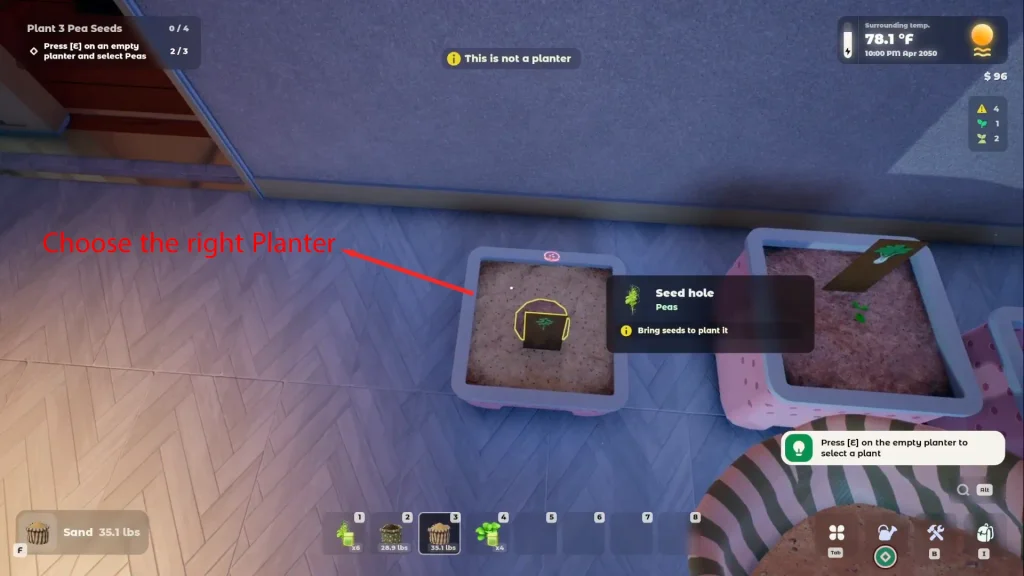
There’s no separate plant-leveling system gatekeeping new plants in Tiny Eden. Instead, certain seeds require you to build up your standing with the other residents in the apartment building before you can buy them.
That reputation feeds into the wider progression loop: harvest crops, turn them into food, sell the food for money and reputation and that reputation opens up new opportunities down the line.
Discovering new plant varieties runs on a separate track entirely.
Every harvest forces a choice between profit and research, and research is what unlocks the ability to create new varieties: tomatoes with different colors, frost resistance, size, taste, and fragility. So unlocking a seed and discovering a new variety aren’t the same thing here, even though both sound like “getting a new plant.”
Tiny Eden Plants: Wilting and Dying Plants
Wilting is the last of Tiny Eden’s four growth stages. Reaching it usually means the plant is due for replacement.
That doesn’t make a wilting plant dead weight. It can still serve a purpose, like attracting pollinators. Plant health ties back into the rest of the growing system too. Early on, that means keeping conditions steady and staying on top of weeds and disease; further down, it’s the soil simulation’s nutrient levels and soil-borne diseases doing the work.