

The Our Life Now and Forever personality system lets you be a quiet kid around most people in Golden Grove and still take charge when you’re with Qiu.
You don’t have to stick to a single personality throughout the story, either.
Your dialogue choices determine much of your main character’s personality. The relationship dynamic meters let you decide how you interact with Qiu Lin and Tamarack Baumann individually. The distinction matters, especially if you’re worried about making the wrong choices around your favorite character.
Jump to
How Our Life Now and Forever Personality Works
If you’ve played Our Life: Beginnings & Always, you might remember Cove Holden’s personality settings and the Interest and Comfort system. GB Patch Games takes a different approach in the second game.
There are four parts of the personality and relationship system worth understanding:
| Mechanic | What it determines |
|---|---|
| Personality descriptors | Your MC’s general behavior throughout the story |
| Individual demeanor | How your MC behaves around a particular character |
| Expression Elements | The relationship dynamics you select for each lead |
| Relationship Standing | Whether you consider each other Neighbors, Friends or Crushes. |
Your personality and Relationship Standing are separate. A shy MC can have a crush on Qiu. A talkative MC can prefer to let Tamarack make decisions. Ethan (one of the members of Tpose Gaming’s Editorial team) and I chose a very quiet approach in my playthrough.
Personality Traits and How to Get Them
Your MC develops personality traits through dialogue and actions during Moments. Here’s what the known personality traits mean and which choices to try if you want a particular one.
| Personaly | Corresponding Choices |
|---|---|
| Very Quiet | Regularly choose silent or nonverbal responses. |
| Quiet | Speak less frequently during conversations. |
| Talkative | Frequently choose spoken dialogue options. |
| Polite | Respond respectfully to other characters. |
| Rowdy | Choose mischievous or boisterous actions. |
| Rule Following | Respect instructions and established rules. |
| Shy | Choose hesitant or reserved responses. |
| Casual | Respond in a relaxed manner. |
| Surly | Choose grumpy or unfriendly responses. |
| Friendly | Respond warmly toward a particular character. |
Quiet vs. Very Quiet vs. Talkative (My Experience)
The difference between these traits comes down to how often your MC speaks.
If you want a Very Quiet character like Ethan and me, try nonverbal responses whenever the opportunity presents itself. Your MC can communicate through gestures or simply remain silent during a conversation. The game can also adjust parts of its script based on how rarely your character speaks.
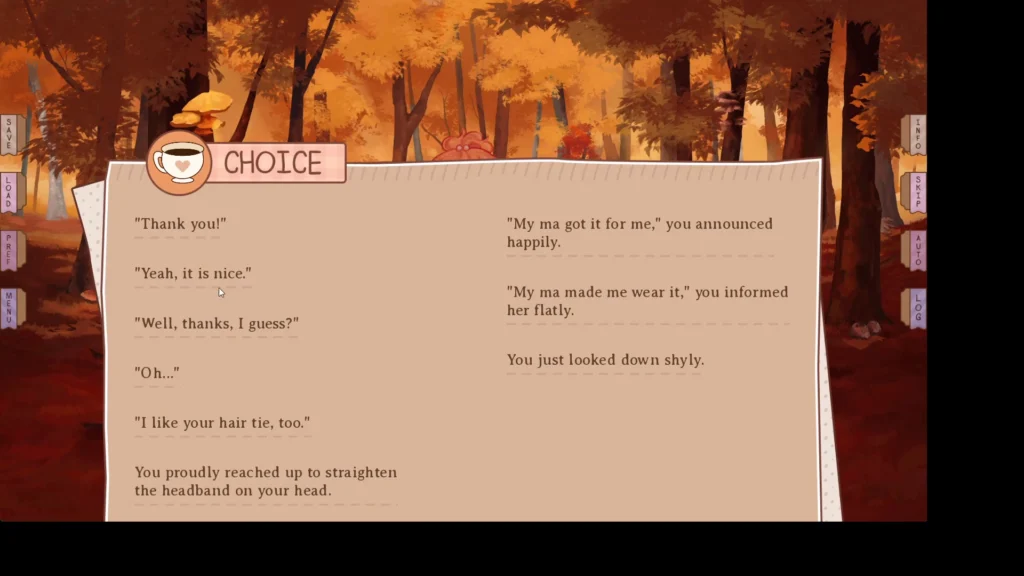
You don’t necessarily have to select a silent response every time for your MC’s established behavior to affect a scene.
Can you change your personality?
Yes. Your character doesn’t have to remain the same person they were at ten years old.
Step 1 takes place during childhood, while Step 2 follows your MC at age 14. Your disposition can change as you grow up, along with your interests and pronouns. In my own run, I learnt that a Quiet character can become Very Quiet in Step 2, for example. The story can also remember aspects of your earlier behavior, such as whether you tended to follow the rules.
Relationship Dynamic Meters Explained
Expression Elements are the settings on the relationship dynamic screen that determine how your MC interacts with Qiu and Tamarack. You select them separately for each character at the start of a Step. Your preferences don’t have to match theirs.
Deferring vs. Teamworking vs. Contesting
This meter determines your preferred approach to decisions.
| Dynamic | Meaning |
|---|---|
| Deferring | You prefer to follow the other person’s lead. |
| Teamworking | You prefer to make decisions together. |
| Contesting | You prefer to take charge or make decisions yourself. |
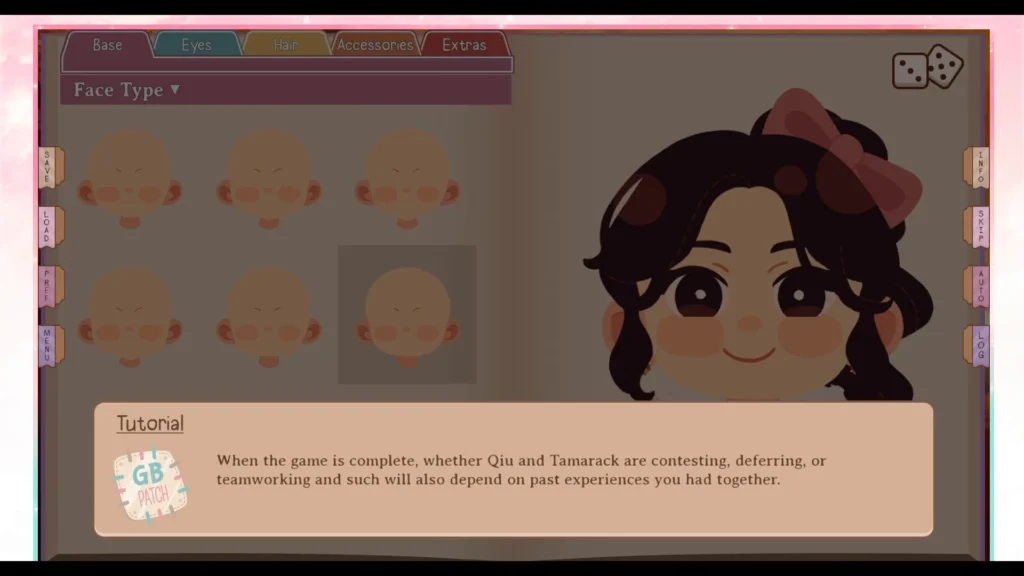
Contesting doesn’t automatically make your character rude or argumentative. You can be a polite, reserved person who simply prefers to decide what to do. Teamworking is a good starting point if you want both characters to have an equal say in their plans. However, I do recommend the Contesting approach because it gives you more control over the flow of the story.
Praising vs. Unassuming vs. Teasing
This meter affects how you communicate with the other person.
| Dynamic | Meaning |
|---|---|
| Praising | You frequently compliment the other person. |
| Unassuming | You don’t comment on their behavior very often. |
| Teasing | You enjoy joking with them or giving them a hard time. |
I’d choose Teasing for a playful friendship with Qiu. Praising is a better fit if you want your MC to express their affection through compliments. Unassuming doesn’t necessarily mean your character is shy. You can be perfectly comfortable around someone without constantly commenting on what they do.
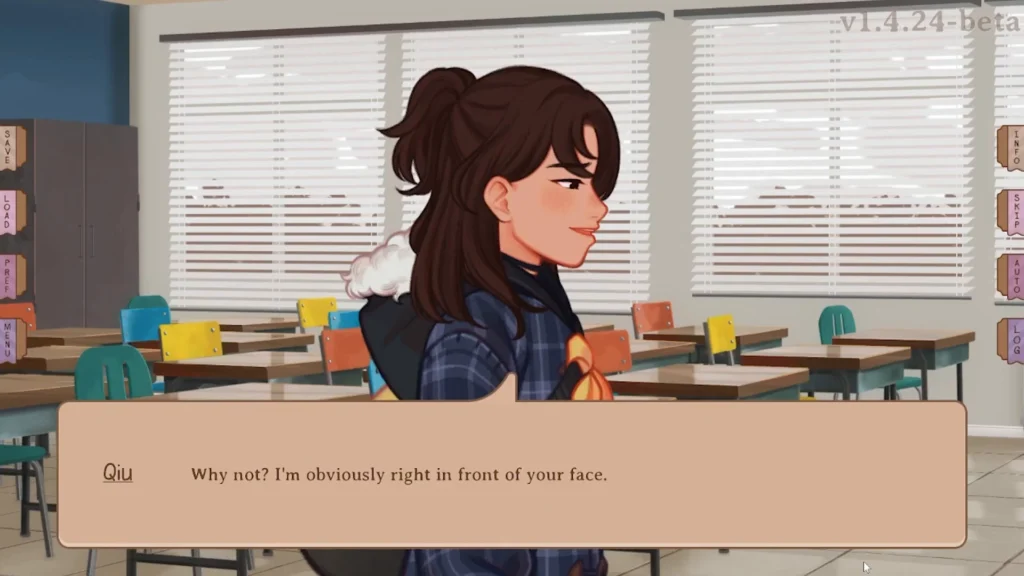
Doting vs. Accepting vs. Admiring
This meter determines how your MC views the other person.
| Dynamic | Meaning |
|---|---|
| Doting | You feel protective of them and want to look after them. |
| Accepting | You see them as an equal. |
| Admiring | You look up to them and consider them remarkable. |
The easiest way to understand the difference between Doting and Admiring is to consider who your character wants to look after and who they look up to. You can also admire someone without having a crush on them. Admiring is a relationship dynamic, whereas a crush is a Relationship Standing.
How personality affects dialogue and relationships
Your personality choices can affect dialogue that occurs without your input. The same applies to Expression Elements, which can change scripted lines or make additional responses available during certain scenes.
However, your selected dynamics don’t dictate every decision you make.
A Deferring MC can take the initiative when something matters to them. A character who normally praises Tamarack can still disagree with her. You don’t have to avoid sarcasm to maintain a close friendship or pursue a crush, either. There is a difference between playful bluntness and a deliberately unkind response. If you want to experiment with different personalities, keep an extra save before a Moment.
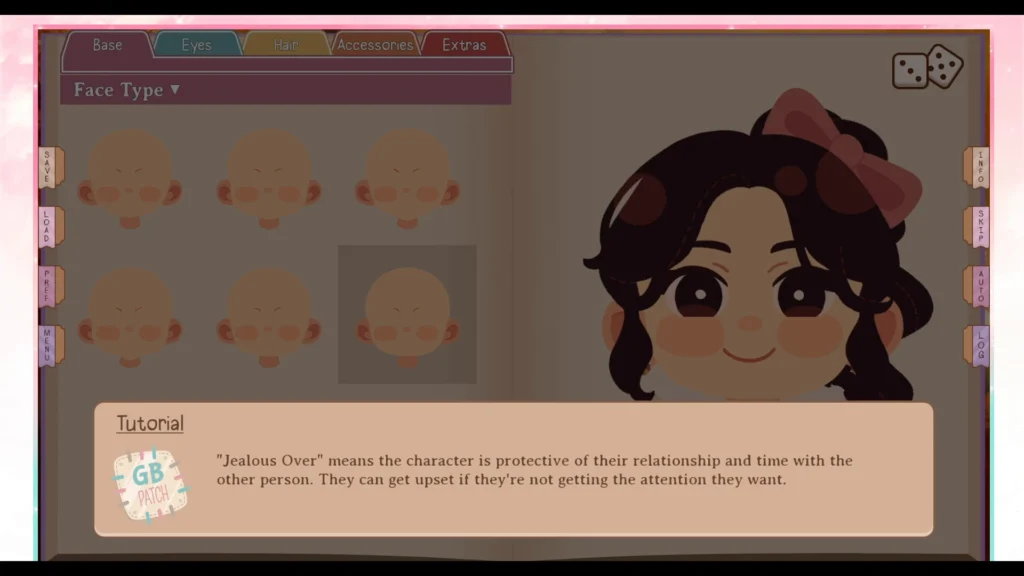
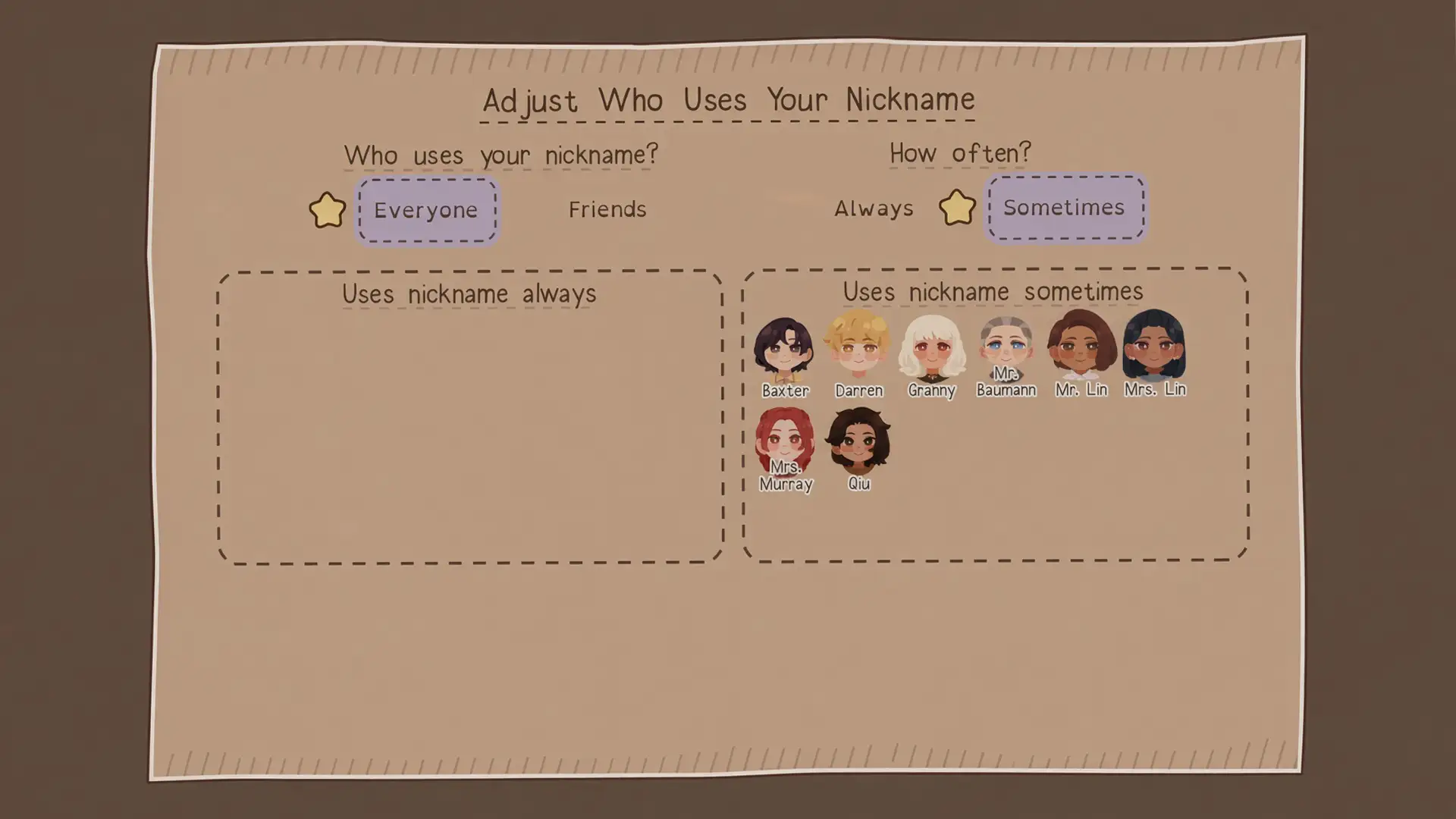
The stars next to dialogue options indicate choices you’ve selected in previous playthroughs, which makes it easier to try something different.
Qiu and Tamarack’s default dynamics
Qiu and Tamarack have their own relationship dynamics toward your MC. These can differ from the Expression Elements you choose for them. The Step 1 character design gives them the following defaults:
| Dynamic | Qiu Lin | Tamarack Baumann |
|---|---|---|
| Decision-making | Teamworking | Contesting |
| Communication | Teasing | Praising |
| Perception | Doting | Accepting |
These settings help explain why childhood Tamarack tends to take the initiative. Qiu is more inclined to collaborate and tease you.
How jealousy works in Step 2
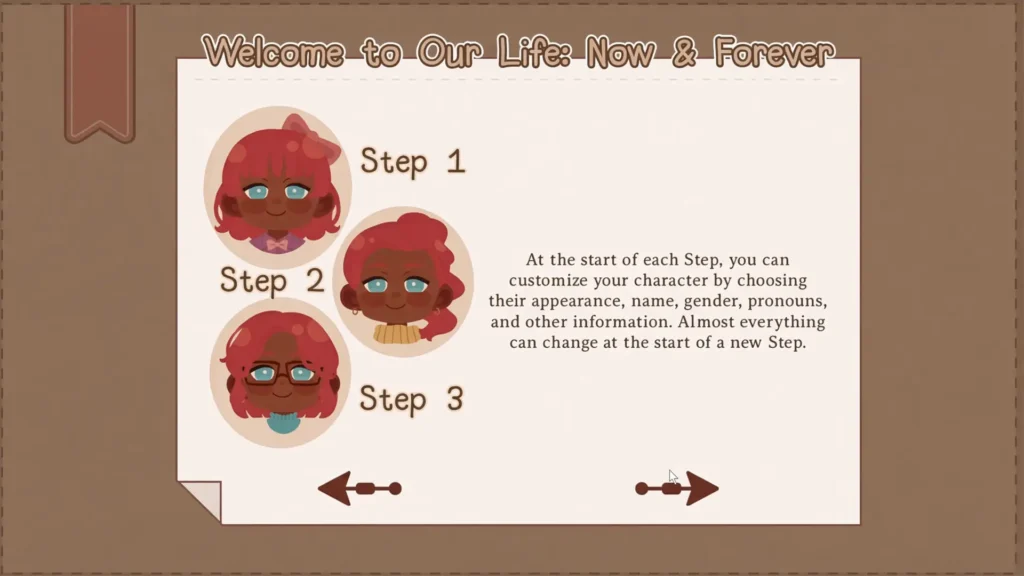
Jealousy is an optional relationship dynamic introduced in Step 2. Although your childhood MC can express jealousy through ordinary dialogue choices, Step 1 doesn’t have a dedicated jealousy meter in the system.
The Step 2 setup requires you to have a Friends or Crushes standing with the character. The fourth dynamic meter lets you select a form of jealousy for your MC, the other character, or both.
| Jealousy Setting | Meaning |
|---|---|
| Envious Of | You envy something the other person has or experiences. |
| Not Jealous | The optional jealousy dynamic is disabled. |
| Jealous Over | You feel jealous or possessive over the other person’s attention. |
Envious Of was previously called Jealous Of. The two leads respond differently to jealousy. In Step 2, Qiu can become cold or bitter toward the MC. Tamarack tends to become upset with herself. If you prefer a relationship without this type of conflict, stick with Not Jealous. The optional meter is disabled by default, so ordinary dialogue choices shouldn’t activate it on their own.
What is the best personality in Our Life: Now & Forever?
There is no required personality to make Qiu or Tamarack like you. I’d pick a personality based on the kind of relationship I want to experience rather than worry about optimal dialogue choices.
Here are some Expression Element combinations you can try:
| Playstyle | Decision-making | Communication | Perception |
|---|---|---|---|
| Supportive friend | Teamworking | Praising | Doting |
| Playful rival | Contesting | Teasing | Accepting |
| Devoted admirer | Deferring | Praising | Admiring |
| Relaxed companion | Teamworking | Unassuming | Accepting |
| Protective friend | Contesting | Praising | Doting |
| Playful crush | Teamworking | Teasing | Admiring |
These are roleplay suggestions, not official personality classes or romance requirements. For example, you could create a Quiet and Polite MC who enjoys teasing Qiu but becomes much more reserved around Tamarack. Set your dynamics separately to explore those differences without having to start another playthrough.
Qiu and Tamarack’s Personalities in Each Step
Your MC isn’t the only person who changes with age. Both of your childhood neighbors develop their own personalities as the story progresses.
Qiu Lin (Autumn)
At age 10, Qiu is popular, charming, and often willing to accommodate other people. They enjoy teasing their friends and can be complimentary toward a crush. By Step 2, Qiu becomes considerably more withdrawn. They struggle with frustration and have less interest in social activities than they did during childhood.
The adult version of Qiu is more socially confident and comfortable with themselves, without the same need to be the best at everything.
Tamarack Baumann
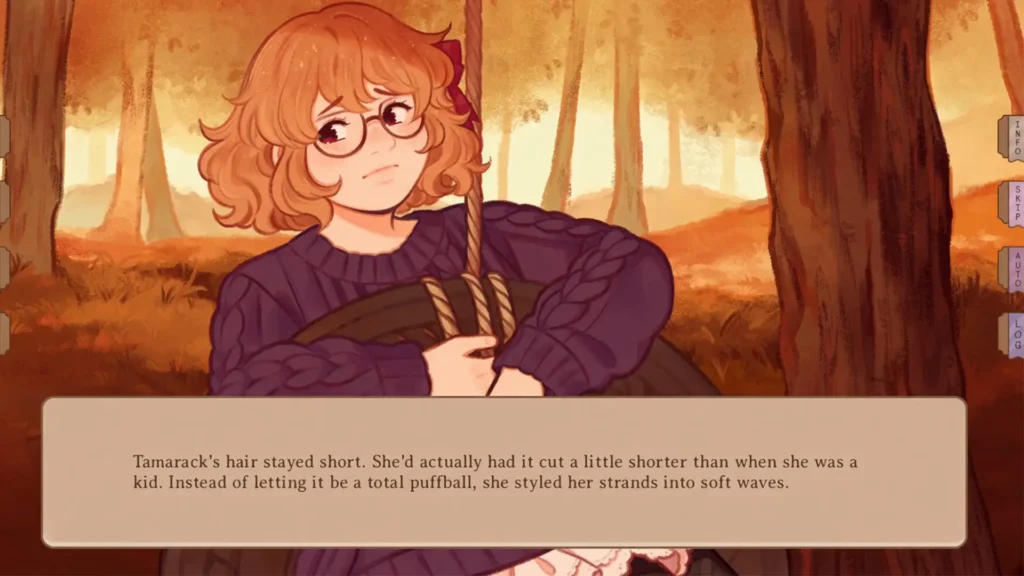
Childhood Tamarack is energetic and adventurous. She’s particularly fond of the forest around Golden Grove and sometimes misses social cues.
At 14, Tamarack becomes more reserved and self-conscious. Her childhood confidence gives way to insecurity during her teenage years. Her Step 3 personality is more self-accepting. She develops into a caring adult with an interest in her community and a fondness for old-fashioned things. Early Access covers Steps 1 and 2, so you’ll have to wait for Step 3 to experience their adult personalities.